What to Eat Before a Workout (Timing and Macros)

BSc Kinesiology · CPT
Pre-workout nutrition directly affects training performance, energy during the session, and recovery afterwards. Getting it right is simpler than most people think, and doesn't require expensive supplements.
What Pre-Workout Nutrition Actually Does
Provides energy for the session: Glycogen (stored glucose in muscles) is the primary fuel for high-intensity training. Eating carbohydrates before training tops up glycogen stores, allowing higher intensity and longer sustained performance.
Ensures amino acid availability: Having protein in circulation during and after training improves muscle protein synthesis response to the training stimulus.
Prevents performance-degrading hunger: Training on an empty stomach (especially after a full day without eating) reduces power output, increases fatigue perception, and can impair technique due to concentration issues.
The Optimal Pre-Workout Macros
Carbohydrates: The priority
- Amount: 0.5-1g per kg bodyweight (35-70g for a 70kg person)
- Type: moderate to fast digesting, white rice, oats, banana, bread
- Higher GI (faster digesting) options work better closer to the session; lower GI carbs work well 2-3 hours before
Protein: Important addition
- Amount: 20-40g
- Any complete protein source works
Fat: Keep low pre-workout
- Fat slows gastric emptying, which can cause GI discomfort during training
- Keep to under 15-20g in the pre-workout meal, particularly if eating close to the session
Fibre: Moderate
- High fibre (15g+ in a single meal) can cause GI discomfort during training
- Standard meal amounts are fine; avoid very high-fibre foods immediately pre-workout
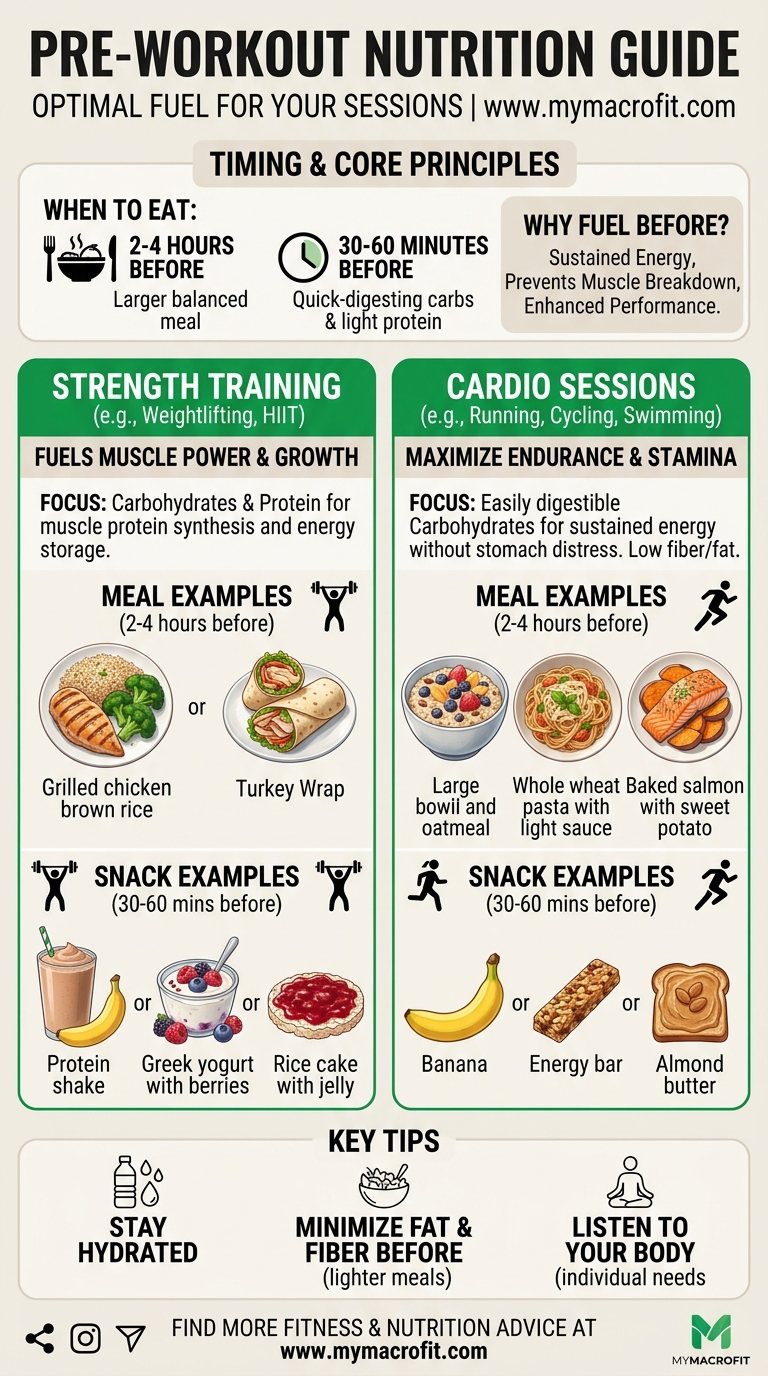
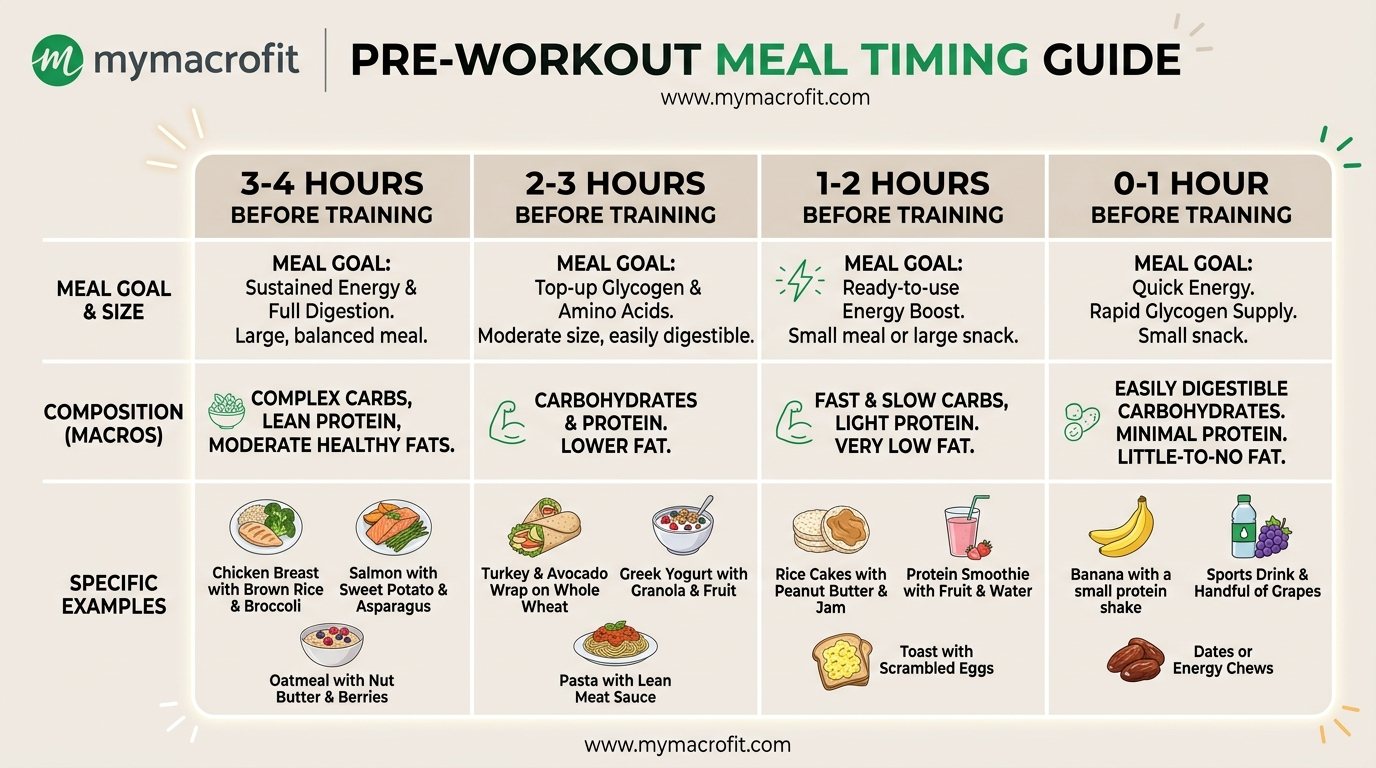
Timing Guide
| Time before training | What to eat |
|---|---|
| 2-3 hours | Full meal: protein + carbs + vegetables (moderate fat, moderate fibre) |
| 1-1.5 hours | Smaller meal: 200-400 kcal, protein + carbs, low fat |
| 30-60 minutes | Small snack: primarily carbs with some protein, low fat and fibre |
| Under 30 minutes | Fast carbs only: banana, sports drink, dates |
Practical Pre-Workout Meals by Time Window
2-3 Hours Before Training (Full Meal)
Grilled chicken + white rice + salad:
- 150g chicken breast (30g protein)
- 200g cooked white rice (52g carbs)
- Mixed salad (minimal oil dressing)
- Total: ~520 kcal, 30g protein, 52g carbs
Salmon + sweet potato:
- 150g salmon (25g protein)
- 200g sweet potato (37g carbs)
- Total: ~480 kcal, 25g protein, 37g carbs
Pasta with lean turkey:
- 150g dry pasta, cooked (55g carbs)
- 100g lean turkey mince (22g protein)
- Tomato sauce
- Total: ~550 kcal, 30g protein, 60g carbs
1-1.5 Hours Before Training (Medium Snack/Small Meal)
Oats + protein shake:
- 40g oats with water (27g carbs)
- 1 scoop protein powder in milk (25g protein, 10g carbs)
- Total: ~320 kcal, 30g protein, 37g carbs
Greek yogurt + banana + small handful granola:
- 200g Greek yogurt (20g protein)
- 1 banana (27g carbs)
- 20g granola (16g carbs)
- Total: ~370 kcal, 22g protein, 43g carbs
30-60 Minutes Before Training (Small Snack)
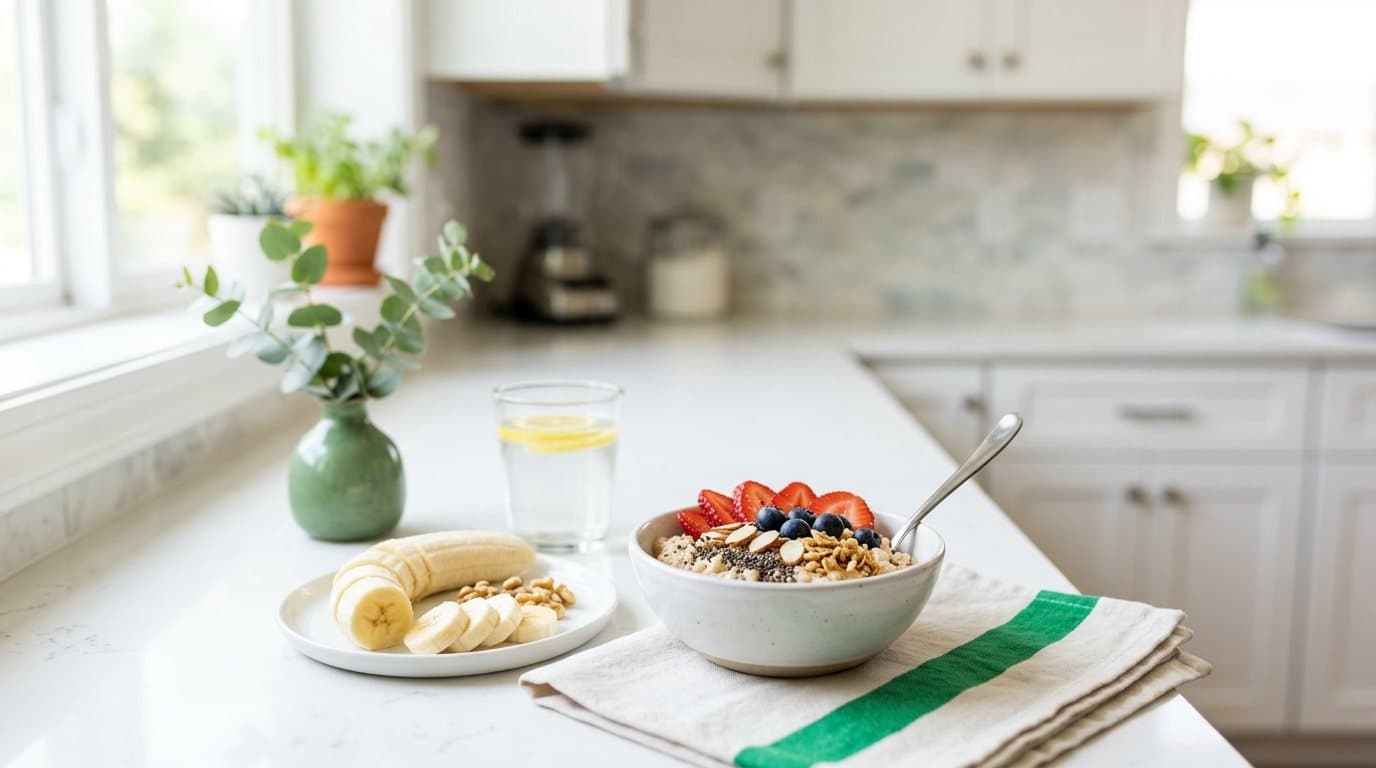
Banana + protein shake:
- 1 banana (27g carbs)
- 1 scoop protein in water (25g protein)
- Total: ~230 kcal, 25g protein, 27g carbs
2 rice cakes + 1 tbsp peanut butter:
- Rice cakes (26g carbs)
- Peanut butter (5g protein, 8g fat)
- Total: ~220 kcal, 7g protein, 26g carbs (useful when protein has been adequate earlier)
Pre-Workout for Different Training Types
Strength training: Carbohydrates are the priority fuel. Glycogen powers the intense, short-duration muscular contractions of lifting. Higher carbohydrate pre-workout meals improve both lifting volume and strength output.
HIIT: High glycolytic demand, carbohydrates are critical. Similar to strength training in pre-workout carbohydrate needs.
Moderate cardio (45-60 min): More metabolically flexible, moderate carbohydrates are sufficient. Fat oxidation contributes more to fuel at lower intensities.
Long cardio (90+ min): Higher carbohydrate need before the session AND may require carbohydrates during (gels, sports drinks) for sessions over 90 minutes.
What to Avoid Before Training
Very high fat meals: Slow digestion → risk of nausea and sluggishness during training. Avoid 200+ kcal of fat within 90 minutes of training.
Very high fibre meals: Similar GI risk, can cause cramping and urgency during running or cardio. Keep pre-workout fibre moderate (under 10g in the meal).
Large portions too close to training: Being too full impairs performance and comfort. Adjust portion size to timing.
Novel foods: Don't experiment with new foods before important training sessions or competitions, stick with familiar options.
The Bottom Line
Pre-workout nutrition doesn't need to be complicated: carbohydrates + protein at the right timing window. The size and composition adjusts based on how long before the session you're eating, more food and more diversity with 2+ hours; smaller and simpler within 60 minutes.
Use our Macro Calculator to fit pre-workout meals within your daily calorie and macro targets.
Save & share on Pinterest
Click any card to pin it — or share with someone who needs it.
What to Eat Before a Workout (Timing and Macros)
The optimal pre-workout nutrition for strength training and cardio, what to eat, how much, and when …
The optimal pre-workout nutrition for strength training and cardio, what to eat,…
Read the full guide: What to Eat Before a Workout (Timing and Macros)
Try the free Macro Calculator
What to Eat Before a Workout (Timing and Macros) — use our free calculators for instant personalised…
Pinterest opens in a new tab. You can edit the description before saving.
Ready to get your numbers?
Free calculator, instant results, no signup required.
Frequently Asked Questions
How long before a workout should I eat?+
Is it OK to train on an empty stomach?+
What should I eat before a morning workout?+
What's the best pre-workout meal for building muscle?+
Should I take caffeine or a pre-workout supplement before training?+
About the Author

I'm a kinesiologist and personal trainer. I've spent eight years helping women lose fat and get stronger without handing their whole life over to a diet.
View full profile →