The Best Foods for Recovery After Training
Kinesiotherapist · Pilates Coach
Recovery nutrition is the gap I see most often in people who otherwise train well. Here is how I think about it: your training is the request you make of your body, and your recovery is the environment that lets your body actually answer it. Feed that recovery properly and every bit of your training works harder for you. Your body is your only investment, and this is one of the simplest ways to look after it.
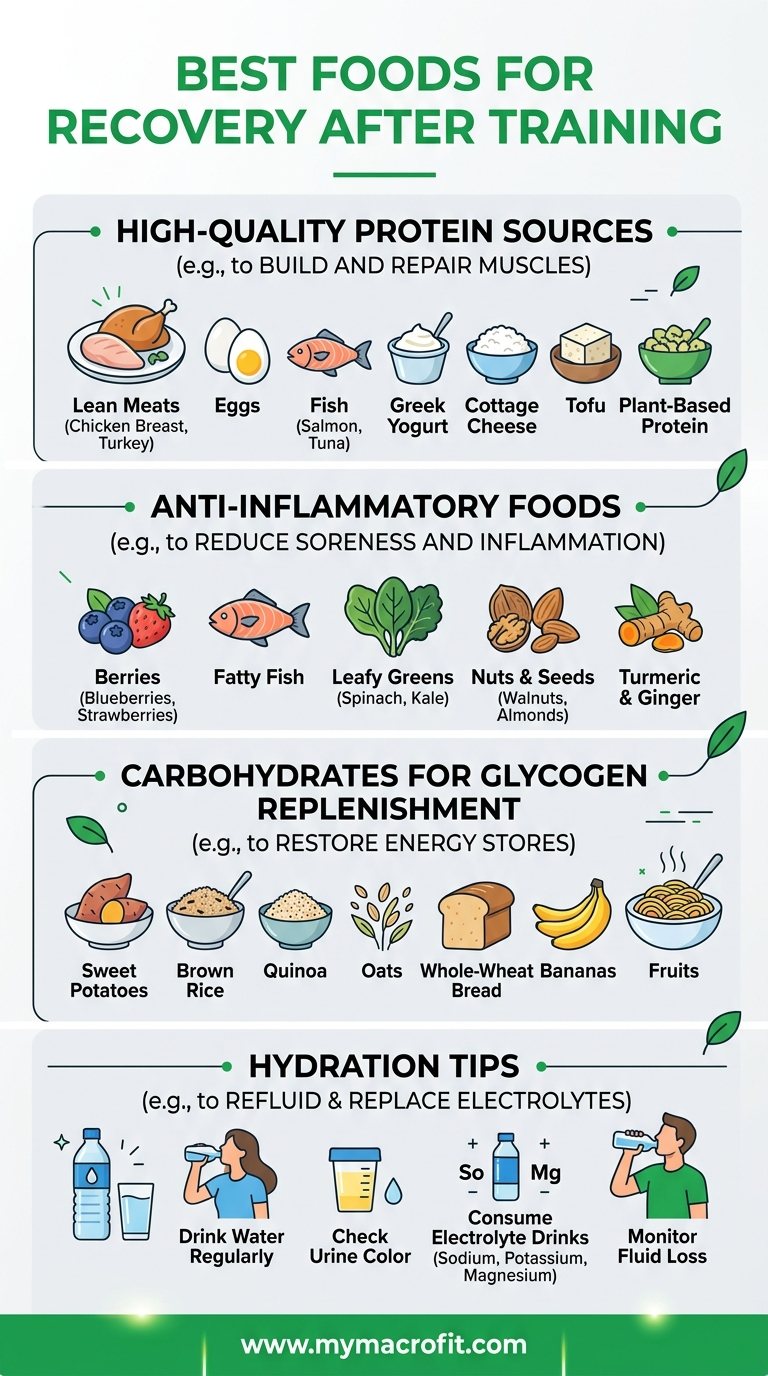
What actually matters, in order
Recovery food has a clear pecking order, and it helps to know it so you spend your effort where it counts:
- Protein, for muscle repair.
- Carbohydrate, to refill your fuel stores.
- Fluid and electrolytes, to rehydrate.
- Anti-inflammatory foods, to ease soreness in harder phases.
- Sleep, which quietly outranks everything else.
The first three are the workhorses, get those consistently right and you have done most of the job. The anti-inflammatory foods are a lovely addition when training is hard, rather than a daily essential.
The best proteins for recovery
Quick to digest, nice straight after training:
- Whey shake, around 25g and digested fast, with plenty of the key amino acid leucine.
- Greek yogurt, about 20g per 200g, easy on the stomach.
- Egg whites, very fast to absorb.
- Skyr or quark, high protein and relatively quick.
Whole-food proteins, moderate digestion:
- Salmon or tuna, around 30g per 150g.
- Chicken breast, around 30 to 35g per 150g.
- Eggs, roughly 6 to 7g each, so four eggs gives you about 25g.
Slower to digest, lovely in the evening:
- Cottage cheese, a slow-release casein protein, ideal before bed after an evening session.
- Casein powder, if you prefer a shake.
Aim for roughly 35 to 50g of protein within a couple of hours of training.
Carbohydrate to refill your tank
Carbohydrate restores the fuel your muscles used. This matters most when you train often or your next session is within a day. Quicker-refilling options include white rice, potato or sweet potato, banana, and oats. Aim for around 0.5 to 0.8g per kg of bodyweight, so roughly 35 to 56g for a 70kg person.
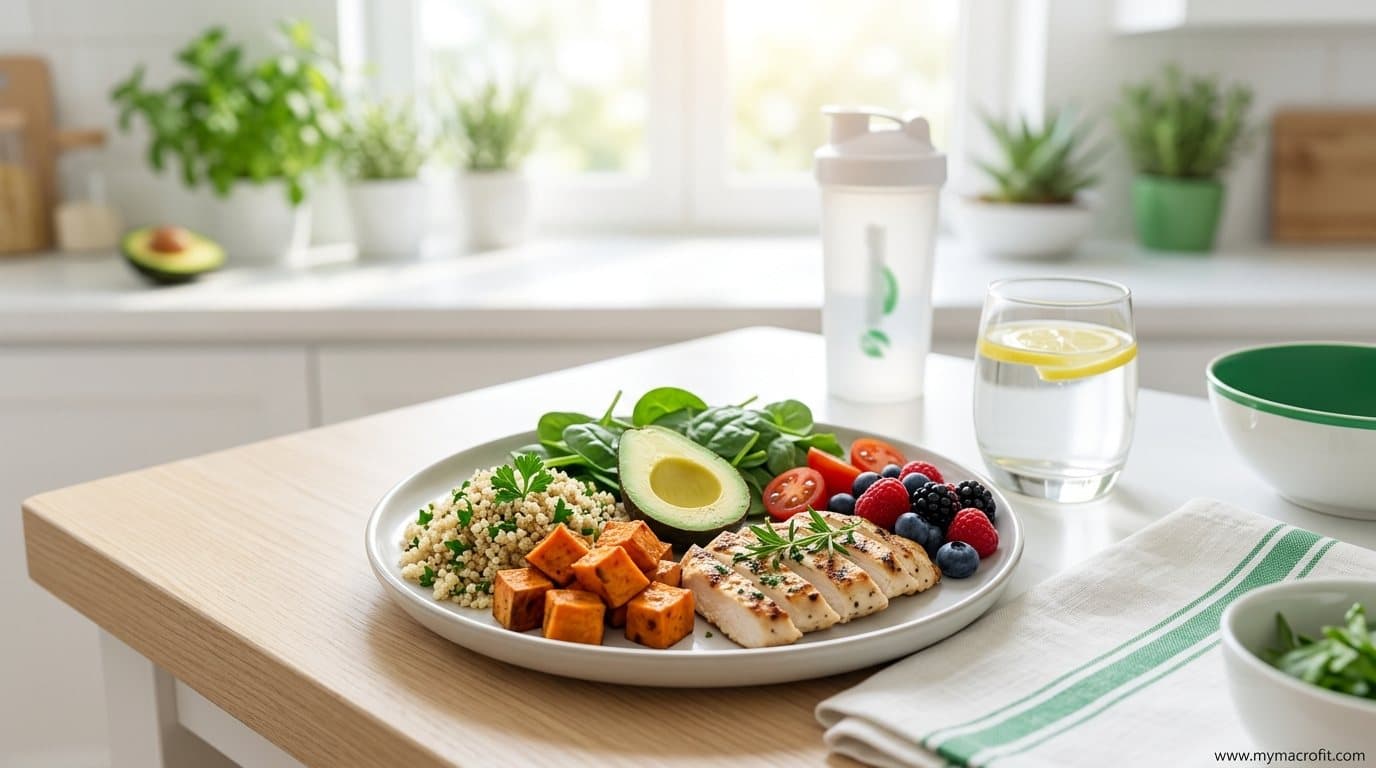
A simple recovery plate: 150g salmon, 200g white rice, and some green vegetables gives you a tidy 35g of protein and around 44g of carbohydrate, which is genuinely excellent recovery nutrition without any fuss.
Foods that calm the inflammation
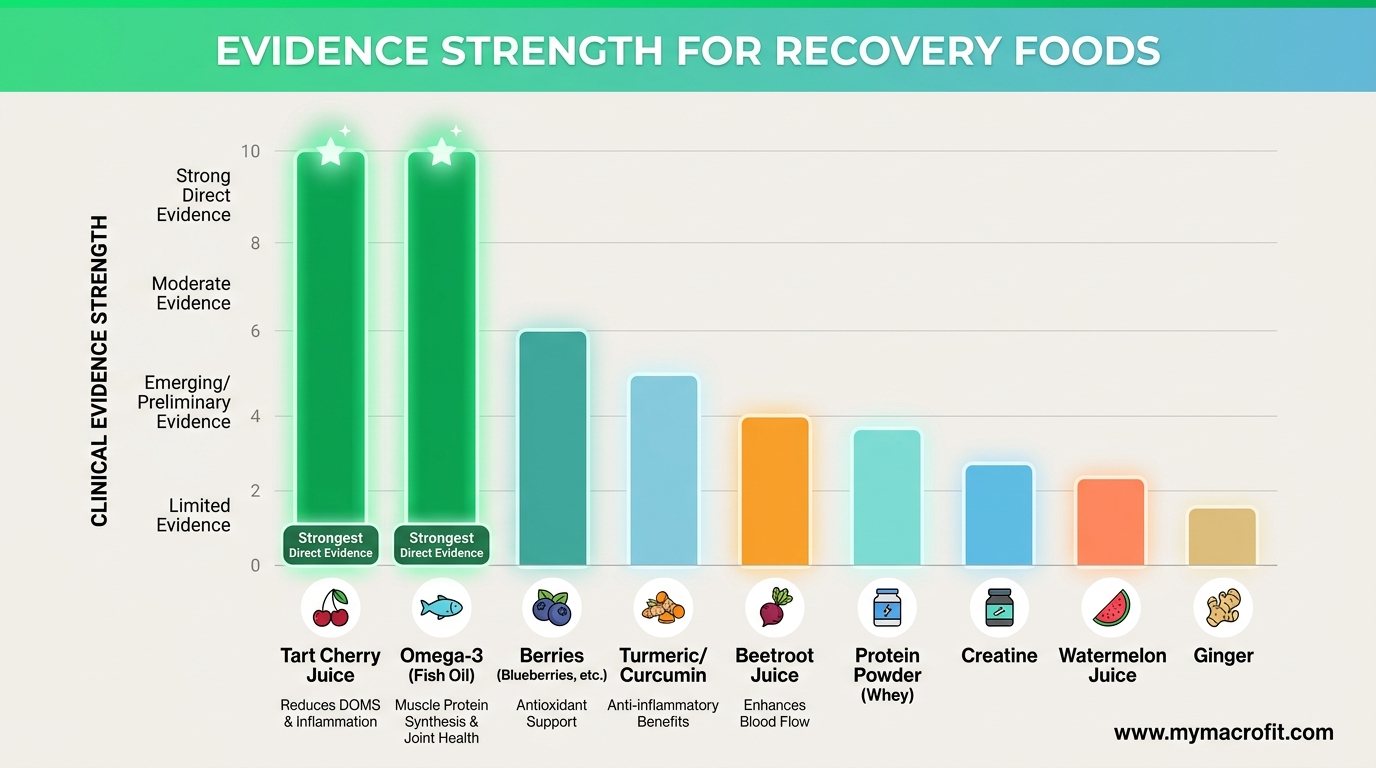
A bit of inflammation after exercise is normal and even useful, since it helps drive the adaptation you trained for. It is only excess inflammation that drags recovery out. These foods have evidence for keeping it in check:
Tart cherry juice
The most evidence-backed of the lot. Its anthocyanins work a little like a gentle, food-based anti-inflammatory. Studies show that tart cherry concentrate twice a day can cut soreness meaningfully, speed up the return of strength after hard sessions, and lower inflammatory markers. A practical dose is around 30ml of concentrate in water, twice a day, during demanding training stretches.
Oily fish
The omega-3 fats in salmon, mackerel, and sardines settle inflammation. Eating them two or three times a week builds a calmer baseline that takes the edge off exercise inflammation.
Berries
Blueberries, blackberries, and strawberries are full of the same dark pigments and other polyphenols that reduce the oxidative stress of training. Studies on blueberries in particular show less soreness and better-preserved muscle function after hard work.
Turmeric, with black pepper
The curcumin in turmeric is reliably anti-inflammatory, but your body absorbs very little of it without black pepper, which dramatically improves uptake. Use it daily rather than occasionally, in your cooking or as a turmeric latte, or take a curcumin supplement that includes piperine.
Ginger
A simple one that works. A couple of grams of ginger a day has been shown to ease post-exercise soreness compared with nothing.
Don't forget to rehydrate
Losing even 2% of your bodyweight in fluid dents your next session, so rehydrating matters more than people think. Replace around one and a half times the fluid you lost, which for most sessions means roughly 500 to 750ml in the half hour to hour afterwards. A little sodium, from a salty meal or an electrolyte drink, helps you actually hold onto that fluid rather than passing it straight through. Pale yellow urine is the simple sign you are getting it about right.
Sleep is the real recovery tool
I have to be honest with you: no food or supplement here comes close to sleep. The deepest muscle repair, driven by your repair hormones, happens while you sleep. Regularly getting under six or seven hours blunts those hormones, raises the stress hormones that break muscle down, dulls your next-day performance, and slows repair. So if you take one thing from this article, let it be to protect seven to nine hours, especially after a hard session.
A simple recovery day
- Right after training: 500ml of water, with electrolytes if it was a sweaty one.
- Within two hours: a proper recovery meal, 35 to 50g protein and 40 to 50g carbohydrate, such as salmon, rice, roasted vegetables, and a glass of milk.
- Across the day: keep your protein steady, aiming for around 2g per kg.
- Before bed: some cottage cheese, whose slow-release protein feeds repair through the night.
- In harder phases: add tart cherry concentrate twice a day, berries with breakfast, and omega-3 from oily fish.
How I'd leave it
Recovery nutrition really comes down to protein within a couple of hours, carbohydrate to refuel, and fluid to rehydrate, with anti-inflammatory foods like tart cherry, oily fish, berries, and turmeric easing soreness when training is hard. And underneath all of it, sleep does the heavy lifting that no plate can replace. Look after the recovery, and your training looks after you. It pairs naturally with respecting your rest days, which is where the results are quietly made.
Save & share on Pinterest
Click any card to pin it — or share with someone who needs it.
The Best Foods for Recovery After Training
The evidence on post-workout nutrition for recovery, the best protein sources, anti-inflammatory foo…
The evidence on post-workout nutrition for recovery, the best protein sources, a…
Read the full guide: The Best Foods for Recovery After Training
Free fitness tools
The Best Foods for Recovery After Training — use our free calculators for instant personalised resul…
Pinterest opens in a new tab. You can edit the description before saving.
Frequently Asked Questions
What should I eat for muscle recovery after a hard workout?+
Does tart cherry juice really help with muscle recovery?+
Does protein timing matter for recovery?+
Do I need a protein shake after training, or is real food fine?+
What foods help reduce muscle soreness?+
Is it true you should not eat too much right after a hard workout?+
About the Author
I'm a kinesiotherapist and Pilates coach. I help people move well and get strong without breaking down, from fixing a stiff back to building real strength using nothing but their own bodyweight.
View full profile →