Bodyweight vs Weights: Which Is Better for Building Strength?
Kinesiotherapist · Pilates Coach
It is one of the most common questions I get: should I train with my bodyweight or get to a gym and lift weights? People expect me to pick a side. I will not, because the honest answer is that both build real strength, and the better choice is mostly about you, not the method. Your body is your only investment, and there is more than one good way to look after it.
What they have in common
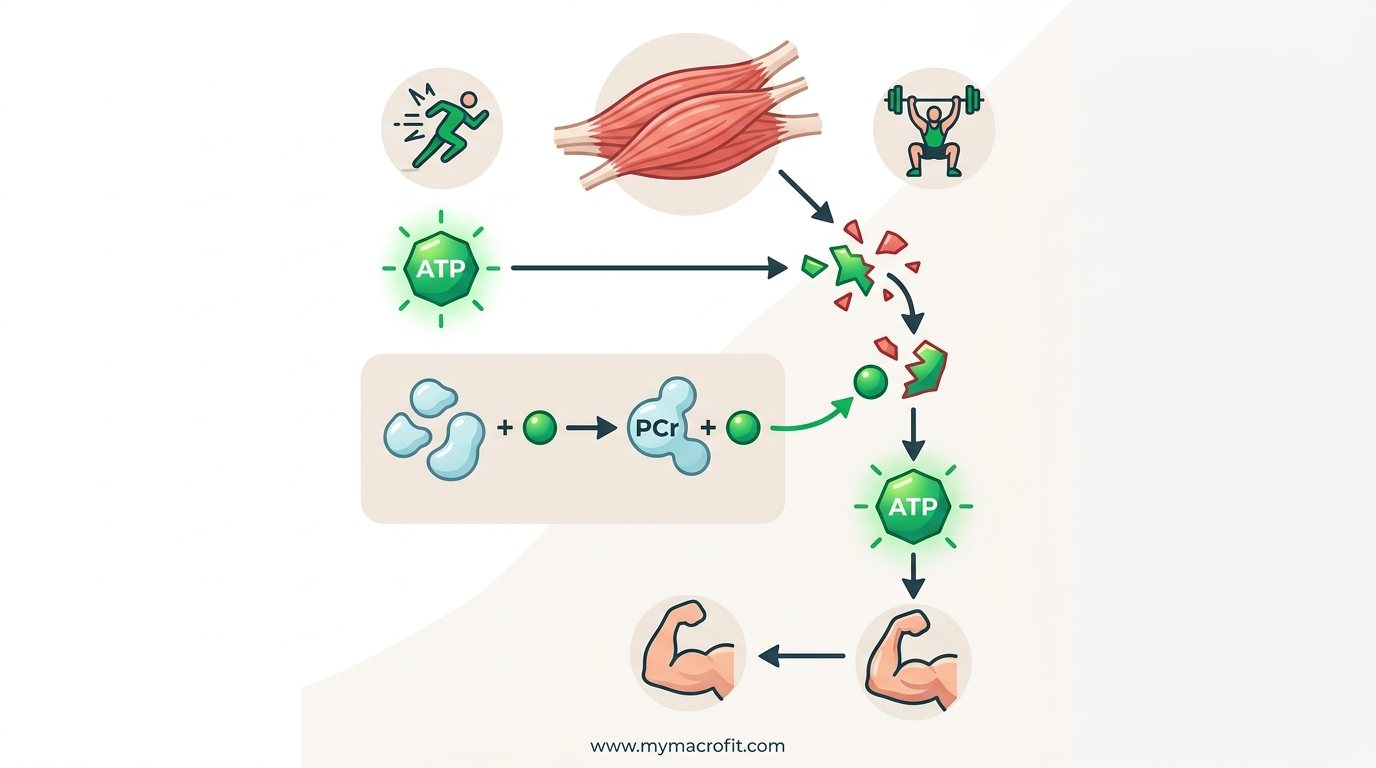
Let us start with the most important thing, because it settles half the debate. Muscle does not know what is creating the resistance. It responds to challenging effort taken close to fatigue, repeated regularly, with enough recovery and protein. A hard set of single-leg squats and a hard set of barbell squats both send the same basic message: get stronger. So both approaches genuinely work, and neither is fake or lesser.
What bodyweight does best
- Convenience. No commute, no cost, no waiting for equipment. You train where you are, which is the single biggest driver of consistency.
- Body control and relative strength. Bodyweight work builds excellent coordination, core stability, and the kind of strength you can actually use in life.
- Joint-friendly progress. Gradual variations let you build strength while looking after your joints.
- No barrier to starting. This matters more than people admit. The best programme is the one you will actually begin and continue.
The lower body, core, and pushing muscles thrive on bodyweight training, as covered in the bodyweight strength training guide.
What weights do best
- Easy heavy loading, especially for pulling muscles like the back, which are harder to overload at home.
- Precise progression. Adding small increments of weight is a very simple, measurable way to keep getting stronger.
- A higher ceiling for advanced lifters who have already built a strong foundation.
These advantages are real, but notice who they mostly serve: people who are already quite strong, or who specifically want to push heavy numbers.
A side-by-side, honestly
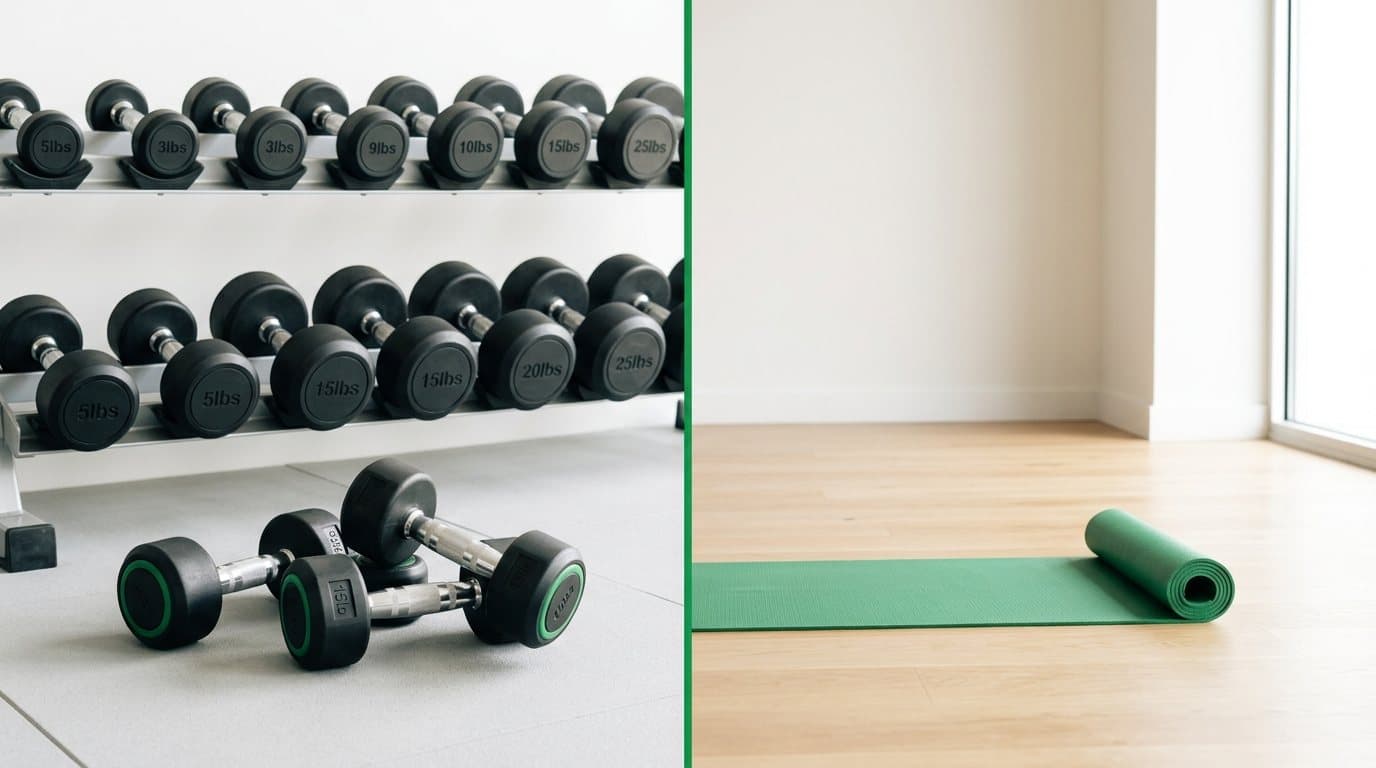
People want a scorecard, so here is one, kept fair to both. Notice that neither column is empty, which is rather the point.
| Bodyweight | Weights | |
|---|---|---|
| Cost & access | Almost none | Gym or equipment |
| Best for | Push, core, single-leg, control | Heavy pulling, precise loading |
| Progression | Leverage, tempo, range | Add small increments |
| Beginner-friendly | Very | Moderate |
| Advanced ceiling | High, needs creativity | Higher, simpler |
| Joint demand | Naturally moderate | Depends on load and form |
Read down it and you will see they trade strengths rather than one beating the other. Bodyweight removes barriers and builds beautiful control; weights make heavy loading and measurement simple. The right choice is the column that matches your life right now, not the one a stranger online insists is superior.
How to progress bodyweight without it stalling
The one fair criticism of bodyweight training is that progression feels less obvious than adding a plate. So here is how you keep getting stronger without any weight at all, the same way I coach it:
- Change the leverage. Elevate your feet on a push-up, or move to a single-leg squat. Longer levers and single limbs multiply the challenge.
- Slow the tempo. Lower over three or four seconds. Time under tension builds strength and control beautifully.
- Add a pause. Hold the hardest position for a breath before moving. Pauses expose and then build the weak point.
- Increase the range. Use handles or a step to let yourself travel further. More range, more work.
- Reduce the rest, or add reps. Small, trackable nudges that keep the muscle adapting.
Used patiently, those five levers give you years of progress without a single weight. They are why "you will plateau without a gym" is mostly a myth for the average person.
So which should you choose?
Here is how I guide people:
- If you are starting out, or value training at home, begin with bodyweight. It builds a brilliant foundation with no barriers, and many people never need anything else.
- If you have access to a gym and enjoy it, weights are a great tool, particularly for loading your back and for simple progression.
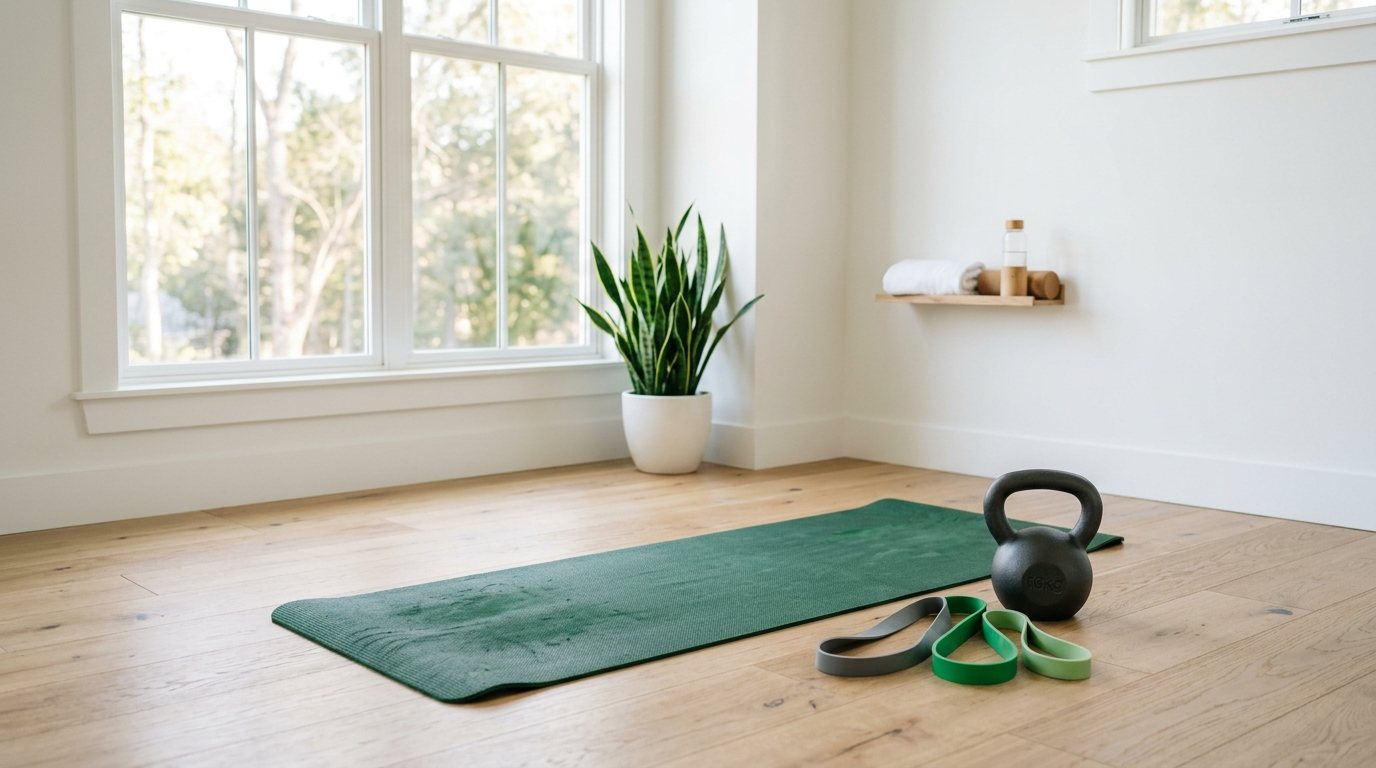
- If you want the best of both, do bodyweight work and add a few simple tools over time, like a pull-up bar or resistance bands, which cover the main gaps.
Crucially, the deciding factor should be which one you will actually do, week after week. Consistency beats the theoretical best method every time. A home routine you keep up for a year will transform you far more than a gym membership you use twice.
You are not missing out by training at home
If your honest situation is that the gym intimidates you, costs too much, or eats time you do not have, please do not let that stop you. Bodyweight training is not a consolation prize. It is a complete, effective way to get strong that happens to remove every excuse. Train with control, progress patiently, eat enough protein, and your body will get stronger, weights or no weights.
Save & share on Pinterest
Click any card to pin it — or share with someone who needs it.
Bodyweight vs Weights: Which Is Better for Building Strength?
Bodyweight or the gym? Both build real strength. Here is an honest comparison of what each does best…
Bodyweight or the gym? Both build real strength. Here is an honest comparison of…
Read the full guide: Bodyweight vs Weights: Which Is Better for Building Strength?
Free fitness tools
Bodyweight vs Weights: Which Is Better for Building Strength? — use our free calculators for instant…
Pinterest opens in a new tab. You can edit the description before saving.
Frequently Asked Questions
Is bodyweight training as good as weights?+
Can you build as much muscle with bodyweight as with weights?+
Should a beginner start with bodyweight or weights?+
Do you need weights to get strong?+
Is bodyweight or weight training better for joint health?+
Can I combine bodyweight and weights in the same routine?+
About the Author
I'm a kinesiotherapist and Pilates coach. I help people move well and get strong without breaking down, from fixing a stiff back to building real strength using nothing but their own bodyweight.
View full profile →