Intermittent Fasting and Meal Timing for Shift Workers and Long Hours

BSc Kinesiology · CPT
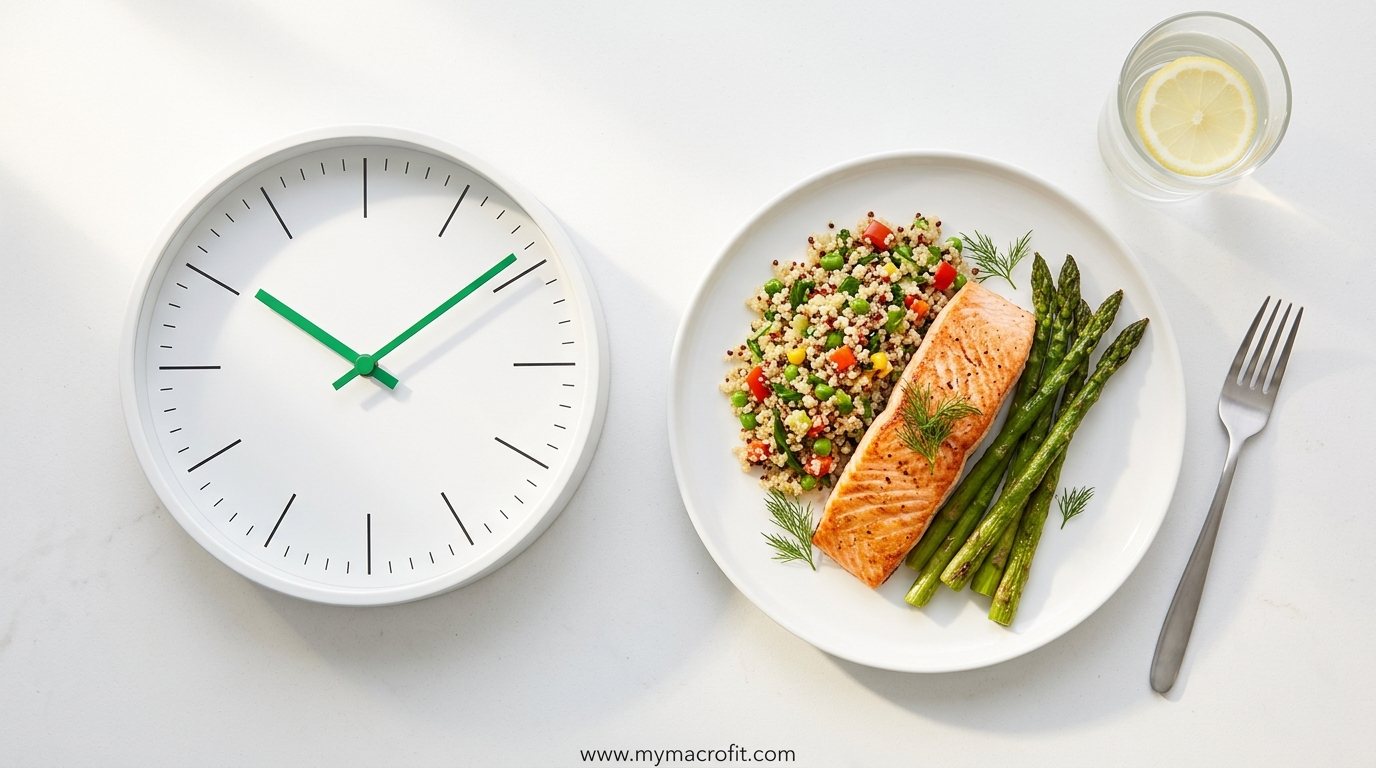
Most diet advice quietly assumes you work nine to five, sleep at eleven, and eat three meals at sensible hours. If you do night shifts, rotating rosters, twelve-hour days, or simply long unpredictable hours, that advice falls apart fast. The good news: intermittent fasting and smart meal timing can actually be easier to run on a demanding schedule than constant grazing, once you stop anchoring everything to the clock.
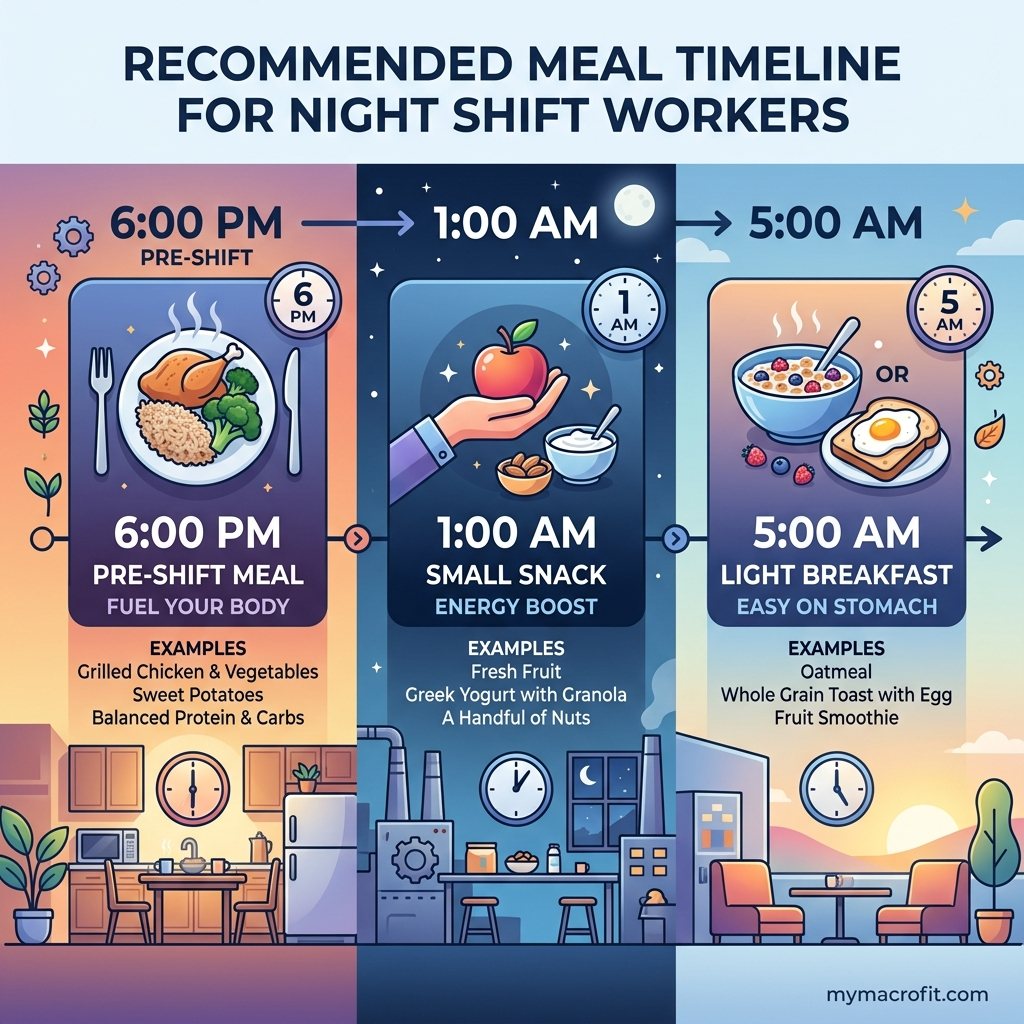
Anchor to your shift, not the clock
The single most important shift in thinking: your eating window follows your day, not the wall clock. "Eat between noon and 8pm" is meaningless if you start work at 7pm. Instead, the rules become relative to your own waking and sleeping:
- Open your eating window one to two hours after you wake, whenever that is.
- Close it two to three hours before you sleep, whenever that is.
- Keep the window roughly the same length every working day, even as the start time moves.
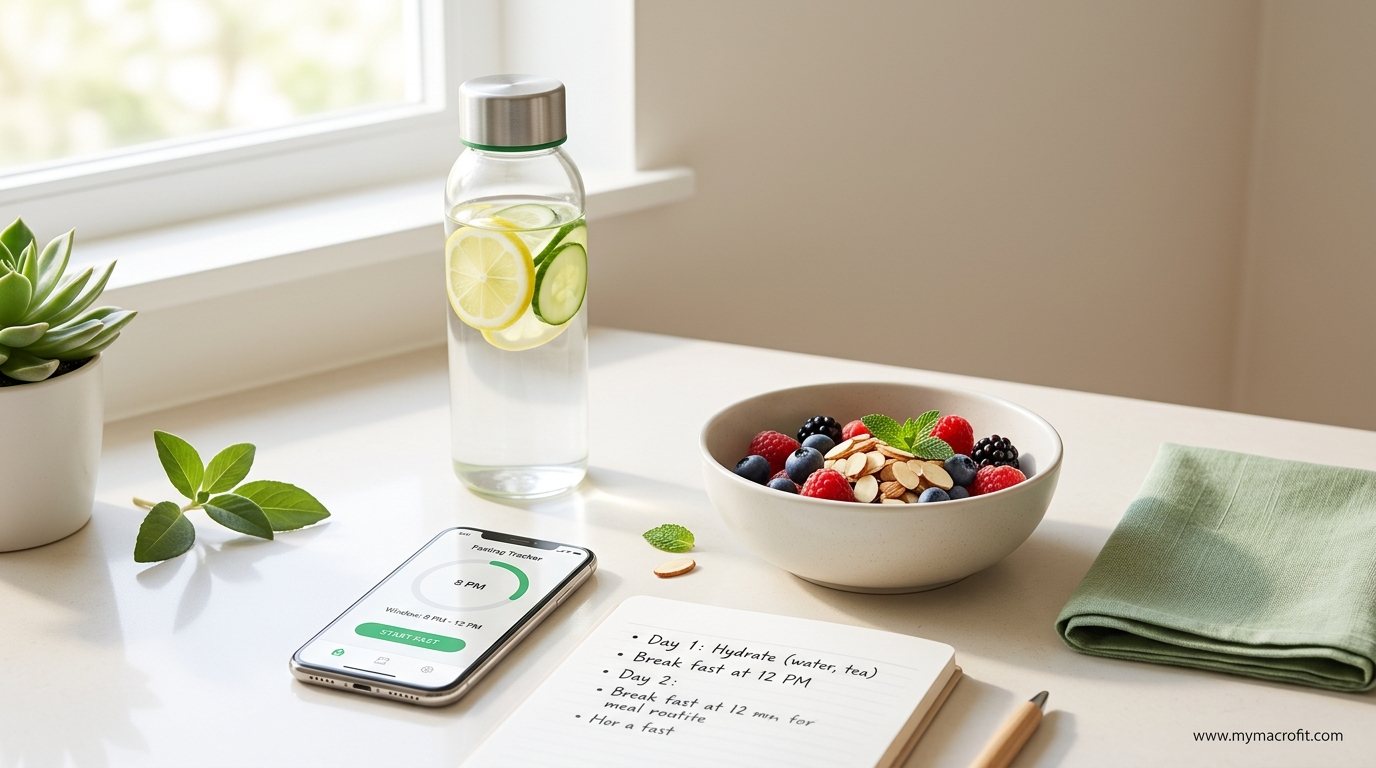
A night-shift worker who wakes at 3pm and sleeps at 7am might eat from 5pm to 1am. That's a perfectly valid 16:8, it just doesn't look like the textbook version. Use the Intermittent Fasting Calculator to set your window length, then slide it to fit your shift.
Protect sleep above everything
For shift workers, sleep isn't just recovery, it's the lever that decides whether weight loss is possible at all. Disrupted sleep raises the hunger hormone ghrelin, lowers the fullness hormone leptin, and ramps up cravings for exactly the high-sugar, high-fat food that's available in the small hours.
That's why the "stop eating before sleep" rule matters so much here. A heavy meal right before day-sleep wrecks sleep quality and digestion, then the bad sleep drives the next day's overeating. Breaking that loop, finishing food a couple of hours before bed, keeping the bedroom dark, and being strict with caffeine timing, does more for shift-worker weight loss than any clever macro split.
Prep is non-negotiable
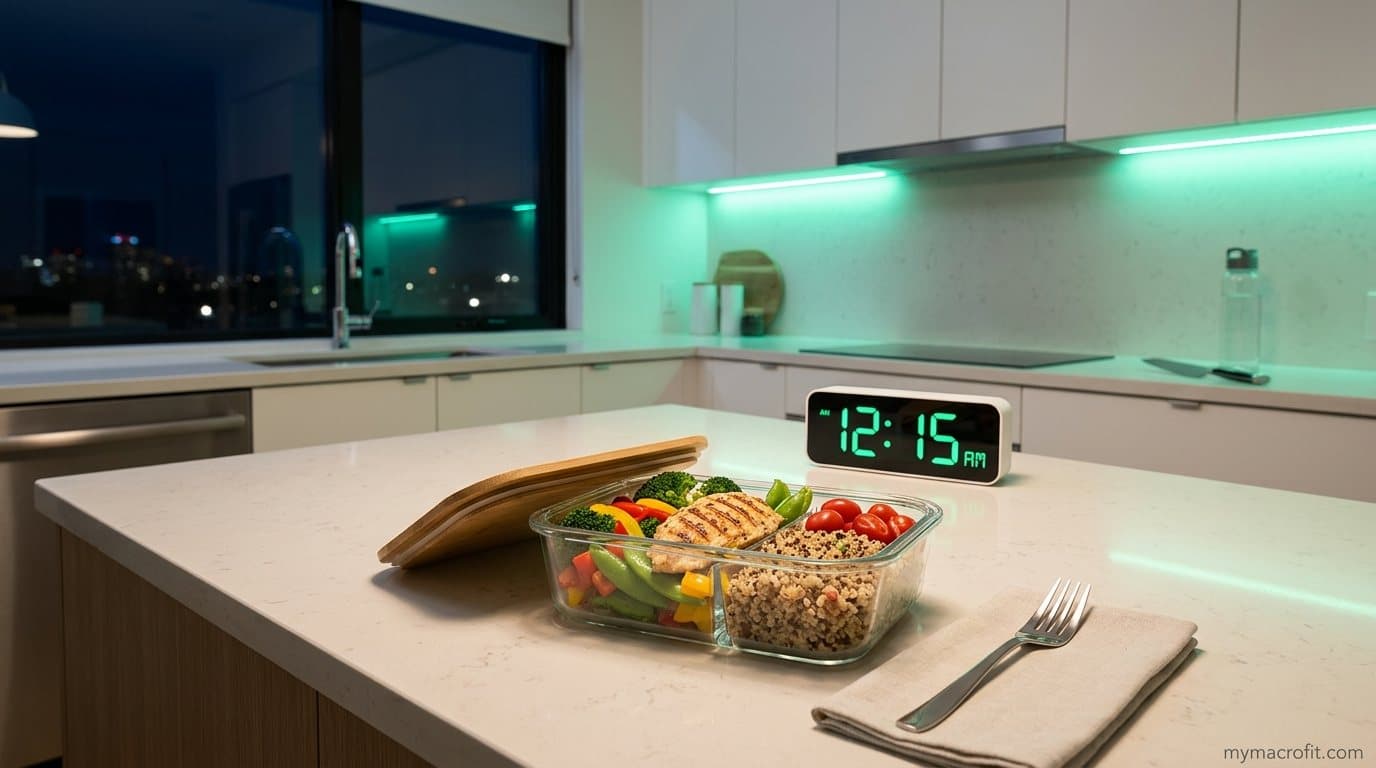
On a long or overnight shift, willpower at hour ten is not a plan. The break room vending machine and the 24-hour drive-through are. The only reliable defence is food you've already prepared:
- Front-load protein and fibre in your first meal so satiety carries you through the long middle stretch.
- Pack portable protein snacks, Greek yogurt, boiled eggs, jerky, cottage cheese, a protein shake, for the mid-shift dip.
- Keep the late-shift meal lighter, since digestion and insulin sensitivity are at their lowest in the small hours.
Batch-cooking two or three proteins and a tray of veg on your day off turns "what can I grab" into "what did I bring," which is the whole game.
Set a fasting window that fits your roster.
The free Intermittent Fasting Calculator gives you eating and fasting windows you can anchor to your shift, not the clock.
Open the IF Calculator →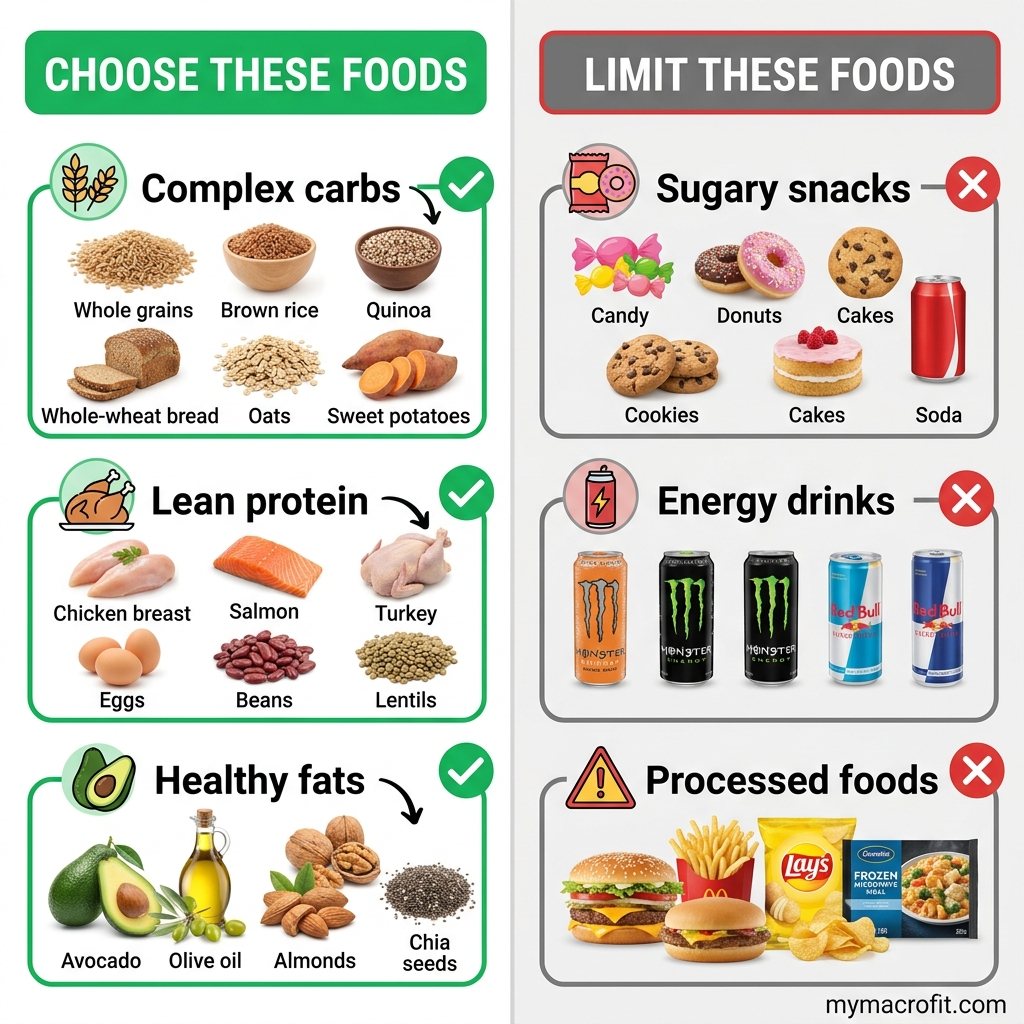
Match the fast to the work
One size doesn't fit every job:
- Desk and sedentary shifts: a standard 16:8 works well. Long hours sitting burn fewer calories than people think, so the discipline is in not turning boredom into snacking.
- Active and physical shifts: consider a gentler 14:10 and put your first meal before the physically demanding part of the shift, with some carbs in it. Trying to do heavy manual work fully fasted often leaves you flat and undermines the day.
- Rotating shifts: keep the window length constant and slide the start time. Consistency of structure matters more than consistency of timing.
A sample night-shift eating day
To make the "anchor to your shift" idea concrete, here's how a 7pm-to-7am worker who wakes around 3pm might lay out a 16:8 window, eating roughly 5pm to 1am:
| Time | Meal | Focus |
|---|---|---|
| ~5pm (pre-shift) | Main meal: protein, veg, slow carbs | Fullness for the long middle |
| ~9pm (mid-shift) | Protein snack: yogurt, eggs, jerky | Beats the hour-ten dip |
| ~12:30am (late-shift) | Light meal: protein + salad | Kept small before sleep |
| 1am-5pm | Fasting window | Includes sleep |
It looks nothing like a textbook 16:8, but it is one, the window just rides the shift instead of the clock. The heavy eating sits in the alert early hours, the tail is light and finishes before sleep, and the long fast quietly covers the time spent asleep. Slide the whole pattern earlier or later as your roster rotates.
The deficit still rules
Fasting and timing make a calorie deficit easier to hold by shrinking the hours you eat in, but they don't override it. Long shifts feel exhausting, which tricks people into thinking they've burned a huge number of calories and earned a big meal. Most shift work, especially desk-based, burns less than it feels like. The fast is a tool to manage intake; the deficit is what produces the result.

The realistic takeaway
You can absolutely lose weight on the toughest schedule. Anchor your eating window to your own wake-and-sleep cycle rather than the clock, guard your sleep like it's part of the diet (because it is), and prep food so the hard hours don't decide your meals for you. Do those three things and intermittent fasting stops being a 9-to-5 luxury and becomes one of the few diet approaches genuinely built for irregular work.
Save & share on Pinterest
Click any card to pin it — or share with someone who needs it.
Intermittent Fasting and Meal Timing for Shift Workers and Long Hours
Night shifts, 12-hour days, and unpredictable hours make most diet advice useless. Here's how to mak…
Night shifts, 12-hour days, and unpredictable hours make most diet advice useles…
Read the full guide: Intermittent Fasting and Meal Timing for Shift Workers and Long Hours
Try the free Intermittent Fasting Calculator
Intermittent Fasting and Meal Timing for Shift Workers and Long Hours — use our free calculators for…
Pinterest opens in a new tab. You can edit the description before saving.
Ready to get your numbers?
Free calculator, instant results, no signup required.
Frequently Asked Questions
Can you do intermittent fasting on night shifts?+
What should I eat on a 12-hour shift to lose weight?+
Does intermittent fasting work if you have an active or physical job?+
How do I stay consistent with eating when my schedule changes every week?+
Why is it harder to lose weight on shift work?+
Should I eat a big meal at the end of a night shift before sleeping?+
What are the best snacks to keep at work for a long shift?+
Is it better to eat before or after a night shift to lose weight?+
About the Author

I'm a kinesiologist and personal trainer. I've spent eight years helping women lose fat and get stronger without handing their whole life over to a diet.
View full profile →