How Many Calories Do I Need to Build Muscle?

BSc Kinesiology · CPT
Building muscle requires energy, you need to eat enough to fuel training, recovery, and the synthesis of new muscle protein. But how much extra do you actually need? The answer is more precise than most people expect.
Why Calories Matter for Muscle Building
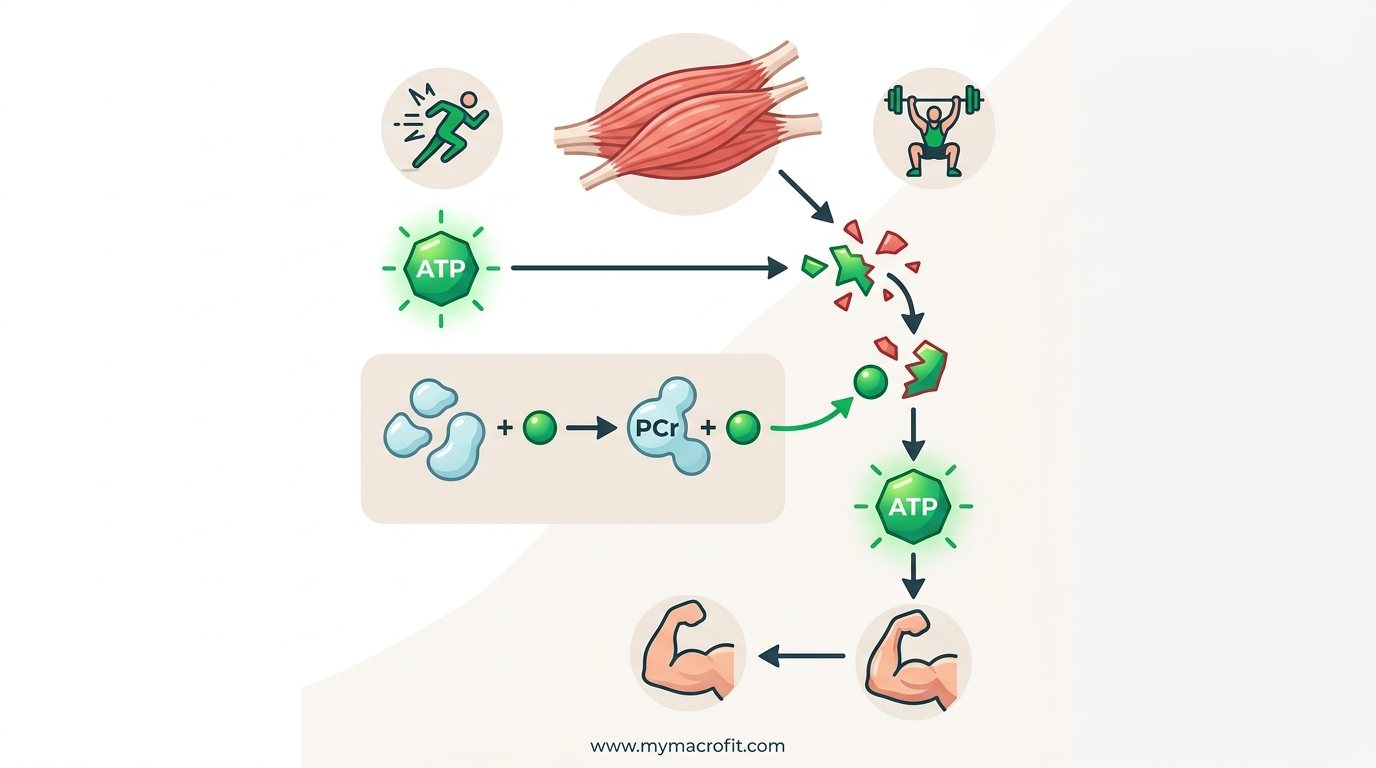
Muscle protein synthesis (MPS), the process of building new muscle, requires:
- Adequate amino acids (protein)
- Energy substrate (calories above maintenance)
- The training stimulus (progressive overload)
Without a calorie surplus, the body has insufficient energy for both basic metabolic functions and the energy cost of building new tissue. Protein is a valuable fuel source, in a deficit, some dietary protein is diverted to energy rather than muscle synthesis.
A calorie surplus ensures:
- Protein is spared for muscle synthesis (not burned for energy)
- Anabolic hormone levels (testosterone, IGF-1, insulin) remain supportive
- Recovery between sessions is fully supported
- Glycogen stores are adequate for training performance
Calculating Your Muscle-Building Calories
Step 1: Establish your TDEE (Total Daily Energy Expenditure)
This is the maintenance level, what you burn including activity. Use our Lean Bulk Calculator to calculate this based on your weight, height, age, and activity level.
Step 2: Add the surplus
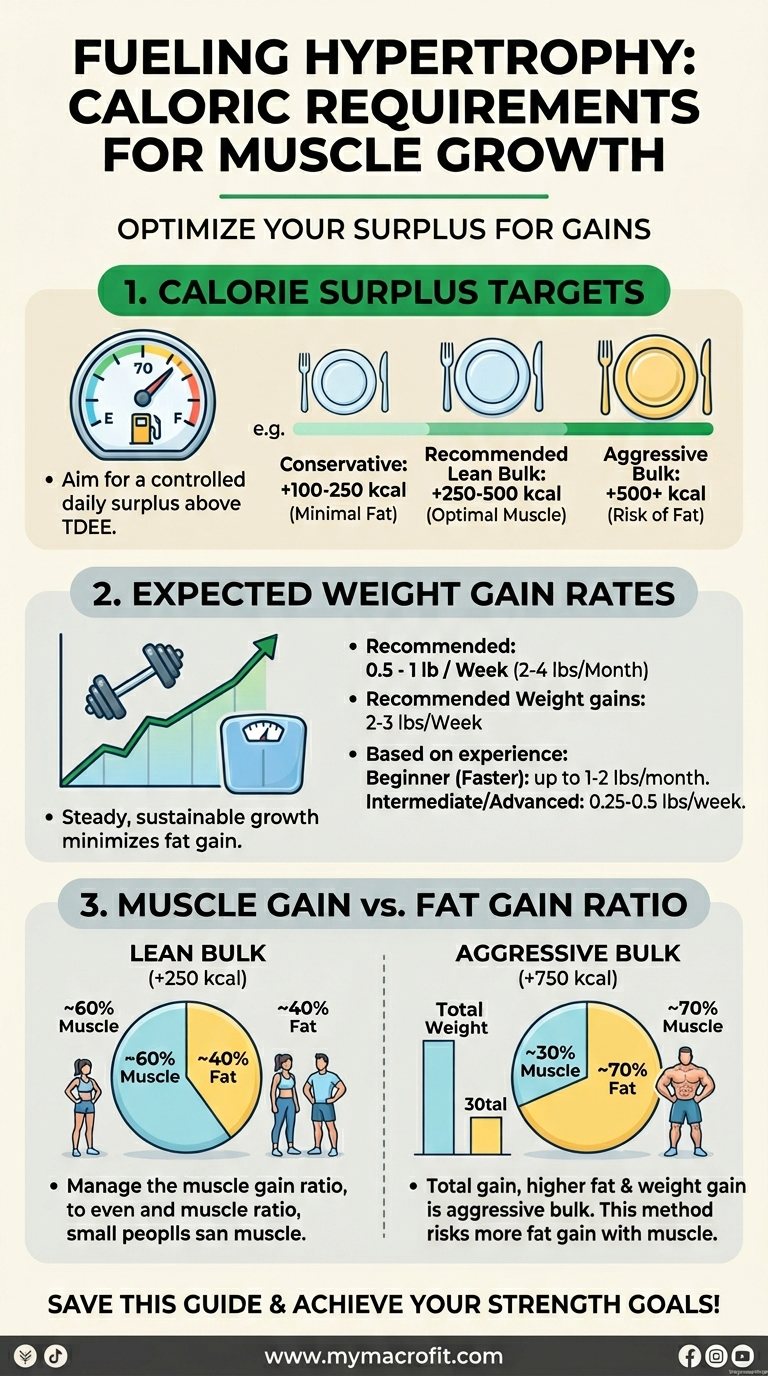
| Goal | Surplus | Expected gain/week |
|---|---|---|
| Body recomposition (beginners) | 0 kcal | 0-0.2kg (mostly muscle) |
| Conservative lean bulk | +150-200 kcal | 0.15-0.2kg |
| Standard lean bulk | +250-350 kcal | 0.2-0.35kg |
| Moderate bulk | +350-500 kcal | 0.3-0.5kg |
| Aggressive bulk (not recommended) | +500-1,000 kcal | 0.4-1kg (increasing fat gain) |
For most people starting a lean bulk: TDEE + 300 kcal is the sweet spot.
The Muscle-Building Ceiling
The most important concept: muscle can only be synthesised at a certain maximum rate regardless of calorie availability.
Maximum natural muscle gain rates:
- Beginners: 1-2kg/month
- Intermediate trainees: 0.5-1kg/month
- Advanced trainees: 0.2-0.5kg/month
To build 1kg of muscle requires approximately 5,000-7,000 kcal above maintenance (accounting for the energy cost of muscle synthesis and associated glycogen/water).
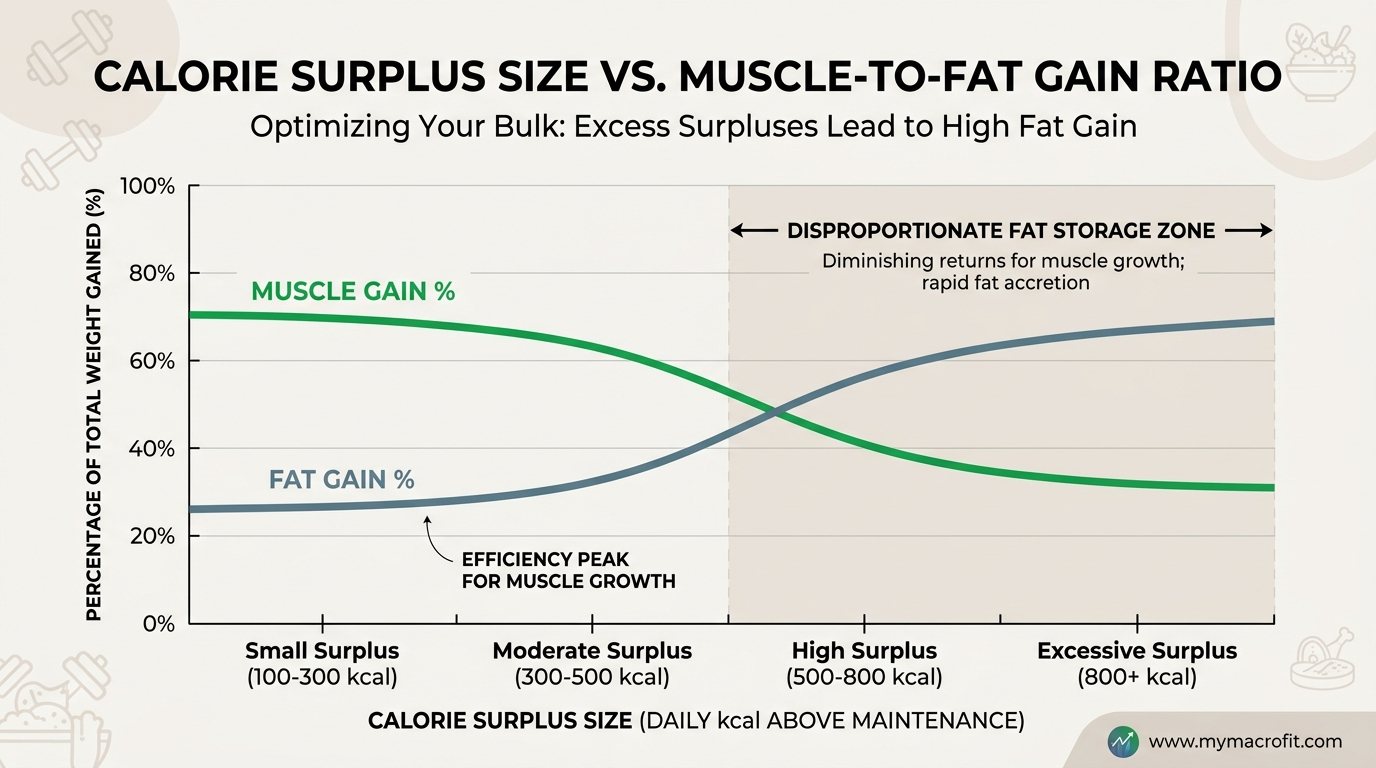
For an intermediate trainer gaining 0.5kg muscle/month, this requires approximately 5,500 kcal excess over the month, roughly +183 kcal/day. Eating 1,000 kcal/day above maintenance doesn't double muscle gain, it predominantly increases fat storage, because the surplus exceeds what muscle synthesis can use.
This is why modest surpluses produce the best muscle:fat gain ratio.
Protein Within the Surplus
Calories provide the energy; protein provides the building blocks. Both are required.
Protein target: 2-2.2g/kg bodyweight
This is non-negotiable. A calorie surplus without adequate protein increases fat storage without proportionally increasing muscle gain. The surplus should be designed as:
- Protein: 2-2.2g/kg (4 kcal/g)
- Remaining calories distributed between carbohydrates and fat
Example for a 70kg person:
- Protein: 140g × 4 kcal = 560 kcal
- TDEE: 2,000 kcal
- Surplus: +300 kcal
- Total: 2,300 kcal
- Carbohydrates + fat: 2,300 − 560 = 1,740 kcal remaining to distribute
Adjusting Based on Actual Results
The theory guides the starting point; your body's response refines it.
Week 1-2: Scale weight will likely increase more than actual gain (glycogen and water replenishment from increased carbohydrate intake). Expect 0.5-1.5kg scale increase that stabilises.
From week 3 onwards: Weekly average weight gain should be 0.2-0.4kg/week for women and 0.2-0.5kg/week for men.
Adjusting:
- Gaining less than 0.2kg/week for 3+ weeks: Add 100-150 kcal
- Gaining more than 0.5kg/week consistently: Reduce by 100-150 kcal
- Weight stable: Increase by 150-200 kcal
Reassess every 4 weeks and adjust. TDEE changes as bodyweight increases, recalculate every 4-5kg gained.
Carbohydrate Emphasis in a Muscle-Building Phase
When distributing the non-protein calories:
Carbohydrates should be prioritised over fat for the additional calories in a lean bulk:
- Carbohydrates fuel training (glycogen)
- Higher carbohydrate intake improves insulin sensitivity and MPS signalling
- Carbohydrates support growth hormone and testosterone through improved training quality
- The additional training performance from higher carbohydrate intake translates to greater muscle stimulus
Practical macro split for muscle building (70kg person, TDEE 2,000, 300 kcal surplus):
- Total calories: 2,300 kcal
- Protein: 140g (2g/kg) = 560 kcal
- Carbohydrates: ~260g = 1,040 kcal
- Fat: ~78g = 700 kcal
This carbohydrate level (3.7g/kg) is well within the range for supporting training performance.
Common Mistakes in Setting Up a Muscle-Building Calorie Target
Overestimating TDEE: Using a calculator that applies "very active" multiplier when actual activity is moderate. This produces a TDEE that's 200-400 kcal above reality, the "surplus" is actually at maintenance.
Using a surplus that's too large: Starting with +700-1,000 kcal "to build faster." This gains weight faster but predominantly as fat once it exceeds the muscle synthesis ceiling.
Not adjusting over time: As bodyweight increases, TDEE increases. A fixed calorie target that produces a surplus at 70kg may produce maintenance at 75kg. Regular recalculation is required.
Prioritising calories over protein: Eating 3,000 kcal with 100g protein will produce significantly more fat than muscle compared to the same calories with 150g protein.
The Bottom Line
The optimal calorie target for muscle building is TDEE + 250-350 kcal for most people, producing 0.2-0.4kg weight gain per week at the best muscle:fat ratio. Protein stays at 2-2.2g/kg regardless of calorie level.
Monitor weekly weight average and adjust in 100-150 kcal increments. The body's actual response is the most accurate guide, use the calculator to set your starting point and real data to refine it.
Save & share on Pinterest
Click any card to pin it — or share with someone who needs it.
How Many Calories Do I Need to Build Muscle?
The calorie requirements for muscle building, how to calculate your surplus, what rate of gain to ex…
The calorie requirements for muscle building, how to calculate your surplus, wha…
Read the full guide: How Many Calories Do I Need to Build Muscle?
Try the free Lean Bulk Calculator
How Many Calories Do I Need to Build Muscle? — use our free calculators for instant personalised res…
Pinterest opens in a new tab. You can edit the description before saving.
Ready to get your numbers?
Free calculator, instant results, no signup required.
Frequently Asked Questions
How many extra calories do I need to build muscle?+
Can you build muscle in a calorie deficit?+
What if I'm gaining weight too fast on a bulk?+
How do I know if my surplus is right or if I need to adjust?+
Do I need to count calories to build muscle, or can I just eat more?+
About the Author

I'm a kinesiologist and personal trainer. I've spent eight years helping women lose fat and get stronger without handing their whole life over to a diet.
View full profile →