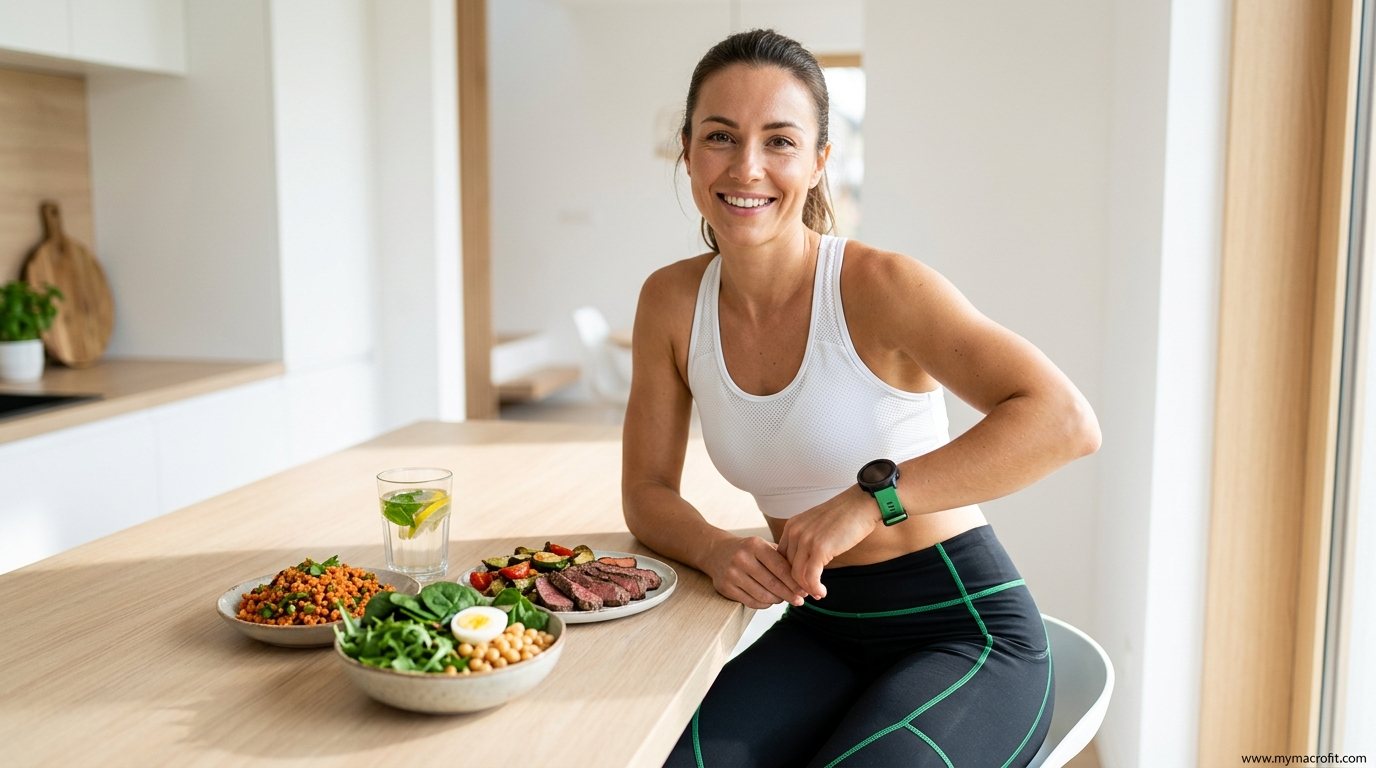
The Perimenopause Diet: What to Eat in Your 40s

RHC · Pre/Postnatal Fitness Specialist
Your 40s bring gradual but significant hormonal changes, declining oestrogen, increased hormonal fluctuation, and the beginning of the perimenopausal transition. Nutrition that worked well in your 30s may need recalibration to support this new hormonal reality.
This guide focuses specifically on the dietary adjustments that make the most difference for women in their 40s going through perimenopause.
What's Changing in Your 40s
The perimenopausal transition is characterised by:
Oestrogen fluctuation and eventual decline: Oestrogen doesn't decline linearly, it fluctuates unpredictably in perimenopause, sometimes surging higher than pre-perimenopause levels before ultimately declining. This fluctuation is responsible for many symptoms.
Progesterone decline (often first): Progesterone typically begins declining before oestrogen, creating a period of relative oestrogen dominance in the early perimenopause phase. Symptoms: heavier periods, PMS, bloating, mood changes.
Insulin sensitivity reduction: Declining oestrogen reduces insulin sensitivity, carbohydrate metabolism becomes less efficient.
Accelerated muscle loss: Oestrogen supports muscle maintenance. Its decline accelerates sarcopenia, reducing metabolic rate and increasing fat gain risk even at the same calorie intake.
Bone loss initiation: Bone density begins declining as oestrogen falls. The next 5-10 years see the fastest bone density loss of a woman's life.
The Perimenopausal Dietary Framework
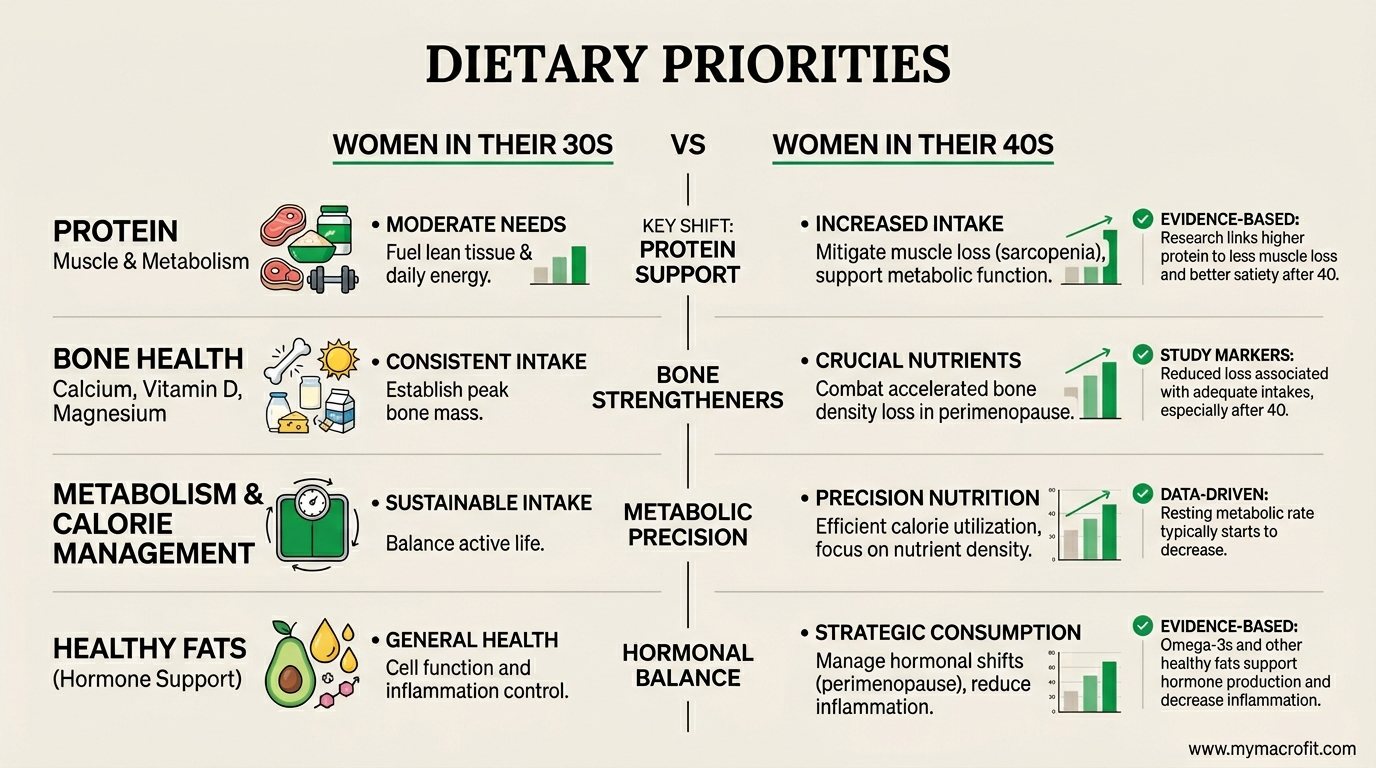
1. Protein: Increase to 1.8-2g/kg
Protein requirements increase in the 40s for two reasons: countering accelerated muscle loss and supporting satiety on a lower calorie allowance (TDEE begins declining).
Target: 1.8-2g/kg bodyweight per day, distributed across 3-4 meals.
For a 65kg woman: 117-130g/day. This is likely higher than most women are currently eating.
Prioritise protein sources at every meal:
- Breakfast: eggs, Greek yogurt, cottage cheese
- Lunch: chicken, fish, tuna, legumes
- Dinner: any lean protein 150-200g
2. Reduce Glycaemic Load
The insulin sensitivity changes of perimenopause mean the same carbohydrate-heavy diet that felt fine in your 30s may now cause blood glucose dysregulation, energy crashes, and increased fat storage.
Practical shifts:
- Replace refined carbohydrates with legumes, oats, and sweet potato
- Pair every carbohydrate with protein and fat to slow absorption
- Reduce portion sizes of starchy foods; increase non-starchy vegetables
- Limit added sugar and sugary drinks
A lower-glycaemic approach doesn't mean low-carb, it means carbohydrate quality over quantity.
3. Prioritise Phytoestrogens
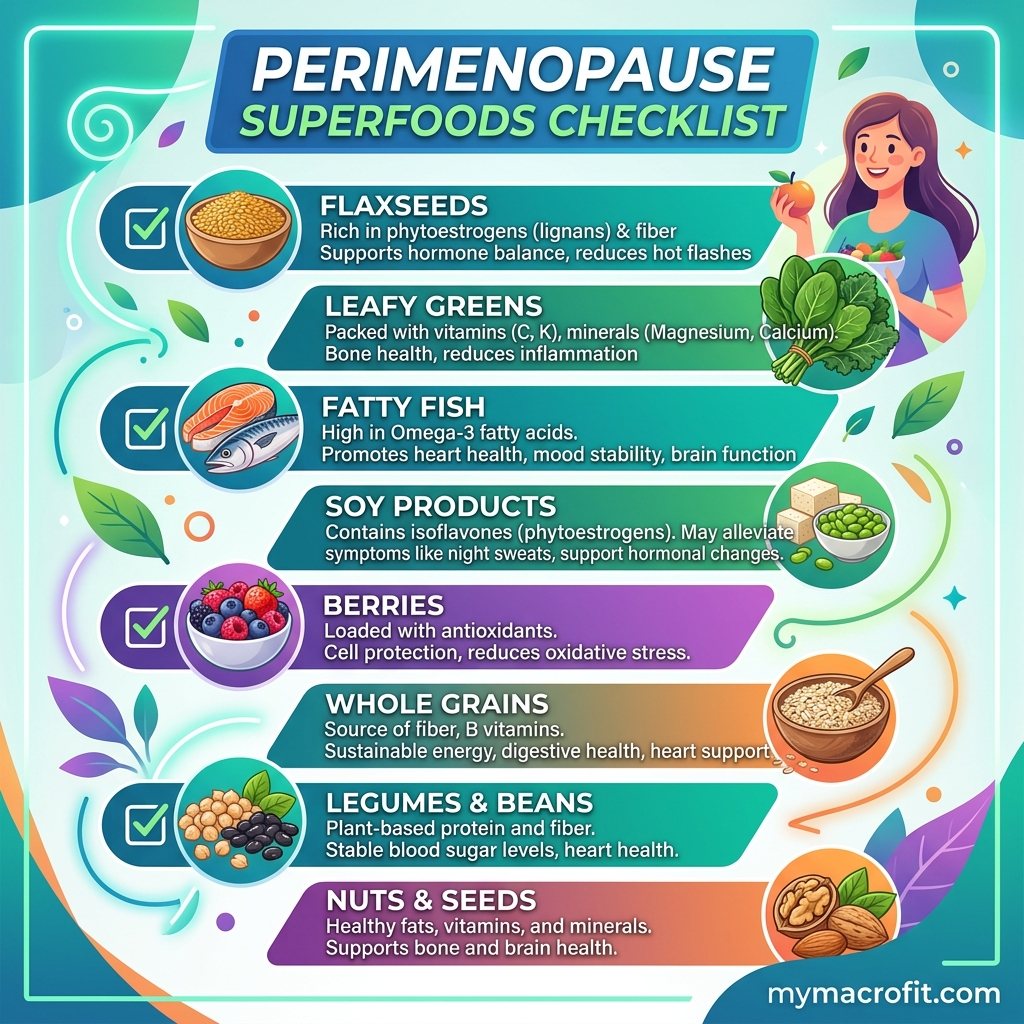
Phytoestrogens are plant compounds that weakly bind oestrogen receptors. They may modestly support oestrogen balance as levels decline and fluctuate, with some studies showing reduced hot flush frequency in women who consume them regularly.
Best dietary sources:
- Soy products: tofu, edamame, tempeh, soy milk (isoflavones, most studied)
- Ground flaxseed: 1-2 tbsp/day (lignans)
- Legumes: chickpeas, lentils
- Sesame seeds, sunflower seeds
A daily serving of soy (200g tofu or 200ml soy milk) and ground flaxseed provides a meaningful phytoestrogen intake.
4. Bone Health Foundations Begin Now
Bone loss accelerates significantly during and after menopause. The dietary foundations laid in your 40s directly influence your fracture risk in your 60s and 70s.
Daily targets:
- Calcium: 700-1,000mg (from dairy, fortified plant milks, sardines with bones, kale)
- Vitamin D: 10-25 mcg supplement daily (most people in northern latitudes cannot get adequate sun exposure)
- Vitamin K2: found in fermented foods, cheese, grass-fed animal products, directs calcium to bones
- Protein: supports bone collagen synthesis (often overlooked in bone health discussions)
5. Anti-Inflammatory Foods as the Foundation
Declining oestrogen reduces its natural anti-inflammatory effect. The result is increased inflammatory baseline, contributing to fatigue, joint aches, mood changes, and metabolic disruption.
Anti-inflammatory priorities:
- Omega-3 fatty acids: fatty fish 2-3x/week or 1-2g EPA+DHA supplement/day
- Olive oil as primary cooking fat
- Abundant colourful vegetables (polyphenols)
- Berries, cherries, leafy greens
- Turmeric and ginger in cooking
6. Fibre for Gut-Hormone Balance
The gut microbiome regulates oestrogen recycling through the estrobolome (see gut health and hormones). High-fibre eating supports beneficial bacterial diversity and oestrogen metabolism.
Target: 30g fibre/day. Current average in the UK is ~18g.
Use our Fibre Intake Calculator to assess and plan.
Easiest fibre additions: Ground flaxseed (add to yogurt or porridge), lentils at lunch, additional vegetables at dinner, apple with lunch.
Foods That Support Specific Perimenopausal Symptoms
Hot Flushes
- May help: Soy isoflavones, ground flaxseed, regular physical activity
- Avoid: Alcohol, spicy foods, hot drinks consumed rapidly, caffeine in excess
- Individual: Keep a symptom diary to identify your personal triggers
Sleep Disruption
- Evening: magnesium glycinate (200-400mg), tart cherry juice (melatonin precursor), no caffeine after 2pm
- Avoid large meals within 2 hours of bed
- Cool bedroom temperature (helpful for night sweats)
Mood Changes
- Maintain blood glucose stability (avoid sugar spikes and crashes)
- Omega-3 (evidence for depression risk reduction)
- Adequate vitamin D
- Regular exercise (most evidence-based mood intervention)
Bloating/Digestive Changes
- Introduce fermented foods gradually (kefir, yogurt)
- Ensure adequate fibre
- Reduce FODMAPs if bloating is significant (temporarily)
- Identify food triggers individually
What a Day on This Framework Looks Like
All six priorities can feel like a lot in the abstract, so here's how they quietly come together on one ordinary day, no special foods required:
| Meal | Example | Hits |
|---|---|---|
| Breakfast | Greek yogurt, ground flaxseed, berries, 2 eggs | Protein, phytoestrogens, calcium |
| Lunch | Lentil and tofu salad, olive oil, leafy greens | Protein, fibre, omega-rich fat, soy |
| Snack | Edamame or cottage cheese | Protein, phytoestrogens |
| Dinner | Salmon, sweet potato, broccoli, sesame | Omega-3, quality carbs, bone nutrients |
Look at the right-hand column: a single unremarkable day hits protein, phytoestrogens, fibre, omega-3, and bone-supporting nutrients without anyone having to "follow a perimenopause diet." That's the reassuring part, you're not adding a rigid protocol on top of your life, you're making quality swaps within meals you already enjoy.
Recalculating Your Calorie Needs
TDEE typically begins declining in the 40s. Eating the same as you did at 35 will likely produce gradual weight gain as metabolic rate slows.
Use our Menopause Calorie Calculator to estimate your updated calorie needs and confirm against your weekly weight trend.
The Bottom Line
The perimenopausal diet in your 40s focuses on: higher protein (countering muscle loss), lower glycaemic carbohydrates (reduced insulin sensitivity), phytoestrogens (hormonal support), bone health nutrients (calcium, vitamin D, K2), anti-inflammatory foods (omega-3, olive oil, vegetables), and adequate fibre (gut-hormone balance).
These aren't restrictive changes, they're quality shifts that support a body in a significant hormonal transition.
Save & share on Pinterest
Click any card to pin it — or share with someone who needs it.
The Perimenopause Diet: What to Eat in Your 40s
How nutritional needs shift in your 40s during perimenopause, the foods, nutrients, and dietary patt…
How nutritional needs shift in your 40s during perimenopause, the foods, nutrien…
Read the full guide: The Perimenopause Diet: What to Eat in Your 40s
Try the free Menopause Calorie Calculator
The Perimenopause Diet: What to Eat in Your 40s — use our free calculators for instant personalised …
Pinterest opens in a new tab. You can edit the description before saving.
Ready to get your numbers?
Free calculator, instant results, no signup required.
Frequently Asked Questions
When does perimenopause start?+
What foods trigger hot flushes?+
Does a plant-based diet help with perimenopause?+
Do I need supplements during perimenopause, or can I get everything from food?+
Is it normal to gain weight in perimenopause even eating the same?+
Should I cut carbs to manage perimenopause symptoms?+
About the Author

I'm a registered health coach and pre/postnatal specialist. I look at the whole person, your sleep, your stress, your hormones, because the number on the scale is only ever part of the story.
View full profile →