2000 Calorie Meal Plan: High-Protein Full Day of Eating

BSc Kinesiology · CPT
Here's something I tell every client who comes to me convinced that 2,000 calories is "the right amount to eat": that number on the back of your cereal box was never about you. It comes from a 1990s FDA labelling decision, a single reference figure chosen to standardise nutrition labels, not a personalised recommendation for any individual human being.
So before you decide 2,000 calories is your target, the real question is: is 2,000 a deficit, maintenance, or surplus for your body? The answer changes everything about whether this plan helps you lose fat, hold steady, or slowly gain. I'll show you how to find out, and then give you a full, high-protein day of eating that works beautifully at this intake.
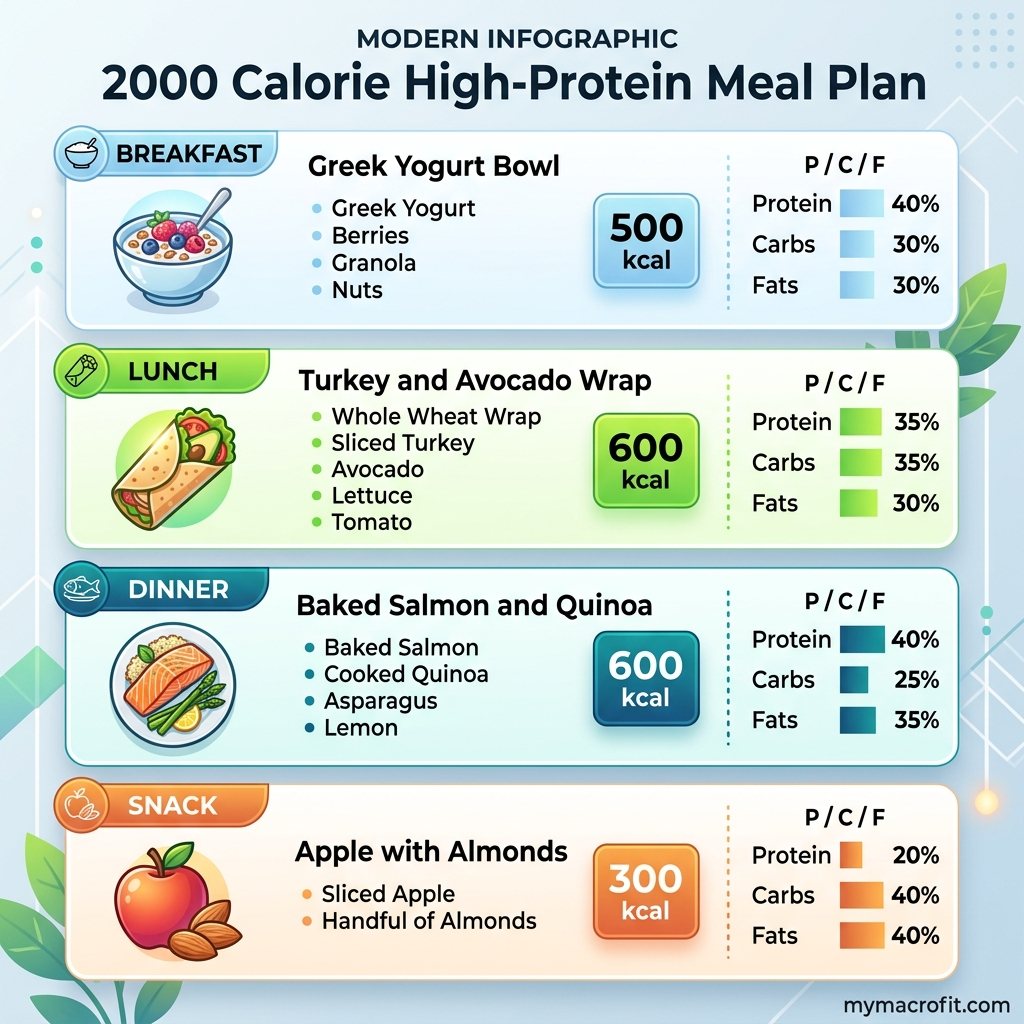
Is 2,000 Calories the Right Target for You?
In seven years of coaching, the single most common mistake I see is people copying a calorie number from somewhere, a friend, an app default, a food label, without checking it against their own body. Your actual needs depend on:
| Factor | Effect on calorie needs |
|---|---|
| Body weight | Heavier = more calories needed |
| Height | Taller = higher BMR |
| Age | Metabolic rate declines ~2-3% per decade after 30 |
| Activity level | Most significant modifier (±500-1,000 kcal) |
| Muscle mass | More muscle = higher resting burn |
Here's roughly where 2,000 kcal lands for different people:
- Approximately maintenance for: sedentary women of average height (165cm, ~65kg)
- A moderate, sustainable deficit for: moderately active women (65-80kg), sedentary men up to 75kg
- A large deficit for: active men, heavier individuals, or anyone carrying significant muscle mass
Calculate your TDEE first. And a piece of advice I give everyone: if 2,000 kcal turns out to create a deficit of more than 700 kcal for you, choose a higher target. A deficit that aggressive will cost you muscle and energy, and in my experience, it's the deficits that feel punishing that people abandon by week three.
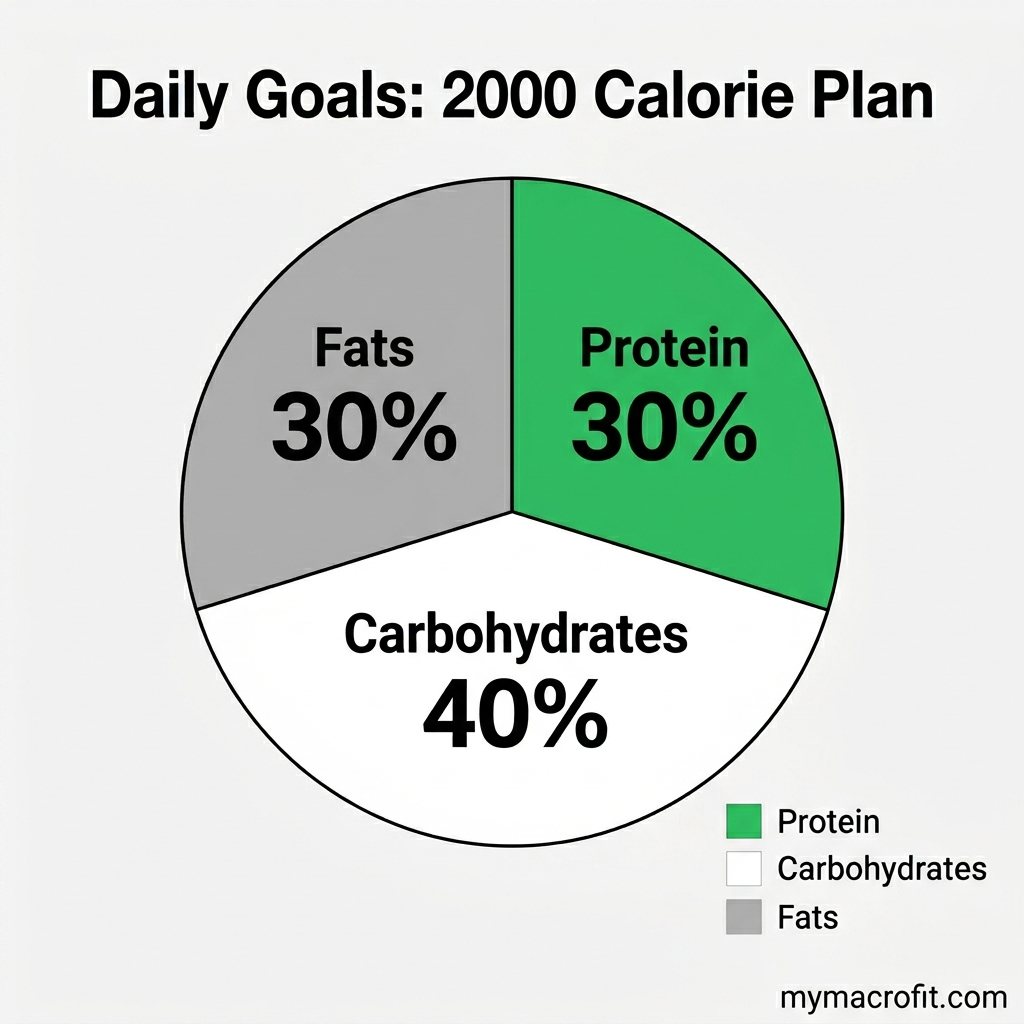
The 2,000 Calorie Meal Plan (High-Protein)
Daily targets: ~2,000 kcal · ~155g protein · ~210g carbs · ~70g fat
Notice the protein target, 155g. That's deliberate. Whether your goal is fat loss or lean muscle, protein is what protects your results. It keeps you full, preserves muscle, and has the highest thermic effect of any macro. I build every plan protein-first, then fill in the rest.
Breakfast, 450 kcal · 40g protein
Option A: Protein oats with eggs
- 80g rolled oats cooked in water (290 kcal, 10g protein)
- 1 scoop whey protein stirred in (100 kcal, 22g protein)
- 100g mixed berries (50 kcal)
- 1 tbsp peanut butter swirled through (90 kcal, 4g protein)
Option B: Full breakfast plate
- 3 whole eggs scrambled (210 kcal, 18g protein)
- 2 turkey rashers (60 kcal, 11g protein)
- 2 slices wholegrain toast (160 kcal, 8g protein)
- Large handful spinach, wilted (20 kcal)
Mid-Morning Snack, 200 kcal · 20g protein
- 200g fat-free Greek yogurt + 1 medium banana (220 kcal, 22g protein)
- Or: 200g cottage cheese + 100g pineapple (170 kcal, 23g protein)
- Or: 2 hard-boiled eggs + 1 apple (195 kcal, 13g protein)
Lunch, 550 kcal · 45g protein
Option A: Chicken rice bowl
- 180g cooked chicken breast (230 kcal, 43g protein)
- 200g cooked jasmine rice (260 kcal, 5g protein)
- 150g steamed broccoli and carrots (50 kcal)
- 1 tbsp low-sodium soy sauce + sesame oil (30 kcal)
Option B: Salmon and sweet potato
- 150g baked salmon fillet (225 kcal, 30g protein)
- 200g baked sweet potato (180 kcal, 3g protein)
- Large mixed salad with 1 tsp olive oil dressing (90 kcal)
- 1 tbsp tahini drizzle (55 kcal)
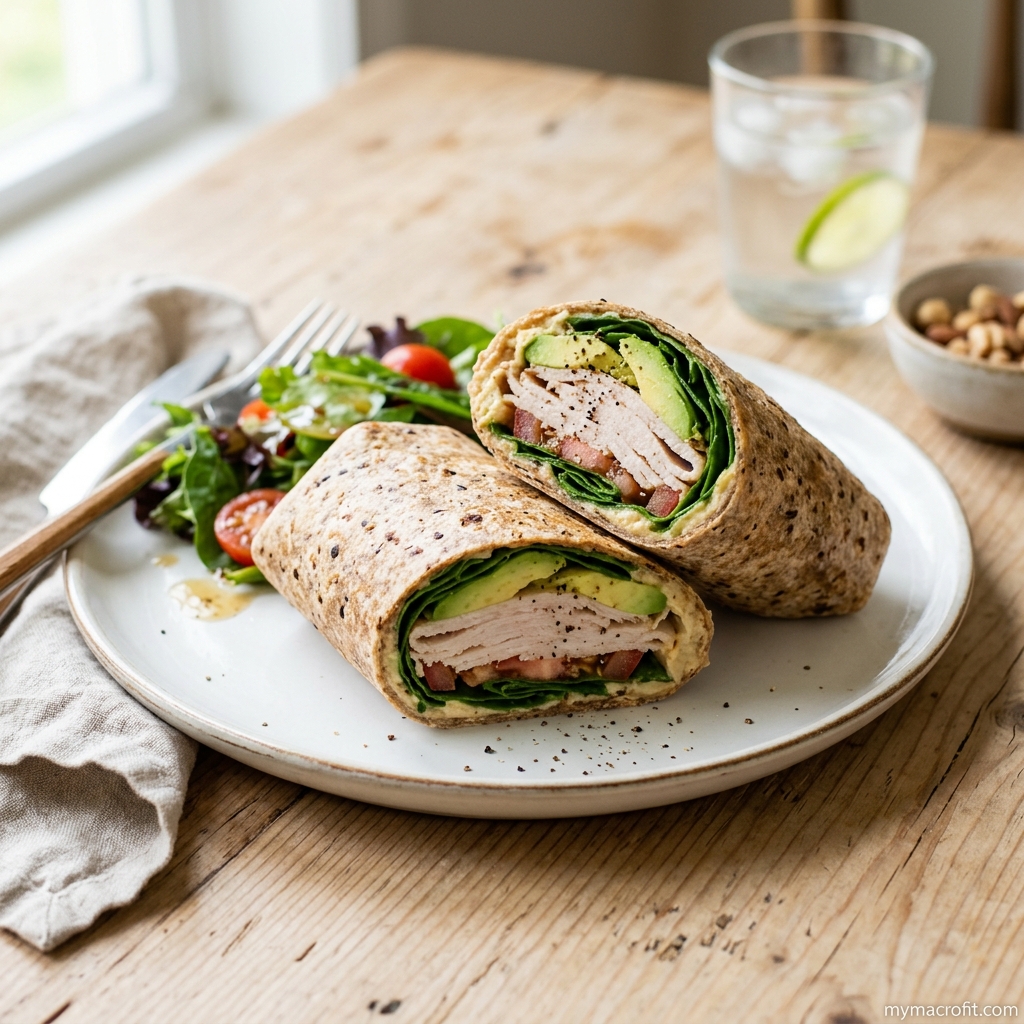
Option C: Turkey wrap
- Large wholegrain tortilla (130 kcal)
- 130g sliced turkey breast (140 kcal, 28g protein)
- 2 tbsp hummus (70 kcal, 3g protein)
- Spinach, tomato, cucumber (30 kcal)
- 30g reduced-fat cheese (80 kcal, 8g protein)
- 1 cup vegetable soup on the side (80 kcal)
Afternoon Snack, 200 kcal · 15g protein
- 1 rice cake + 2 tbsp almond butter + 1 scoop protein shake (290 kcal, trim portions to fit)
- Or: 30g almonds + 1 small orange (215 kcal, 7g protein)
- Or: 170g Greek yogurt + handful mixed nuts (220 kcal, 18g protein)
Dinner, 550 kcal · 40g protein
Option A: Beef and vegetable stir-fry
- 150g lean beef strips (250 kcal, 35g protein)
- 250g stir-fry vegetables (peppers, mushrooms, pak choi, sugar snap peas) (80 kcal)
- 150g cooked egg noodles (190 kcal)
- Low-sodium stir-fry sauce (40 kcal)
Option B: Baked chicken with roasted vegetables and rice
- 200g baked chicken thigh, skinless (230 kcal, 32g protein)
- 250g roasted mixed vegetables (courgette, red onion, cherry tomatoes, aubergine) (100 kcal)
- 150g cooked brown rice (200 kcal)
- Herbs, lemon, olive oil spray (30 kcal)
Option C: White fish and vegetables
- 200g baked cod or haddock (180 kcal, 40g protein)
- 250g roasted root vegetables (parsnips, carrots, beetroot) (180 kcal)
- 100g lentils (120 kcal, 9g protein)
- 1 tsp olive oil and herbs (45 kcal)
Daily Macro Summary
| Meal | Calories | Protein |
|---|---|---|
| Breakfast | 450 | 40g |
| Mid-morning snack | 200 | 20g |
| Lunch | 550 | 45g |
| Afternoon snack | 200 | 15g |
| Dinner | 550 | 40g |
| Total | ~1,950 | ~160g |
That slight underage at 1,950 kcal is intentional. It leaves room for the things real life involves, a splash of oil in the pan, a sauce, a square of chocolate, without blowing your target or forcing you to track every last gram obsessively. Perfection isn't the goal. Consistency is.
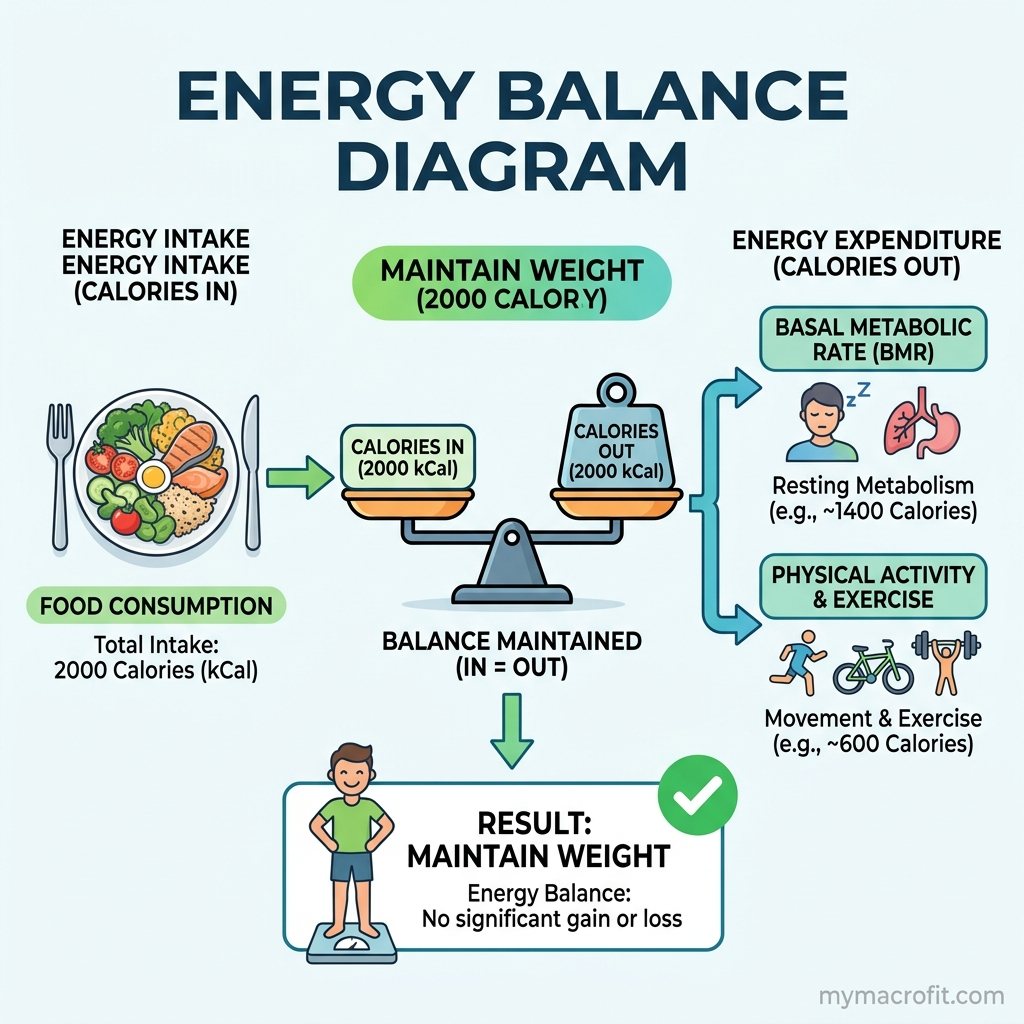
Adjusting for Your Goals
For fat loss (deficit): This plan works as-is if your TDEE is 2,300-2,500 kcal. Reduce portions by 10-15% if you want a slightly larger deficit, but resist the urge to slash much further.
For maintenance: Add 200-300 kcal through larger carbohydrate servings (bigger rice/oat portions, extra fruit, larger sweet potato).
For muscle building (lean bulk): Add 200-300 kcal above your TDEE, increase carbohydrates primarily. Keep protein at 155g+.
On training days vs rest days: Eat slightly more on heavy training days (add 100-200g extra rice or oats) and slightly less on rest days. This "calorie cycling" approach fuels the work that matters while keeping your weekly average on target.
What Actually Makes This Plan Work
I've watched hundreds of meal plans succeed and fail, and the ones that work share three features, all built into this one:
Protein at every meal and snack. The 155g daily target isn't arbitrary. Protein is the most filling macronutrient, it protects muscle during a deficit, and 25-30% of its calories are burned just digesting it. When clients tell me they're "starving" on their plan, low protein is almost always the culprit.
Volume at lunch and dinner. Large servings of non-starchy vegetables give you a physically big plate for very few calories. Feeling full is as much about the size of the meal in front of you as the calories in it.
Flexible options, not rigid rules. Each meal offers 2-3 swaps. The plan you'll actually follow beats the "perfect" plan you abandon out of boredom, every single time.
Related reading: What to Eat on 1,500 Calories · High-Protein Meal Prep · How to Calculate Your Macros
Sources
- EFSA Panel on Dietetic Products. Dietary Reference Values for energy. EFSA Journal, 2013.
- Helms ER, et al. Protein requirements during energy restriction in resistance-trained athletes. British Journal of Nutrition, 2014.
- Hall KD, et al. Energy balance and its components. American Journal of Clinical Nutrition, 2012.
Save & share on Pinterest
Click any card to pin it — or share with someone who needs it.
2000 Calorie Meal Plan: High-Protein Full Day of Eating
A complete 2000 calorie meal plan with breakfast, lunch, dinner, and snacks, optimised for high prot…
A complete 2000 calorie meal plan with breakfast, lunch, dinner, and snacks, opt…
Read the full guide: 2000 Calorie Meal Plan: High-Protein Full Day of Eating
Try the free Macro Calculator
2000 Calorie Meal Plan: High-Protein Full Day of Eating — use our free calculators for instant perso…
Pinterest opens in a new tab. You can edit the description before saving.
Ready to get your numbers?
Free calculator, instant results, no signup required.
Frequently Asked Questions
Is 2000 calories a day right for me?+
What macros should I aim for on 2000 calories?+
Will I lose weight on 2000 calories a day?+
Is 2000 calories enough for someone who exercises regularly?+
About the Author

I'm a kinesiologist and personal trainer. I've spent eight years helping women lose fat and get stronger without handing their whole life over to a diet.
View full profile →