
Maintenance Calories: What They Are and How to Find Yours

BSc Kinesiology · CPT
Every calorie goal you'll ever set, for fat loss, muscle gain, or just holding steady, is built on one number most people never actually calculate: their maintenance calories. Skip it and you're guessing at everything downstream. Nail it and the rest of nutrition becomes simple subtraction or addition. Here's what maintenance calories are, how to find yours, and why they're the most important number in your diet.
What maintenance calories are
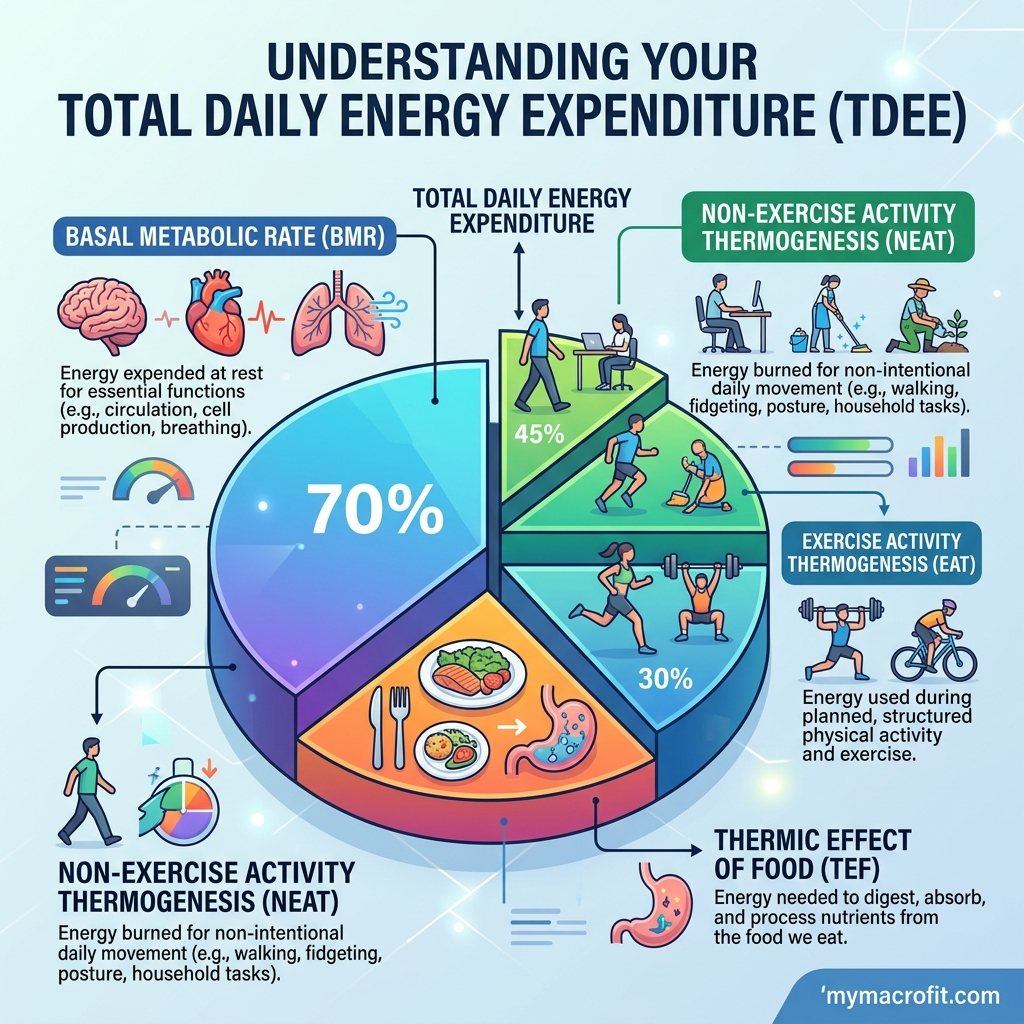
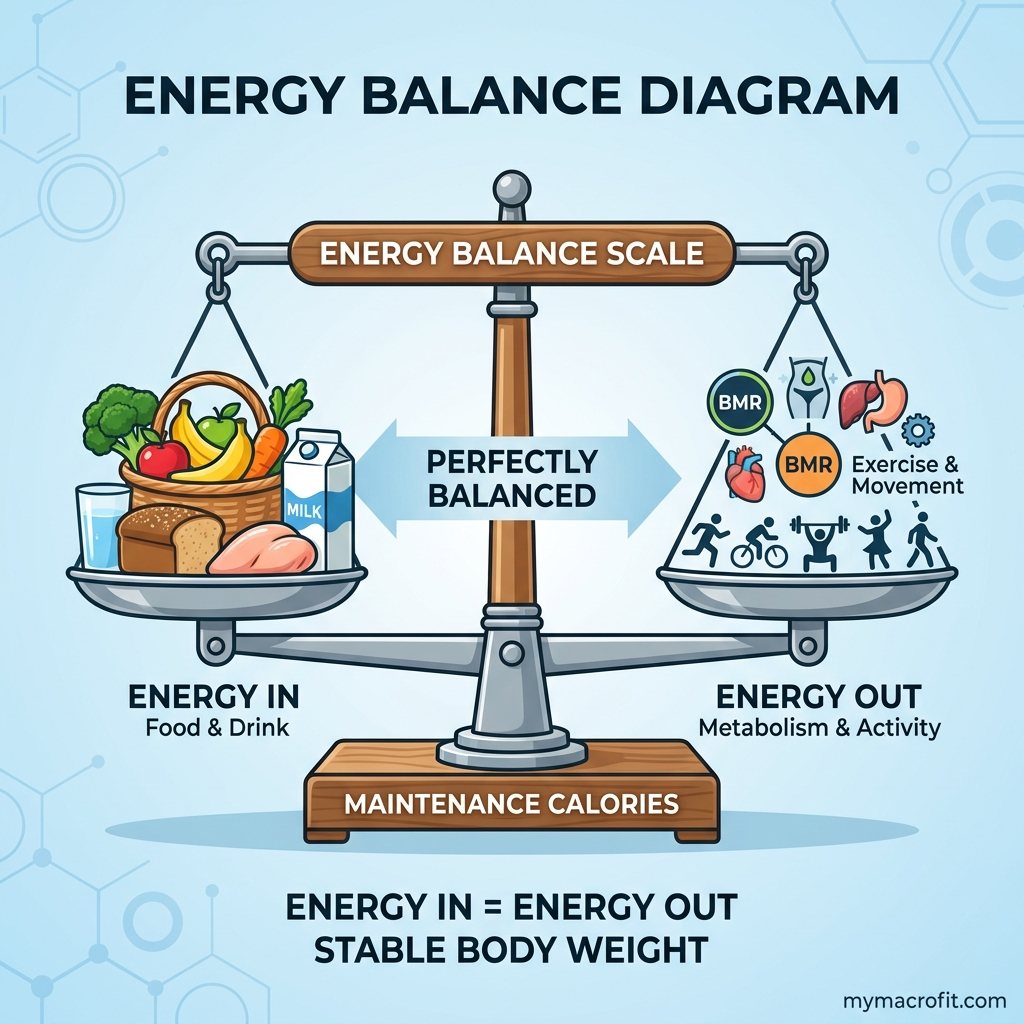
Maintenance calories are the amount you can eat to keep your weight stable, calories in matching calories out. They're another name for your TDEE (Total Daily Energy Expenditure): your resting metabolism plus everything you burn moving, training, and digesting.
This number is your zero point:
- Eat below maintenance → lose fat.
- Eat at maintenance → stay the same.
- Eat above maintenance → gain weight (muscle if you train, fat if you don't).
How to find yours
There are two steps, estimate, then verify.
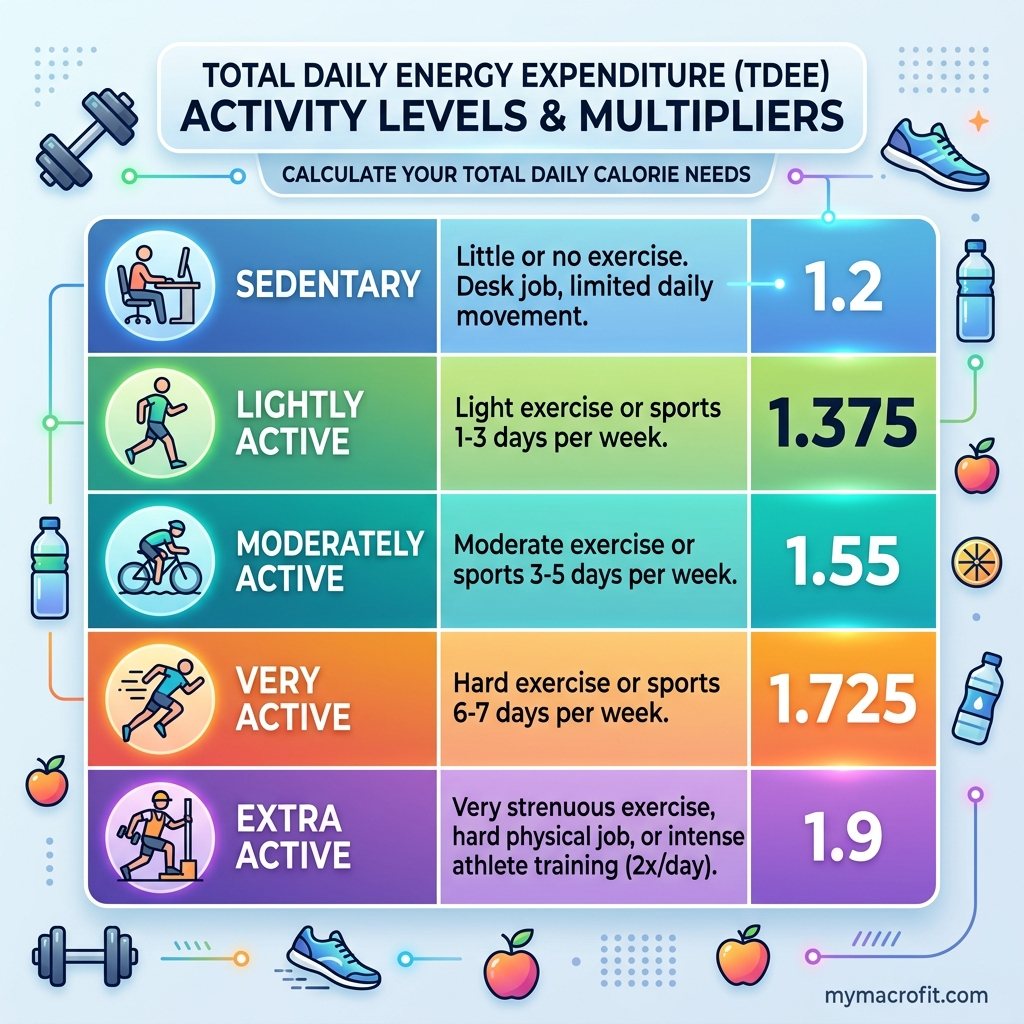
1. Estimate. The TDEE Calculator computes your maintenance from your age, height, weight, and activity using the Mifflin-St Jeor equation. Be honest about activity, overestimating it is the most common error.
2. Verify. Eat at that estimate for 2-3 weeks while tracking your average weekly weight:
| 2-3 week result | What it means | Action |
|---|---|---|
| Weight stable | Estimate is your real maintenance | Lock it in |
| Slowly gaining | True maintenance is lower | Reduce ~150 cal, retest |
| Slowly losing | True maintenance is higher | Add ~150 cal, retest |
Now you have a maintenance number based on your data, not just a formula.
Find your maintenance calories.
The free TDEE Calculator gives you the number every goal is built on.
Calculate My Maintenance →Why it's the most important number
Once you know maintenance, every goal is trivial arithmetic:
- Fat loss: maintenance − 15-25% (set it with the Calorie Deficit Calculator).
- Muscle gain: maintenance + ~10% (set it with the Lean Bulk Calculator).
- Maintain or recomp: eat at maintenance, push protein high, train hard.
Then split whichever target into protein, carbs, and fat with the Macro Calculator. Without maintenance as the anchor, all of this is guesswork.
BMR, TDEE, maintenance: clearing up the jargon
These three terms get thrown around interchangeably and it confuses people, so here's the plain-English version:
| Term | What it is | Rough size |
|---|---|---|
| BMR | Calories to keep you alive at complete rest | ~60-70% of total |
| TDEE | BMR plus all movement, exercise, and digestion | The full number |
| Maintenance | The intake that holds your weight | Same as TDEE |
So maintenance and TDEE are the same number, and BMR is just the resting chunk inside it. The gap between BMR and maintenance is everything you do all day: walking, fidgeting, training, even digesting food. That gap is also the part you have the most control over, which is why two people the same size can have maintenance numbers 400 calories apart.
What quietly moves your maintenance day to day
Maintenance isn't one fixed figure even within a single week. A few things nudge it more than people expect:
- NEAT (non-exercise movement). The steps, fidgeting, and standing you do outside the gym. It can swing by hundreds of calories and tends to drop when you diet, which is a big reason fat loss slows.
- Activity honesty. A genuinely active job versus a desk job is often the single biggest difference between two people's maintenance.
- Muscle mass. More muscle nudges your resting burn up, one of the lasting perks of lifting.
- Sleep and stress. Poor sleep and high stress don't change the maths dramatically, but they affect hunger and how much you move, which shows up in the result.
You don't need to track any of this. You just need to know that "maintenance" is a living average, which is why you verify it against the scale rather than trusting one calculator number forever.
It's a moving number
Maintenance isn't fixed. It drops as you lose weight, rises as you add muscle, and changes with activity, age, and hormones. That's why a deficit that worked at the start eventually slows, your maintenance fell to meet your intake. Recalculate every 4-5kg; see how to adjust macros when weight loss stalls.
The underrated skill: eating at maintenance
Most people only think about deficits, but learning to eat at maintenance is what makes results last. A reverse diet back to maintenance after a cut restores energy and hormones and prevents rebound, and long term, comfortably eating at maintenance is exactly what keeping the weight off looks like.
Lock in the one number first
Maintenance calories are the foundation of every diet: the number that holds your weight, from which deficits and surpluses are measured. Estimate yours with the TDEE Calculator, verify it against two to three weeks of real data, and recalculate as your body changes. Everything else in nutrition gets easier once this number is locked in.
If you do one thing this week, find and verify your maintenance before you set any deficit. It's tempting to skip straight to "how low do I go", but a deficit measured from a wrong maintenance number is just a guess with decimals. Get the anchor right and the fat loss, the muscle gain, and the keeping-it-off all become simple arithmetic.
Save & share on Pinterest
Click any card to pin it — or share with someone who needs it.
Maintenance Calories: What They Are and How to Find Yours
Maintenance calories are the foundation of every diet, the number that keeps your weight stable. Her…
Maintenance calories are the foundation of every diet, the number that keeps you…
Read the full guide: Maintenance Calories: What They Are and How to Find Yours
Try the free TDEE Calculator
Maintenance Calories: What They Are and How to Find Yours — use our free calculators for instant per…
Pinterest opens in a new tab. You can edit the description before saving.
Ready to get your numbers?
Free calculator, instant results, no signup required.
Frequently Asked Questions
What are maintenance calories?+
How do I calculate my maintenance calories?+
Why should I know my maintenance calories before dieting?+
Do maintenance calories change over time?+
Can eating at maintenance help after a diet?+
Why is my real maintenance lower than the calculator says?+
About the Author

I'm a kinesiologist and personal trainer. I've spent eight years helping women lose fat and get stronger without handing their whole life over to a diet.
View full profile →