Cutting Diet Plan: How to Lose Fat While Keeping Your Muscle

CN · Metabolic Health Coach
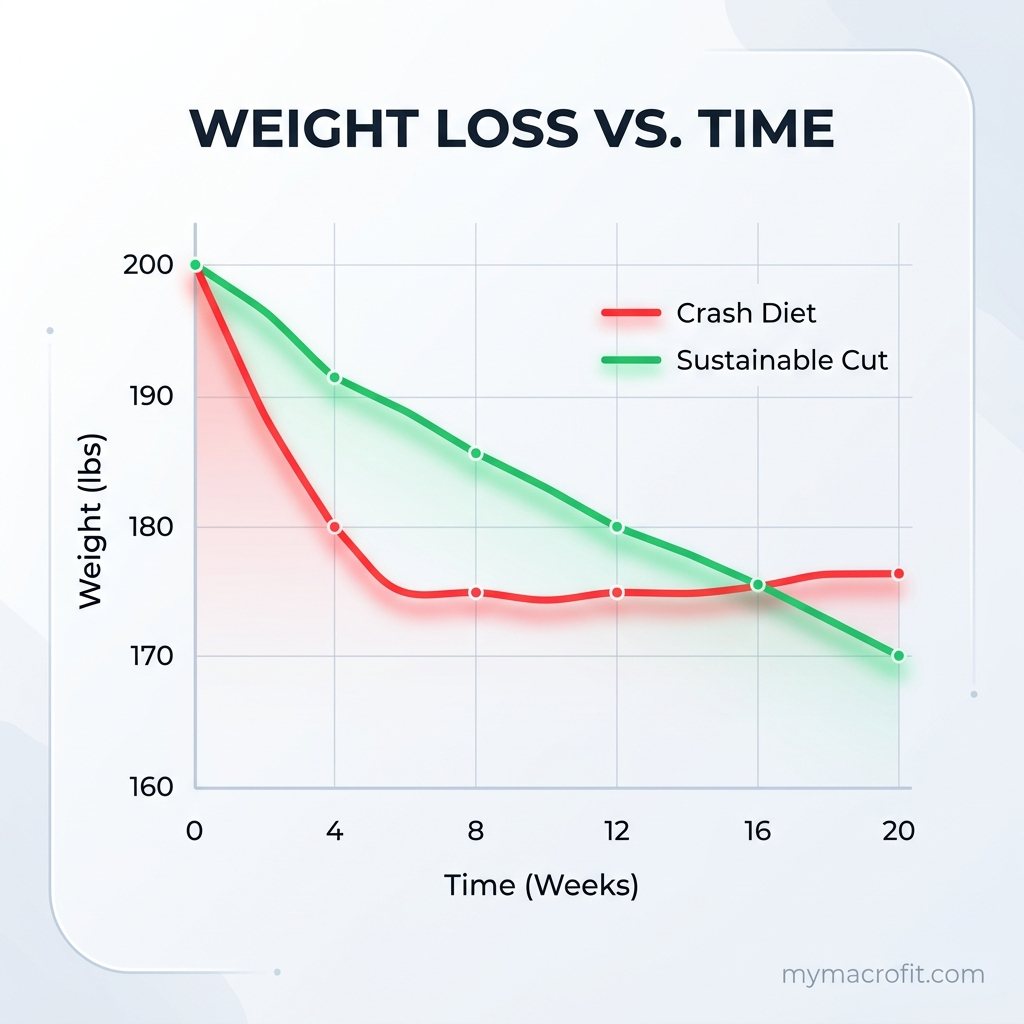
There's a version of fat loss that leaves you smaller but softer, lighter on the scale, yet somehow less defined than when you started. I see it constantly in clients who come to me after a crash diet: they lost 8kg, and roughly half of it was muscle. That's the difference between dieting and cutting.
A proper cut is a strategic period of fat loss, a calorie deficit held alongside high protein and continued training, so you lose fat while keeping the muscle you worked to build. Done well, you finish leaner and more defined. Done badly, you end up "skinny fat" and frustrated. Having guided hundreds of people through this, here's exactly how to do it right.
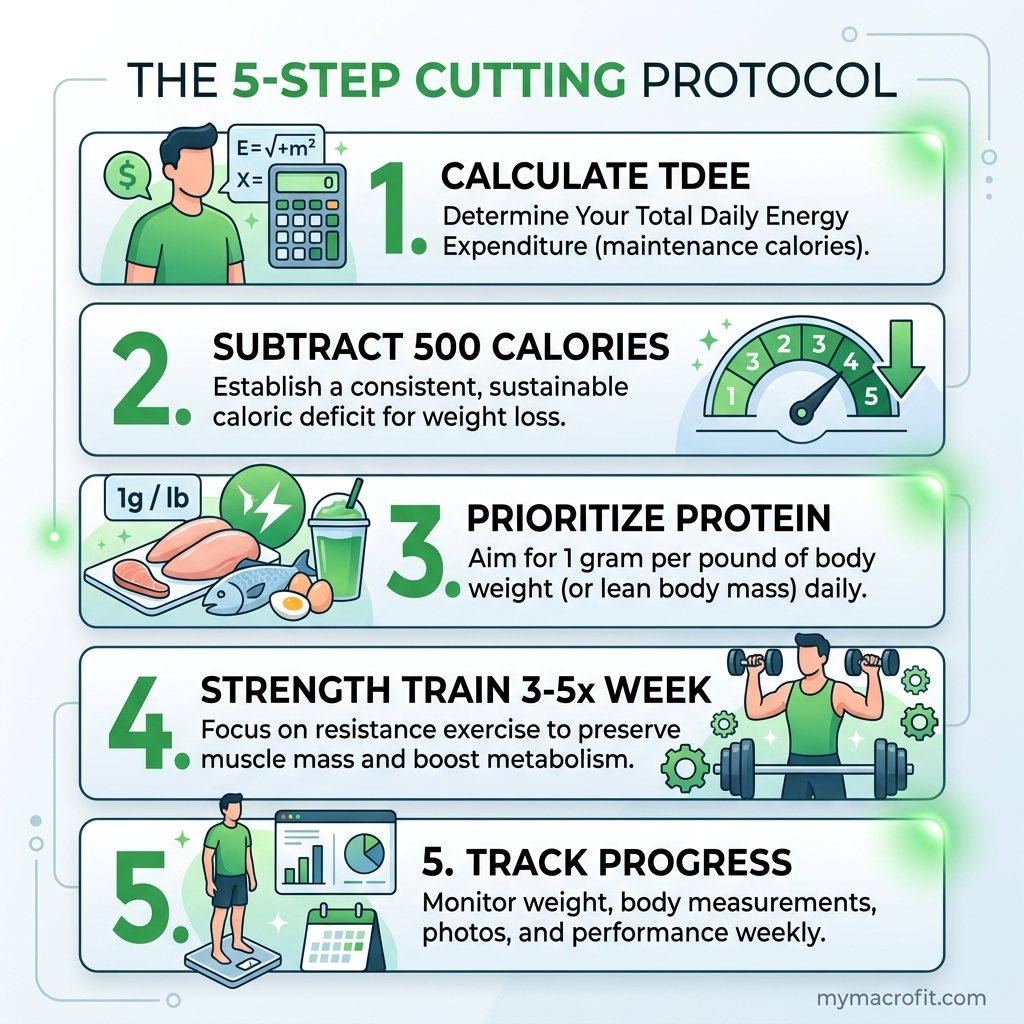
What Is a Cutting Diet?
A cut is a controlled calorie deficit phase with three goals:
- Lose body fat, by eating below TDEE
- Preserve muscle mass, through high protein and continued training
- Maintain performance, so training quality stays high enough to signal muscle retention
It's different from "just dieting" because it's structured, time-limited, and protein-focused. Most people who "diet" and lose weight lose 30-50% of that weight from muscle. A proper cut targets 90%+ fat loss.
Step 1: Set Your Calorie Target
Your cut calorie target = TDEE − deficit.
Choosing your deficit:
| Deficit | Weekly fat loss | Risk |
|---|---|---|
| 200-300 kcal/day | ~0.2kg/week | Very low muscle loss risk |
| 300-500 kcal/day | ~0.3-0.5kg/week | Low, recommended for most |
| 500-700 kcal/day | ~0.5-0.7kg/week | Moderate, high protein required |
| 700-1,000 kcal/day | ~0.7-1kg/week | Higher muscle loss, harder to sustain |
Floor rule: Never eat below 1,200 kcal (women) or 1,500 kcal (men). Below these thresholds, micronutrient needs cannot be met and lean mass loss accelerates severely.
A word from experience: almost everyone wants to pick the biggest deficit on this table. Resist that. The 300-500 kcal range isn't the "slow" option, it's the smart one. It's where you keep your strength, your sanity, and your muscle, and it's the range people actually finish. An aggressive cut you quit in week three loses to a moderate cut you complete every time.
→ Use the TDEE Calculator then subtract your deficit.
Step 2: Set Your Macros
This is what separates a proper cut from general calorie restriction.
Protein, Set This First
Protein is the cornerstone of a cut. High protein:
- Directly signals muscle retention
- Is the most satiating macronutrient, reduces hunger significantly
- Has a high thermic effect (25-30% of protein calories burned in digestion)
Target: 1.8-2.4g per kg of bodyweight
| Bodyweight | Minimum protein | Optimal protein |
|---|---|---|
| 60kg | 108g/day | 132g/day |
| 70kg | 126g/day | 154g/day |
| 80kg | 144g/day | 176g/day |
| 90kg | 162g/day | 198g/day |
Carbohydrates, Fuel Training
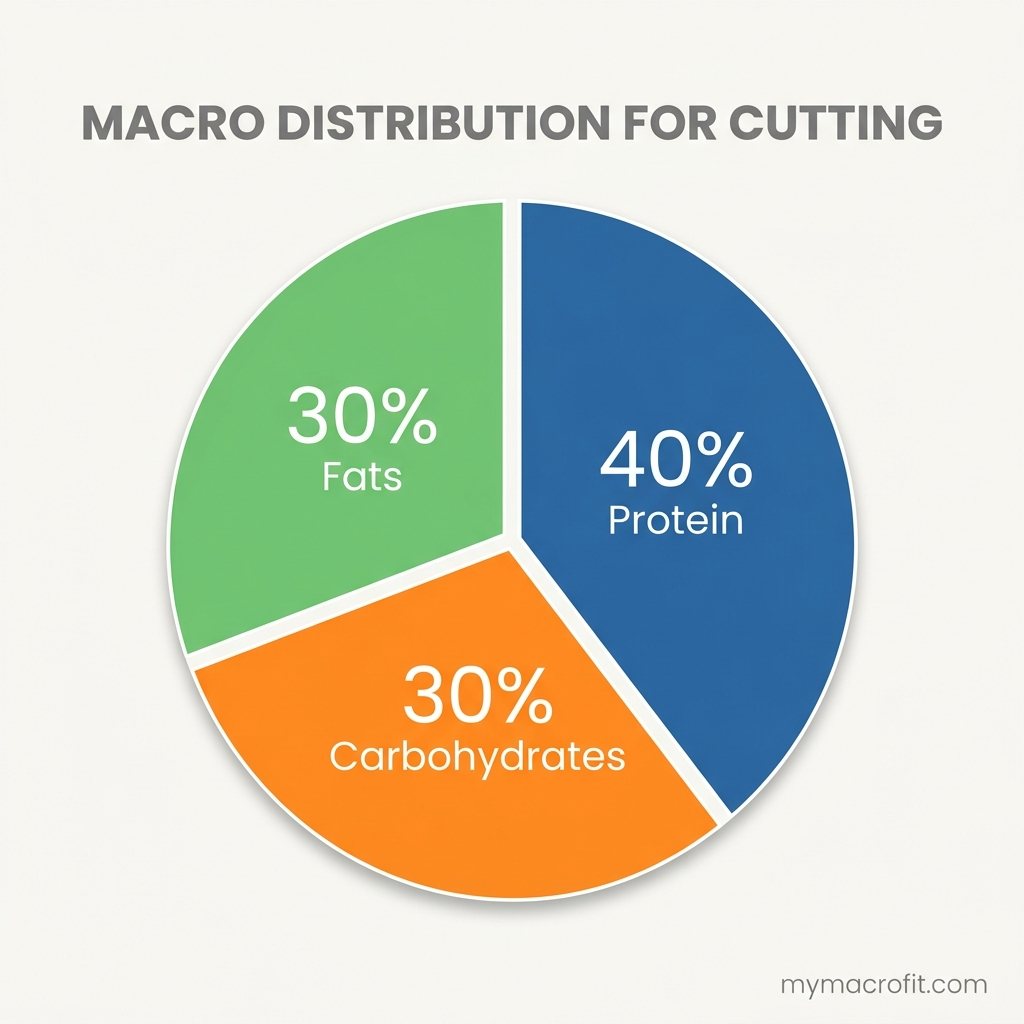
Keep carbohydrates high enough to maintain training quality. Strength performance drops measurably at low carb intakes, and reduced performance = reduced muscle retention signal.
Typical range: 35-45% of total calories from low-to-moderate GI carbs.
Fat, Minimum for Hormones
Fat should not go below 0.7g/kg. Below this, testosterone (men) and oestrogen (women) decline, impairing recovery, mood, and metabolic rate.
Typical range: 20-30% of total calories.
Example cutting macros, 75kg person, 1,800 kcal target:
| Macro | Target | Grams |
|---|---|---|
| Protein | 34% (612 kcal) | 153g |
| Carbohydrates | 40% (720 kcal) | 180g |
| Fat | 26% (468 kcal) | 52g |
Step 3: Choose Your Foods
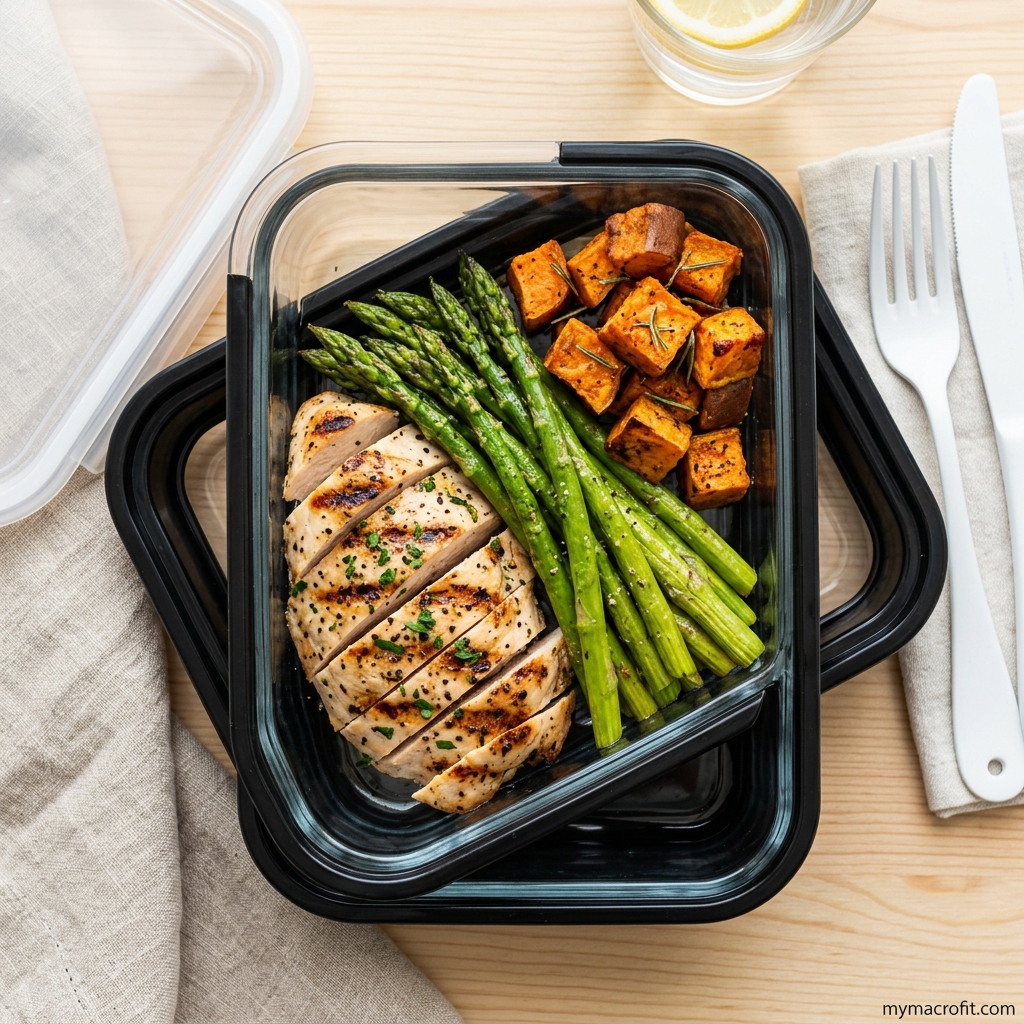
Best Cutting Foods (High Protein, High Volume, Low Calorie)
Protein anchors:
- Chicken breast, 31g protein/100g cooked, ~165 kcal
- White fish (cod, haddock, tilapia), 20g protein/100g, ~100 kcal
- Egg whites, 11g protein/100ml, 52 kcal
- Non-fat Greek yogurt, 10g protein/100g, 57 kcal
- Cottage cheese (low fat), 12g protein/100g, 72 kcal
- Tuna (canned in water), 23g protein/100g, 116 kcal
High-volume carbs:
- Oats, filling, slow-digesting
- Sweet potato, nutrient-dense, satisfying
- Rice, easy to portion, pairs with anything
- Fruit, low calorie density, high fibre
Volume vegetables (essentially free calories):
- Spinach, broccoli, courgette, mushrooms, cucumber, lettuce, eat as much as you want
Healthy fats (portion carefully, high calorie):
- Olive oil (1 tbsp = 120 kcal)
- Avocado (half = 120 kcal)
- Nuts (30g = 180 kcal)
Step 4: Structure Your Meals
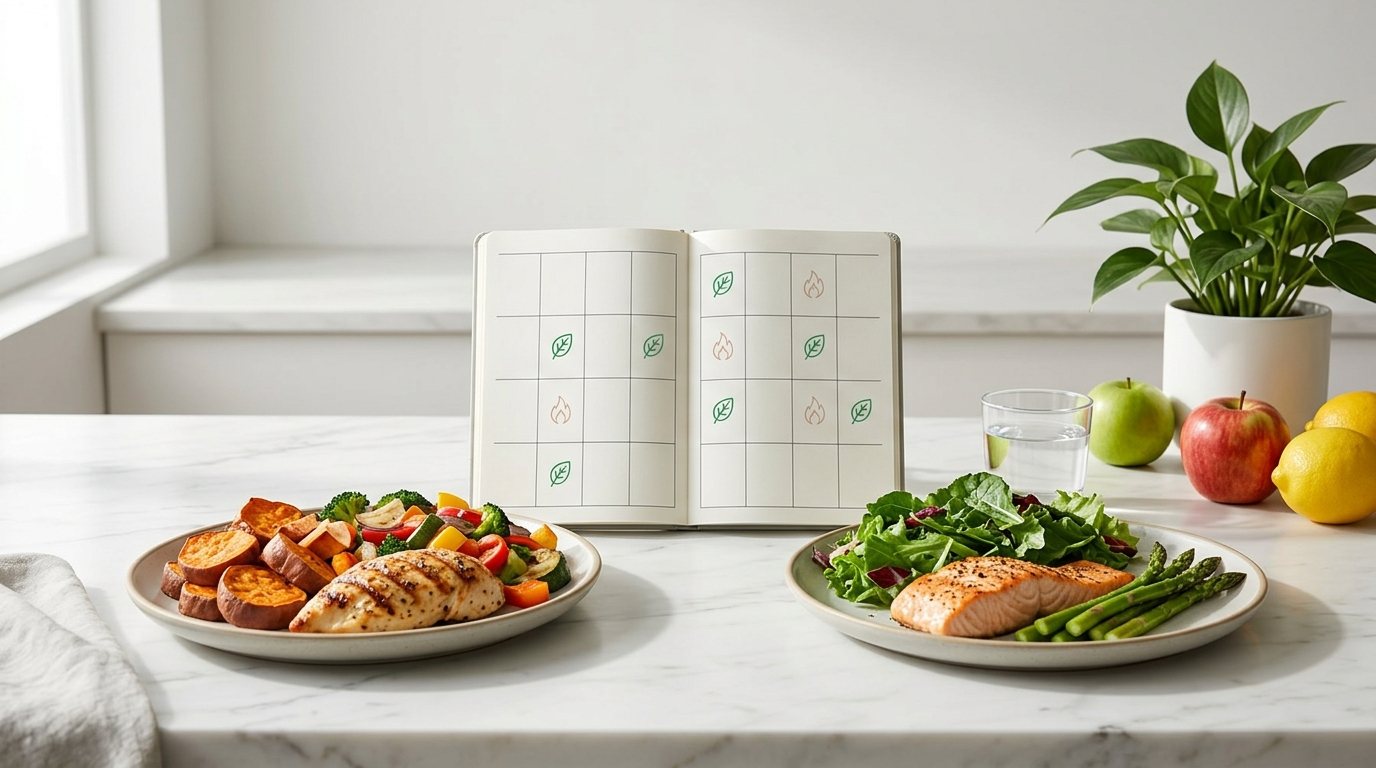
A day of eating on a cut (1,800 kcal, 153g protein example):
| Meal | Food | Protein | Calories |
|---|---|---|---|
| Breakfast | 4 egg whites + 1 whole egg + oats + berries | 28g | 350 kcal |
| Lunch | 150g chicken breast + 150g rice + salad | 47g | 420 kcal |
| Snack | 200g Greek yogurt | 20g | 114 kcal |
| Dinner | 200g white fish + 200g sweet potato + vegetables | 42g | 420 kcal |
| Evening | 100g cottage cheese | 12g | 72 kcal |
| Total | 149g | 1,376 kcal |
Remaining 424 kcal can be allocated to healthy fats or additional carbohydrates around training.
Step 5: Train to Retain
The other half of a successful cut is the training. Do not stop lifting during a cut. Your muscle is retained because your body is being signalled to keep it. If you only do cardio during a cut, the body has no reason to maintain muscle, and it won't.
Training approach during a cut:
- Maintain strength training frequency, 3-4 sessions/week minimum
- Reduce volume slightly, 15-20% fewer sets is fine; less calorie drain
- Keep intensity, don't drop the weight. Percentage of 1RM should stay constant
- Add walking, 8,000-10,000 steps daily adds 300-500 kcal burn with zero recovery cost
→ Read more: Strength Training for Weight Loss
Managing Hunger on a Cut
Hunger is the enemy of adherence. These strategies reduce it:
High-volume eating: 400g of broccoli + 200g chicken = the same calories as a small bag of crisps. Food volume matters for satiety.
Protein at every meal: Protein is 2x more satiating per calorie than carbohydrates or fat.
Liquid calories are your enemy: Juice, alcohol, milk in coffee, protein bars, these don't register satiety well. Eat your calories, don't drink them.
Fibre: Aim for 25-30g/day from vegetables, legumes, oats, and fruit. Fibre slows gastric emptying and keeps you full longer.
Sleep: 7-9 hours reduces ghrelin (hunger hormone) and cortisol. Cutting on poor sleep means fighting biological hunger signals all day.
→ Read more: Calorie Deficit Without Hunger
Common Cutting Mistakes
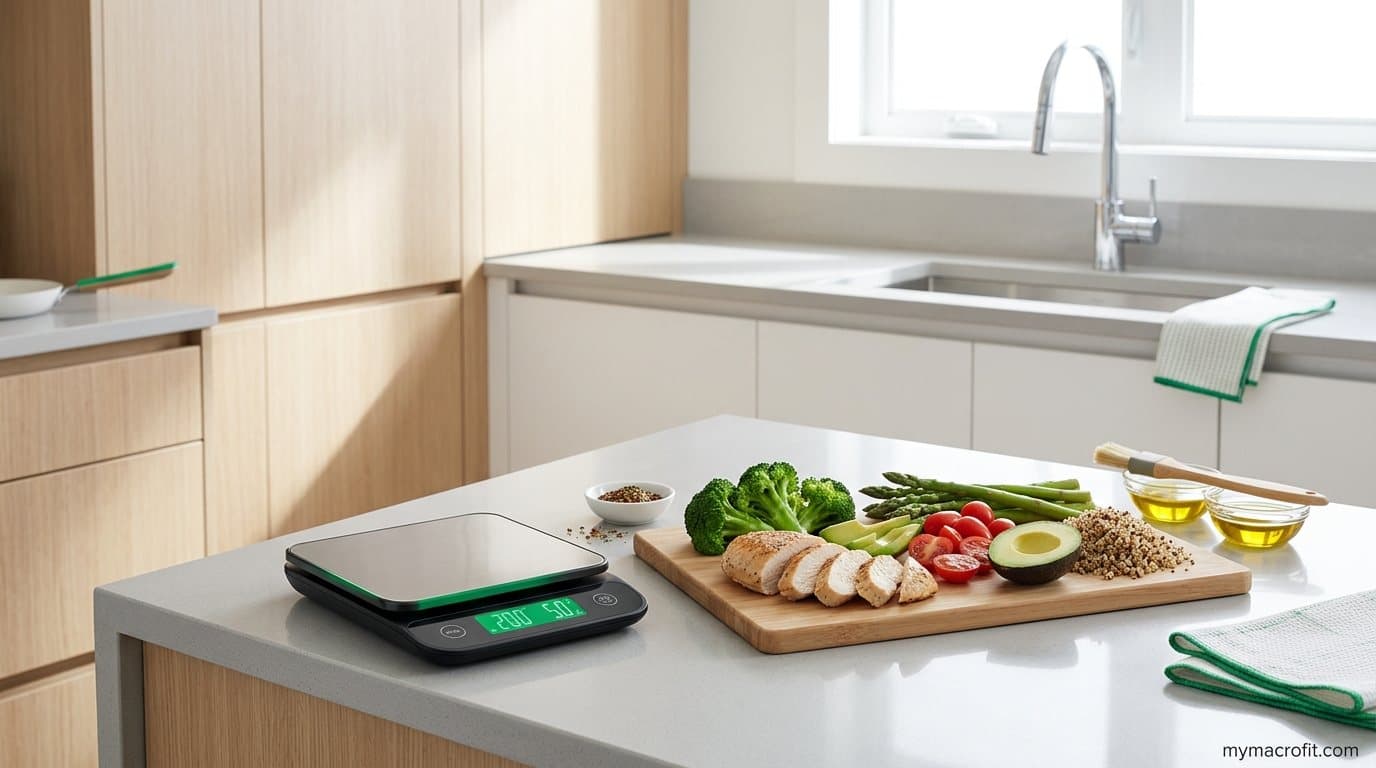
1. Not tracking accurately, the most common reason cuts stall. Use a food scale for 4 weeks minimum.
2. Cutting too aggressively, a 1,000 kcal deficit feels productive but causes significant muscle loss. Moderate and consistent wins.
3. Eliminating carbs entirely, very low carb on a cut kills training performance. Keep carbs in, just from quality sources.
4. Stopping when progress stalls, weight loss plateaus are normal. Audit tracking accuracy, take a 1-week diet break, then reduce calories by 100-150 kcal and continue.
5. Ignoring strength training, the most expensive mistake. Without lifting, up to 50% of weight lost is muscle.
How Long Should You Cut?
| Phase | Duration | What to do |
|---|---|---|
| Main cut | 8-16 weeks | Moderate deficit, high protein, lifting |
| Diet break | 1-2 weeks | Eat at maintenance, lets leptin recover |
| Second cut phase (if needed) | 8-16 weeks | Same structure |
| Reverse diet/maintain | 4-8 weeks | Slowly increase calories to new maintenance |
Most people benefit from taking at least 4-8 weeks at maintenance after a 12+ week cut before attempting another cut.
The Bottom Line
A cutting diet is: TDEE − 300-500 kcal, protein at 1.8-2.4g/kg, continued strength training, high volume foods, and consistency for 8-16 weeks. Everything else is detail.
Use the Calorie Deficit Calculator to set your target, the Macro Calculator for your macros, and the Protein Calculator to confirm protein is high enough.
Sources
- High-protein diet and lean mass preservation during cutting, Helms et al., IJSNEM, 2014
- Resistance training preserves lean mass during energy restriction, Cava et al., Nutrients, 2017
- Dietary fat minimum during calorie restriction, Hamalainen et al., Hormone Metabolic Research, 1984
Save & share on Pinterest
Click any card to pin it — or share with someone who needs it.
Cutting Diet Plan: How to Lose Fat While Keeping Your Muscle
A complete cutting diet plan for fat loss, covering calorie deficit setup, macro targets, meal timin…
A complete cutting diet plan for fat loss, covering calorie deficit setup, macro…
Read the full guide: Cutting Diet Plan: How to Lose Fat While Keeping Your Muscle
Try the free Calorie Deficit Calculator
Cutting Diet Plan: How to Lose Fat While Keeping Your Muscle — use our free calculators for instant …
Pinterest opens in a new tab. You can edit the description before saving.
Ready to get your numbers?
Free calculator, instant results, no signup required.
Frequently Asked Questions
What is a cutting diet?+
How long should a cutting phase last?+
How much muscle will I lose while cutting?+
What foods should I eat on a cutting diet?+
About the Author

I'm a certified nutritionist and metabolic health coach. I went deep on keto and metabolism after reversing my own insulin resistance, and I'd rather give you the actual numbers than a hand-wave.
View full profile →