Macros for Men: How to Calculate Protein, Carbs, and Fat for Your Goal

BSc Kinesiology · CPT
I write a lot for women, it's where most of my coaching work lives, but the men in my clients' lives kept borrowing their partners' macro numbers and wondering why things felt off. So let's do this one properly, built from the ground up around male physiology: higher lean mass, considerably higher testosterone, larger calorie needs, and typically different body-composition goals. All of that changes the numbers in ways that matter. Whether you're cutting fat, building muscle, or recomposing, here's exactly how to set yours.
How Men's Macro Needs Differ
Men generally have:
- More lean muscle mass, higher resting metabolic rate, better carbohydrate utilisation
- Higher testosterone, greater anabolic response to protein, faster recovery
- Higher TDEE, more total calories available to distribute across macros
- Different body fat distribution, visceral fat tends to accumulate first; subcutaneous fat around abs rather than hips/thighs
These differences affect macro targets, particularly carbohydrate allocation and calorie totals.
Calculating Your Calorie Baseline (TDEE)
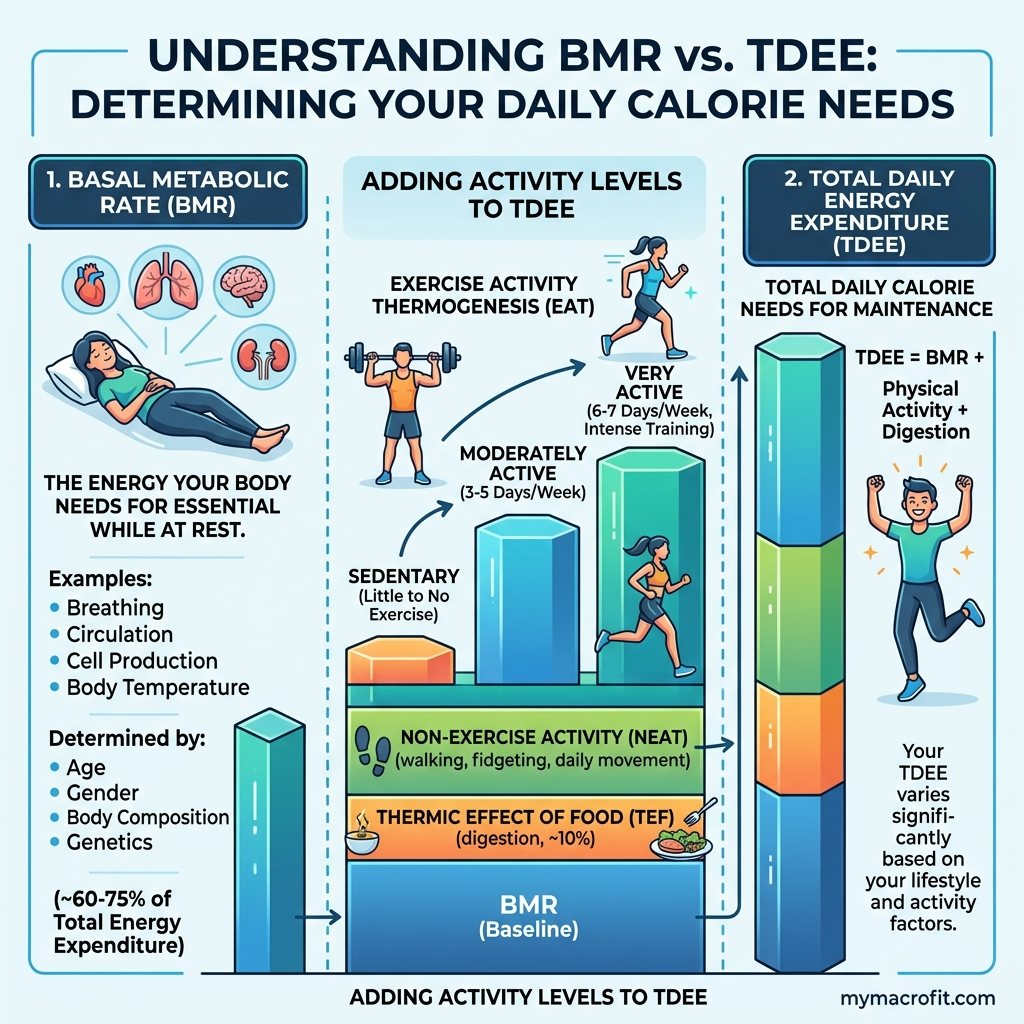
Before setting macros, you need your TDEE (Total Daily Energy Expenditure).
BMR for men (Mifflin-St Jeor):
BMR = (10 × weight kg) + (6.25 × height cm) − (5 × age) + 5
Multiply by activity factor:
| Activity | Multiplier |
|---|---|
| Sedentary (desk job, no gym) | × 1.2 |
| Lightly active (1-3 gym sessions/week) | × 1.375 |
| Moderately active (3-5 sessions/week) | × 1.55 |
| Very active (6-7 sessions + physical job) | × 1.725 |
Example, 32-year-old man, 85kg, 180cm, moderately active: BMR = (850) + (1,125) − (160) + 5 = 1,820 kcal TDEE = 1,820 × 1.55 = 2,821 kcal/day
→ Use the TDEE Calculator to skip the arithmetic.
Macro Targets by Goal
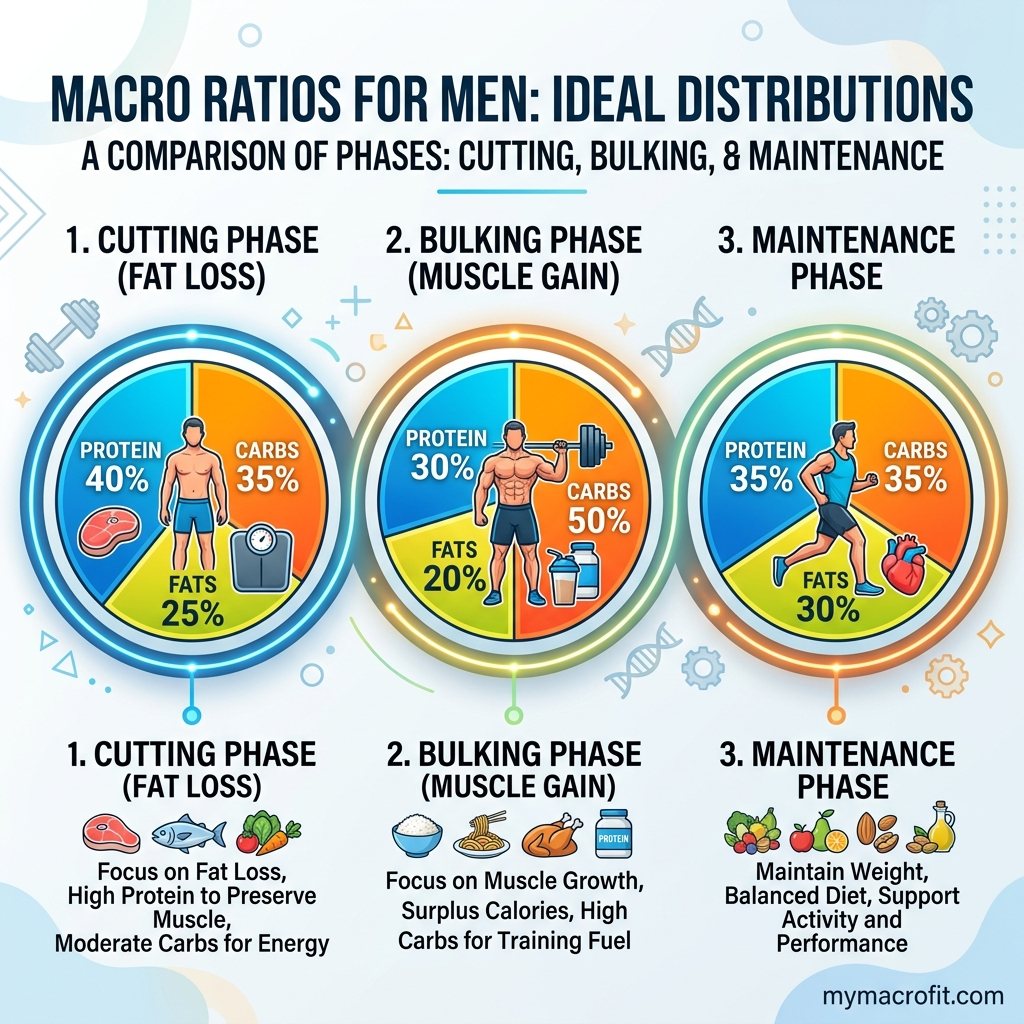
Fat Loss
Calorie target: TDEE − 400-600 kcal
For our example man: 2,221-2,421 kcal/day
| Macro | % of Calories | Grams (at 2,300 kcal) |
|---|---|---|
| Protein | 35% | 200g |
| Carbohydrates | 40% | 230g |
| Fat | 25% | 64g |
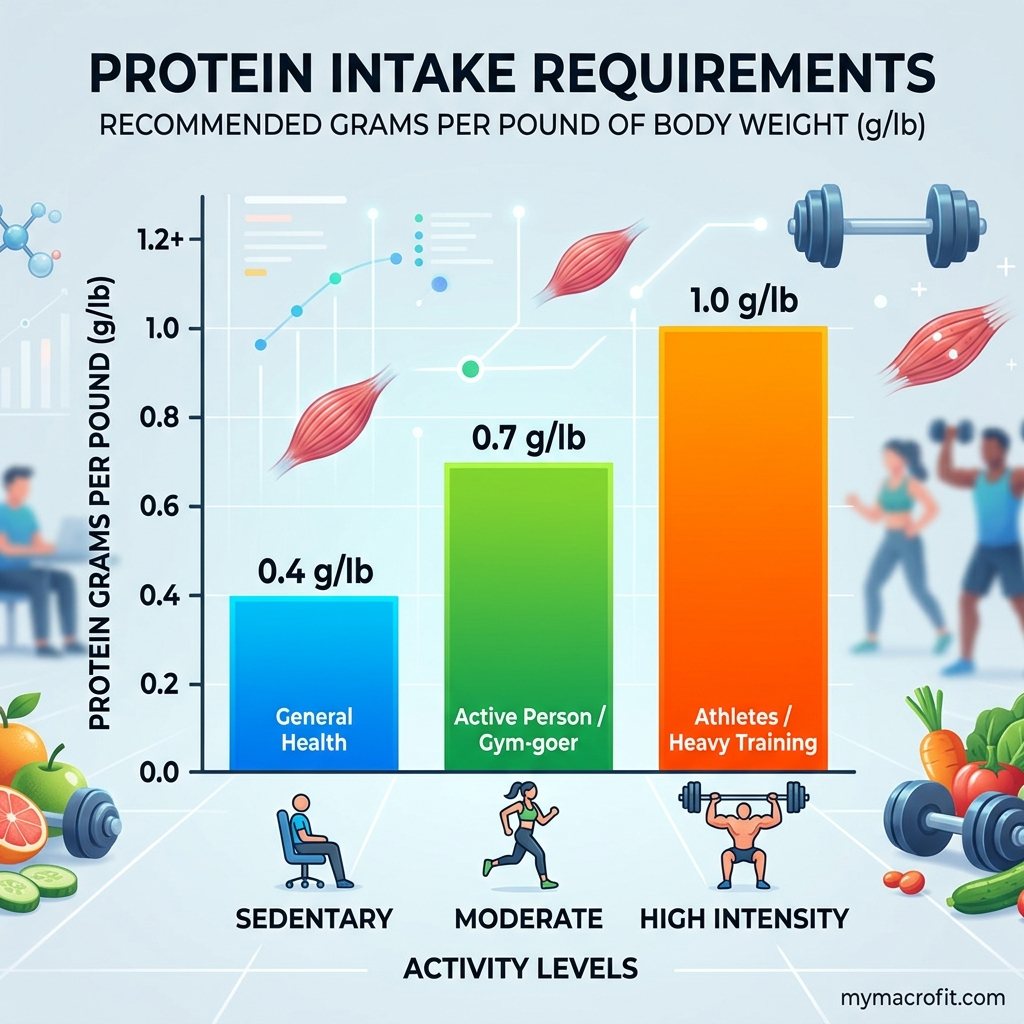
Key principle: Keep protein high (1.8-2.2g/kg) to preserve muscle during the deficit. For an 85kg man, this means a minimum of 153-187g protein/day.
Muscle Building (Lean Bulk)
Calorie target: TDEE + 200-350 kcal
For our example man: 3,021-3,171 kcal/day
| Macro | % of Calories | Grams (at 3,100 kcal) |
|---|---|---|
| Protein | 28% | 217g |
| Carbohydrates | 47% | 364g |
| Fat | 25% | 86g |
Higher carbohydrates support training intensity and glycogen replenishment, this is where muscle building advantage compounds.
Body Recomposition (Maintaining weight, changing composition)
Calorie target: TDEE (±100 kcal)
| Macro | % of Calories | Grams (at 2,800 kcal) |
|---|---|---|
| Protein | 35% | 245g |
| Carbohydrates | 40% | 280g |
| Fat | 25% | 78g |
Body recomposition works best for men who are new to training or returning after a break. Very high protein is critical, the excess above muscle synthesis needs is costly but the signal-to-noise ratio improves significantly.
Maintenance
Calorie target: TDEE
| Macro | % of Calories | Grams (at 2,800 kcal) |
|---|---|---|
| Protein | 25% | 175g |
| Carbohydrates | 45% | 315g |
| Fat | 30% | 93g |
Protein: The Non-Negotiable
Regardless of goal, protein is the most important macro to get right:
- Fat loss: 1.8-2.4g/kg to prevent muscle breakdown
- Muscle building: 1.6-2.2g/kg, more isn't more beneficial
- Maintenance: 1.4-1.8g/kg, for athletic performance and health
Best protein sources for men:
| Food | Protein per serving |
|---|---|
| Chicken breast (150g cooked) | 46g |
| Beef sirloin (150g cooked) | 37g |
| Tuna (145g tin) | 34g |
| Eggs (3 large) | 18g |
| Greek yogurt (200g) | 20g |
| Cottage cheese (200g) | 24g |
| Whey protein (30g scoop) | 22-27g |
→ See the full ranked list: 50 High Protein Foods
Carbohydrates: Fuelling Training
Men typically tolerate higher carbohydrate intakes well, particularly around training. Strategic carb placement:
- Pre-workout (60-90 min before): 30-60g complex carbs (oats, rice, sweet potato)
- Post-workout (within 2 hours): 40-80g fast carbs + 30-40g protein (white rice + chicken; shake + banana)
- Rest day: Reduce carbs by 20-30%, increase fat slightly
Best carb sources:
- White rice, brown rice, sweet potato, oats, whole wheat pasta, fruit, legumes
Fat: Hormonal Health
Men with low dietary fat experience significant testosterone suppression. The minimum fat intake for hormonal health is approximately 0.8g/kg. Men on cutting diets who drop fat too low (below 15% of calories) frequently see reduced libido, recovery, and training performance.
Recommended fat sources: Olive oil, avocado, nuts, oily fish, eggs

A Day of Eating at Your Macros
Example: 85kg man, fat loss phase, 2,300 kcal, 200g protein / 230g carbs / 64g fat
| Meal | Example | Protein | Carbs | Fat |
|---|---|---|---|---|
| Breakfast | 4 eggs + 2 slices wholegrain toast + spinach | 32g | 38g | 18g |
| Lunch | 180g chicken breast + 200g rice + salad | 56g | 60g | 8g |
| Snack | 200g Greek yogurt + banana | 20g | 32g | 2g |
| Dinner | 180g salmon + 200g sweet potato + broccoli | 46g | 52g | 16g |
| Evening | 30g whey shake | 27g | 4g | 2g |
| Total | 181g | 186g | 46g |
Adjust portions up to hit full targets, this is a framework, not a rigid prescription.
Common Mistakes Men Make With Macros
1. Ignoring fat when bulking, sauces, cooking oil, and fatty cuts add up fast. A "clean bulk" with 4,000 kcal from McDonald's is not the same as 4,000 kcal from rice, chicken, and olive oil.
2. Not enough protein on a cut, the most common cause of losing muscle alongside fat during a deficit. Keep protein at minimum 1.8g/kg even when cutting hard.
3. Overestimating calorie burn, fitness watches overestimate burn by 15-40%. Use the TDEE Calculator not your watch to set your calorie target.
4. Weekend drift, a 700 kcal daily deficit Monday-Friday + two 1,000 kcal surplus days Saturday-Sunday = 1,500 kcal weekly deficit instead of 3,500. Consistency matters more than weekday perfection.
The Bottom Line
Men's macro needs are higher in total calories and protein than often quoted, especially during active training. Calculate your TDEE, set protein at 1.6-2.2g/kg, and split remaining calories between carbs and fat at your preferred ratio.
Use the Macro Calculator to get your numbers instantly.
Sources
- ISSN Position Stand: Macronutrient intake for muscle building, Stokes et al., JISSN, 2018
- Dietary fat and testosterone in men, Hamalainen et al., Hormone and Metabolic Research, 1984
- Protein for fat loss meta-analysis, Helms et al., IJSNEM, 2014
Save & share on Pinterest
Click any card to pin it — or share with someone who needs it.
Macros for Men: How to Calculate Protein, Carbs, and Fat for Your Goal
A complete macro guide for men, covering protein, carbs, and fat targets for fat loss, muscle buildi…
A complete macro guide for men, covering protein, carbs, and fat targets for fat…
Read the full guide: Macros for Men: How to Calculate Protein, Carbs, and Fat for Your Goal
Try the free Macro Calculator
Macros for Men: How to Calculate Protein, Carbs, and Fat for Your Goal — use our free calculators fo…
Pinterest opens in a new tab. You can edit the description before saving.
Ready to get your numbers?
Free calculator, instant results, no signup required.
Frequently Asked Questions
How much protein does a man need per day?+
What are good macros for a man trying to lose fat?+
How many calories does an average man need per day?+
Should men eat more carbs than women?+
What are good macros for a man building muscle?+
How should men adjust macros as they get older?+
About the Author

I'm a kinesiologist and personal trainer. I've spent eight years helping women lose fat and get stronger without handing their whole life over to a diet.
View full profile →