The Complete Macros Guide: Everything You Need to Know

BSc Kinesiology · CPT
If you only ever read one nutrition article from me, I'd want it to be this one. Macronutrients, protein, carbohydrates, and fat, are the three categories of nutrients your body draws energy from, and once you truly understand them, almost everything else in nutrition stops feeling like a confusing mess of conflicting advice. Fat loss, muscle building, performance, lasting health, every evidence-based approach is built on this same foundation. Get macros, and you've got the skeleton key.
This is the complete guide, and it's a long one on purpose. We'll cover what each macro actually does, why they matter, how to calculate yours, how to track them without it ruling your life, and how to adjust them for your specific goal. Wherever there's a rabbit hole worth going down, I'll link you to a deeper article, so treat this as your home base and branch out from here.
What Are Macronutrients?
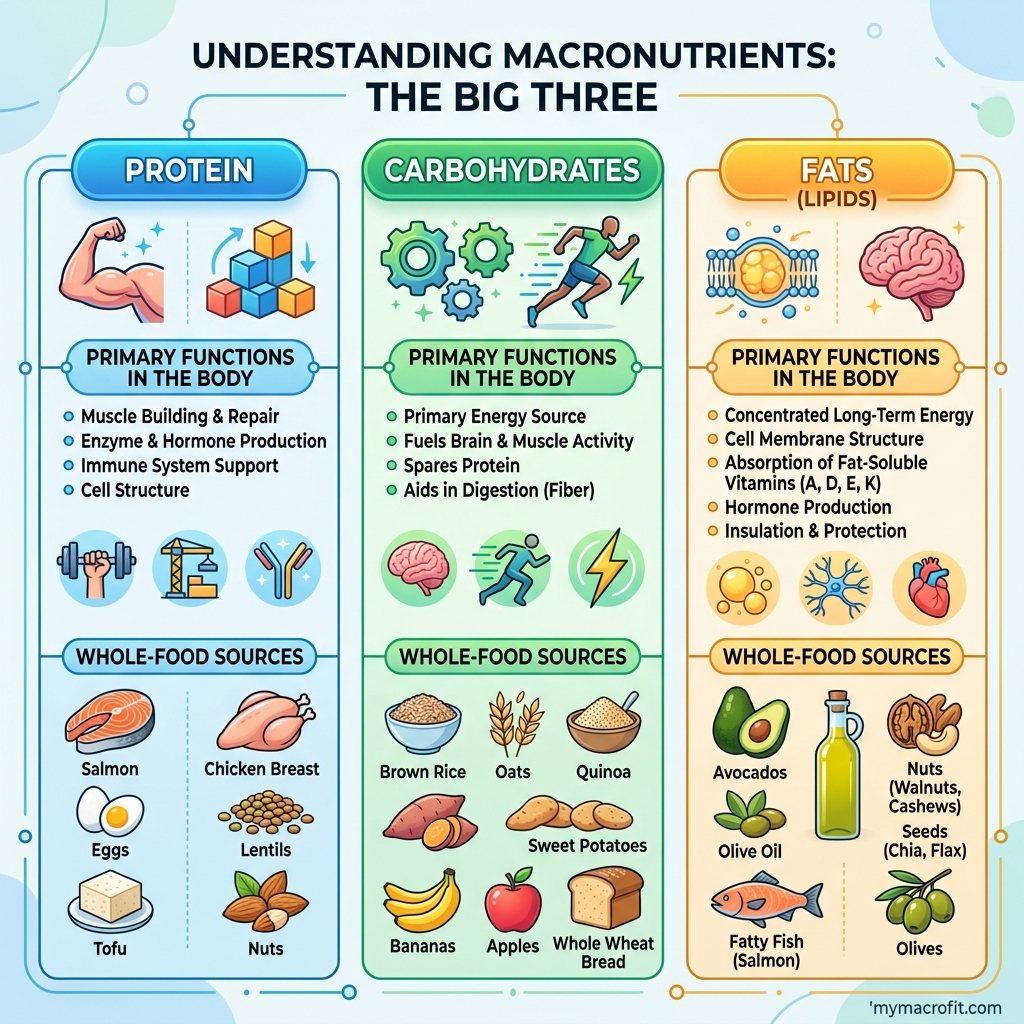
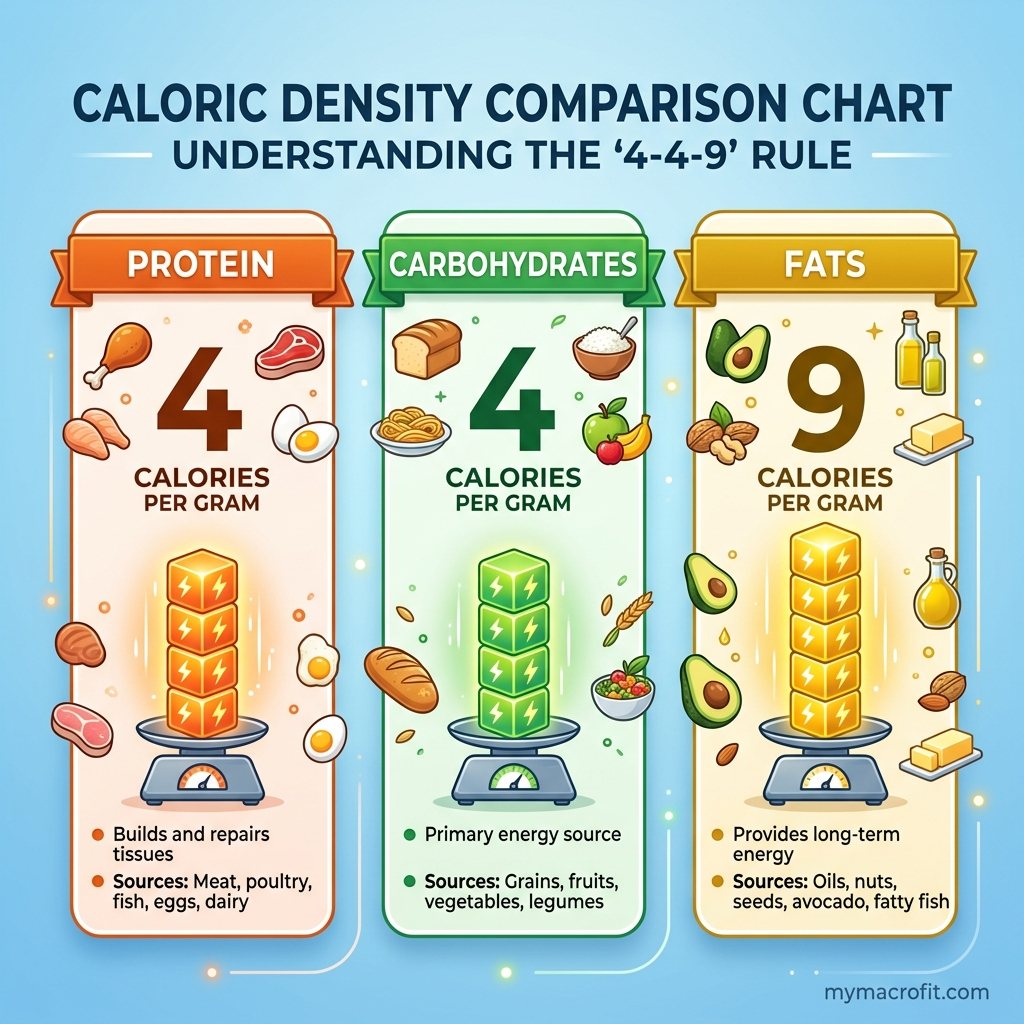
Macronutrients are the nutrients your body requires in large amounts and uses for energy. There are three:
| Macronutrient | Calories per gram | Primary function |
|---|---|---|
| Protein | 4 kcal | Muscle repair, enzymes, hormones, immune function |
| Carbohydrates | 4 kcal | Primary energy source, brain fuel, glycogen storage |
| Fat | 9 kcal | Hormone production, fat-soluble vitamins, cell membranes |
Alcohol also provides energy (7 kcal/g) but is not a macronutrient because the body has no requirement for it.
Why track macros rather than just calories?
Two diets with identical calorie totals can produce dramatically different results depending on macro composition. A diet of 2,000 kcal with 200g protein and 150g carbs will produce far more muscle retention, and better body composition, than 2,000 kcal with 50g protein and 300g carbs. The calories are the same. The outcomes are not.
→ Read more: What Are Macros and How Do I Track Them
Protein: The Most Important Macro
Protein is the macro that matters most for body composition, regardless of your goal.
What it does:
- Builds and repairs muscle tissue (muscle protein synthesis)
- Is the most satiating macronutrient, reduces hunger more than carbs or fat
- Has the highest thermic effect (25-30% of protein calories are burned in digestion)
- Preserves lean mass during fat loss, preventing metabolic slowdown
How much you need:
| Goal | Protein target |
|---|---|
| General health | 0.8-1.2g per kg bodyweight |
| Fat loss (muscle preservation) | 1.8-2.4g per kg bodyweight |
| Muscle building | 1.6-2.2g per kg bodyweight |
| Athletes in training | 2.0-2.4g per kg bodyweight |
For a 70kg person targeting fat loss, this means 126-168g of protein per day, far above what most people eat without tracking.
Best protein sources (per 100g):
- Chicken breast (cooked): 31g protein
- Tuna (canned in water): 23g protein
- Non-fat Greek yogurt: 10g protein
- Cottage cheese (low-fat): 12g protein
- White fish (cod, haddock): 20g protein
→ Read more: 50 High Protein Foods Ranked | How Much Protein Do I Need?
Carbohydrates: Fuel, Not the Enemy
Carbohydrates are your body's preferred energy source. They're stored as glycogen in muscle and liver, fuelling high-intensity exercise, brain function, and daily activity. Despite popular belief, carbohydrates do not cause fat gain, excess calories do.
Simple vs. complex carbohydrates:
| Type | Examples | Glycaemic response |
|---|---|---|
| Simple (high-GI) | White bread, sugar, sweets, fruit juice | Fast, high insulin spike |
| Complex (low-GI) | Oats, sweet potato, lentils, wholegrain pasta | Slow, stable energy |
Complex carbohydrates are generally preferred for:
- Sustained energy throughout the day
- Better satiety (fibre content)
- Improved insulin sensitivity
- Reduced cravings
How many carbs do you need?
After setting protein, carbohydrates fill the remaining calorie budget (after fat allocation). A typical starting split for fat loss:
- 40% carbohydrates | 30% protein | 30% fat
For muscle building, carbohydrates increase to fuel training:
- 50% carbohydrates | 25% protein | 25% fat
→ Read more: Carb Cycling for Women | Keto Macros: The Exact Ratio
Fat: Essential, Not Optional
Dietary fat is required for life. It produces steroid hormones (including oestrogen, testosterone, and cortisol), enables absorption of fat-soluble vitamins (A, D, E, K), maintains cell membrane integrity, and supports brain function (the brain is ~60% fat).
The minimum fat intake for hormonal health is approximately 0.5-1g per kg bodyweight. Going below this, as many very low calorie diets do, disrupts the hormonal system and causes measurable declines in testosterone and oestrogen.
Fat quality matters:
| Type | Examples | Effect |
|---|---|---|
| Monounsaturated | Olive oil, avocado, almonds | Anti-inflammatory, heart-healthy |
| Polyunsaturated (omega-3) | Oily fish, walnuts, flaxseed | Reduces inflammation, supports brain |
| Saturated | Meat, dairy, coconut oil | Neutral in moderation |
| Trans fat | Partially hydrogenated oils, processed foods | Harmful, avoid |
BMR, TDEE, and Why They Matter
Before you can set macros, you need to know how many calories to eat. This requires two calculations:
BMR (Basal Metabolic Rate), the calories your body burns at complete rest to maintain basic functions (breathing, circulation, organ function).
TDEE (Total Daily Energy Expenditure), BMR multiplied by your activity multiplier. This is the number of calories you burn in a day, accounting for exercise and movement.
Your TDEE is your maintenance level. To lose fat, eat below it. To build muscle, eat above it.
| Goal | Calorie target vs TDEE |
|---|---|
| Fat loss | TDEE − 300 to 500 kcal |
| Maintenance | TDEE (±100 kcal) |
| Lean bulk | TDEE + 200 to 350 kcal |
→ Read more: BMR vs TDEE Explained | What is TDEE?
Use the TDEE Calculator to find your personal number.
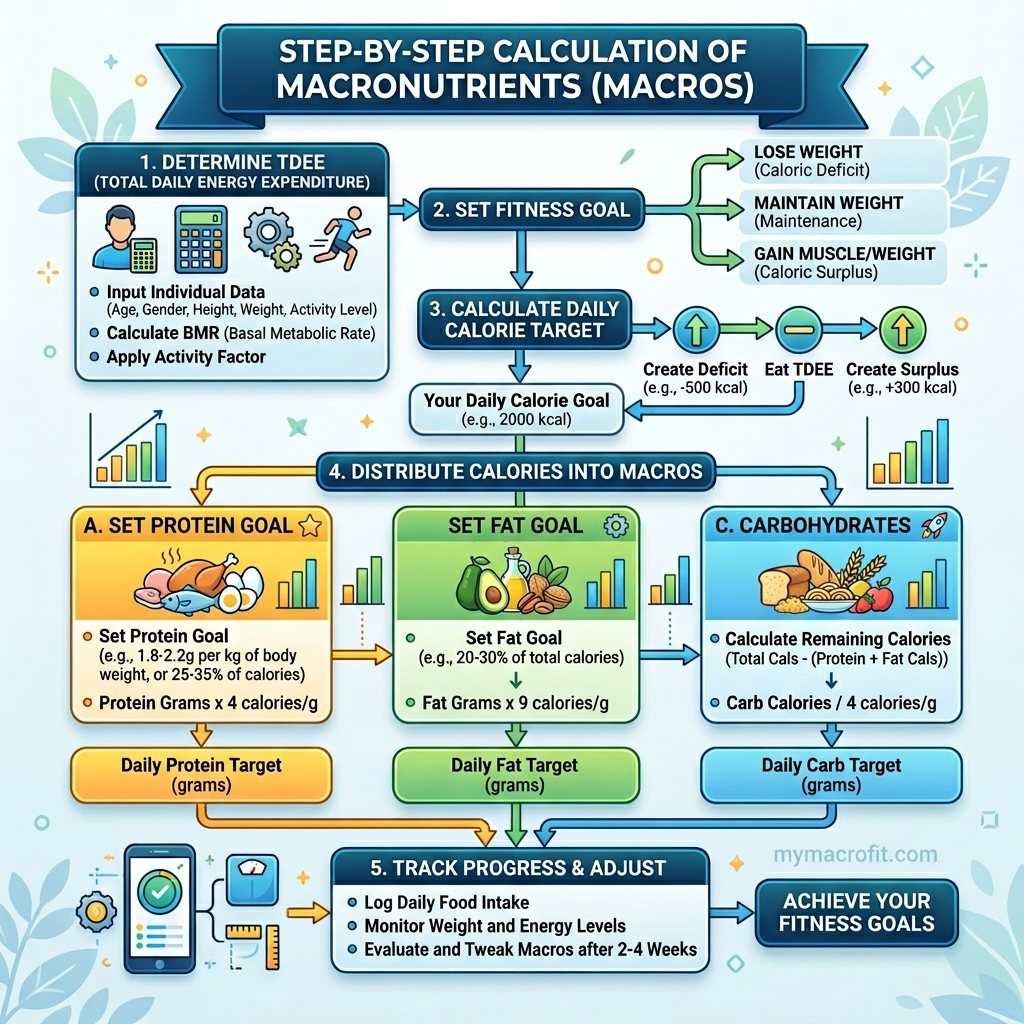
How to Calculate Your Macros
Once you know your calorie target, set macros in this order:
Step 1: Set protein first, 1.6-2.4g per kg bodyweight depending on goal.
Step 2: Set fat, minimum 0.8g per kg, typically 25-30% of total calories.
Step 3: Fill remaining calories with carbohydrates.
Example: 70kg woman, fat loss goal, TDEE 2,000 kcal, target 1,600 kcal:
| Macro | Target | Grams |
|---|---|---|
| Protein | 30% (480 kcal) | 120g |
| Fat | 28% (448 kcal) | 50g |
| Carbohydrates | 42% (672 kcal) | 168g |
→ Full walkthrough: How to Calculate Your Macros for Weight Loss
Use the Macro Calculator for an instant personalised calculation.
Tracking Macros: Practical Methods
Knowing your targets means nothing without tracking. Three practical approaches:
1. Calorie/macro tracking app
Apps like MyFitnessPal, Cronometer, or MacroFactor scan barcodes and have millions of foods in their databases. Log everything, including oils, sauces, and drinks. Weigh food with a digital scale for accuracy; volume measurements (cups, tablespoons) are imprecise for calorie-dense foods.
Expect accuracy within ±10% even when tracking carefully, due to:
- Database inaccuracies
- Cooking losses
- Variation between individual food items
2. Plate method (rough tracking)
For those who find precise tracking unsustainable:
- Half plate: vegetables
- Quarter plate: protein (palm-sized portion)
- Quarter plate: carbohydrates (fist-sized portion)
- Thumb-sized: fat source
This produces roughly 100-150g protein and 1,400-1,800 kcal for most women, adequate for weight loss without tracking.
3. Macro-aware meal prep
Batch-cook high-protein staples (chicken breast, lentils, eggs, Greek yogurt) so your default meals are macro-optimised. When every meal starts with 30-40g protein, hitting daily targets is achievable without constant app use.
→ Read more: High Protein Meal Prep Guide
Adjusting Macros Over Time
Macros are a starting point, not a permanent prescription. Adjust based on results every 3-4 weeks:
Not losing fat despite tracking?
- Verify tracking accuracy, weigh food for one week using a scale
- If intake is accurate, reduce calories by 100-150 kcal (cut carbs or fat, keep protein stable)
- Check non-exercise activity, sitting more than usual reduces TDEE significantly
Losing too fast (>1kg/week)?
- You're likely losing muscle alongside fat. Increase calories by 150-200 kcal, prioritise from carbohydrates
- Ensure protein is at least 1.8g/kg
Plateaued after 8+ weeks?
- Take a 1-2 week diet break at maintenance. This partially restores leptin and reduces adaptive thermogenesis (metabolic slowdown)
- Return to deficit and progress resumes
Special Macro Considerations
Intermittent Fasting and Macros
Intermittent fasting (IF) changes when you eat, not what you eat. Macros still matter within the eating window. IF does not eliminate the need for protein targets, if anything, hitting protein in a compressed eating window requires more deliberate planning.
→ Read more: Intermittent Fasting for Women | 16:8 Intermittent Fasting
Keto and Macros
The ketogenic diet is a high-fat, very low carbohydrate macro split that shifts the body into fat-burning ketosis. Standard keto macros: 70% fat / 25% protein / 5% carbohydrates. It works for some people but requires significant dietary restriction.
→ Read more: Keto Macros: The Exact Ratio You Need
PCOS and Macros
Women with PCOS benefit from a higher-protein, lower-carbohydrate macro split to manage insulin resistance. Standard recommendations of 40% carbs may not be appropriate, a 30/40/30 (protein/carb/fat) split is often better tolerated.
→ Read more: PCOS Diet and Macros
Macros for Women Specifically
Women's macro needs differ from standard recommendations due to hormonal cycling, differences in lean mass, and different satiety responses. The Macro Calculator for Women accounts for these differences.
Common Macro Mistakes
1. Setting protein too low, The single most common error. Most people targeting fat loss eat 60-80g/day. This is inadequate for muscle preservation. Double-check your protein is ≥1.6g/kg.
2. Tracking weekdays only, Two days of higher intake on weekends easily erases a week's deficit. Consistent tracking, including social meals, is required.
3. Ignoring cooking fats, A tablespoon of olive oil is 120 kcal / 14g fat. Restaurant meals and home cooking with unmeasured oils are the most common source of hidden calories.
4. Changing macros too frequently, Give any macro setup 3-4 weeks before adjusting. Short-term weight fluctuations (hormones, water, fibre, glycogen) obscure real progress.
5. Treating macros as a short-term tool, The most successful outcome is when macro-awareness becomes a permanent eating style rather than a temporary diet.
Quick-Reference Summary
| Goal | Protein | Carbs | Fat | Calories |
|---|---|---|---|---|
| Fat loss | 1.8-2.4g/kg | 35-45% | 25-30% | TDEE − 300-500 |
| Muscle building | 1.6-2.2g/kg | 45-55% | 20-25% | TDEE + 200-350 |
| Maintenance | 1.4-1.8g/kg | 40-50% | 25-35% | TDEE |
| Keto | 1.6-2.0g/kg | 5% | 65-75% | TDEE − 200-400 |
Tools in This Guide
- Macro Calculator, personalised protein, carbs, and fat targets
- TDEE Calculator, total daily calorie burn
- BMR Calculator, resting metabolic rate
- Protein Calculator, protein target by bodyweight and goal
- Calorie Deficit Calculator, safe deficit for your goal
All Articles in This Guide
Save & share on Pinterest
Click any card to pin it — or share with someone who needs it.
The Complete Macros Guide: Everything You Need to Know
A comprehensive guide to macronutrients, what they are, how to calculate them, how to track them, an…
A comprehensive guide to macronutrients, what they are, how to calculate them, h…
Read the full guide: The Complete Macros Guide: Everything You Need to Know
Free fitness tools
The Complete Macros Guide: Everything You Need to Know — use our free calculators for instant person…
Pinterest opens in a new tab. You can edit the description before saving.
Frequently Asked Questions
What are the three macronutrients?+
Is it better to count calories or macros?+
What is IIFYM (If It Fits Your Macros)?+
How do I start counting macros as a beginner?+
About the Author

I'm a kinesiologist and personal trainer. I've spent eight years helping women lose fat and get stronger without handing their whole life over to a diet.
View full profile →