1200 Calories After 40: Too Low for Most Women (Here's What to Eat Instead)

RHC · Pre/Postnatal Fitness Specialist
Type "how many calories to lose weight" into any search bar and 1,200 comes up again and again, the internet's default diet number. After 40, it's usually exactly the wrong move. Not because you can't lose weight, but because 1,200 calories is an unnecessarily harsh deficit that fights the very things you need to protect in this decade: your muscle, energy, and sanity. Here's why it backfires and what to do instead.
Where 1,200 comes from (and why it's a trap)
1,200 calories isn't a personalised target, it's a one-size-fits-all floor, often the lowest number diet apps will set. The problem: for most women over 40, it sits far below maintenance, creating a deficit so large it triggers the body's defences. It feels productive because the scale drops fast at first (much of it water and muscle), but it sets up the exact failure pattern most women have lived through.
Why it backfires harder after 40
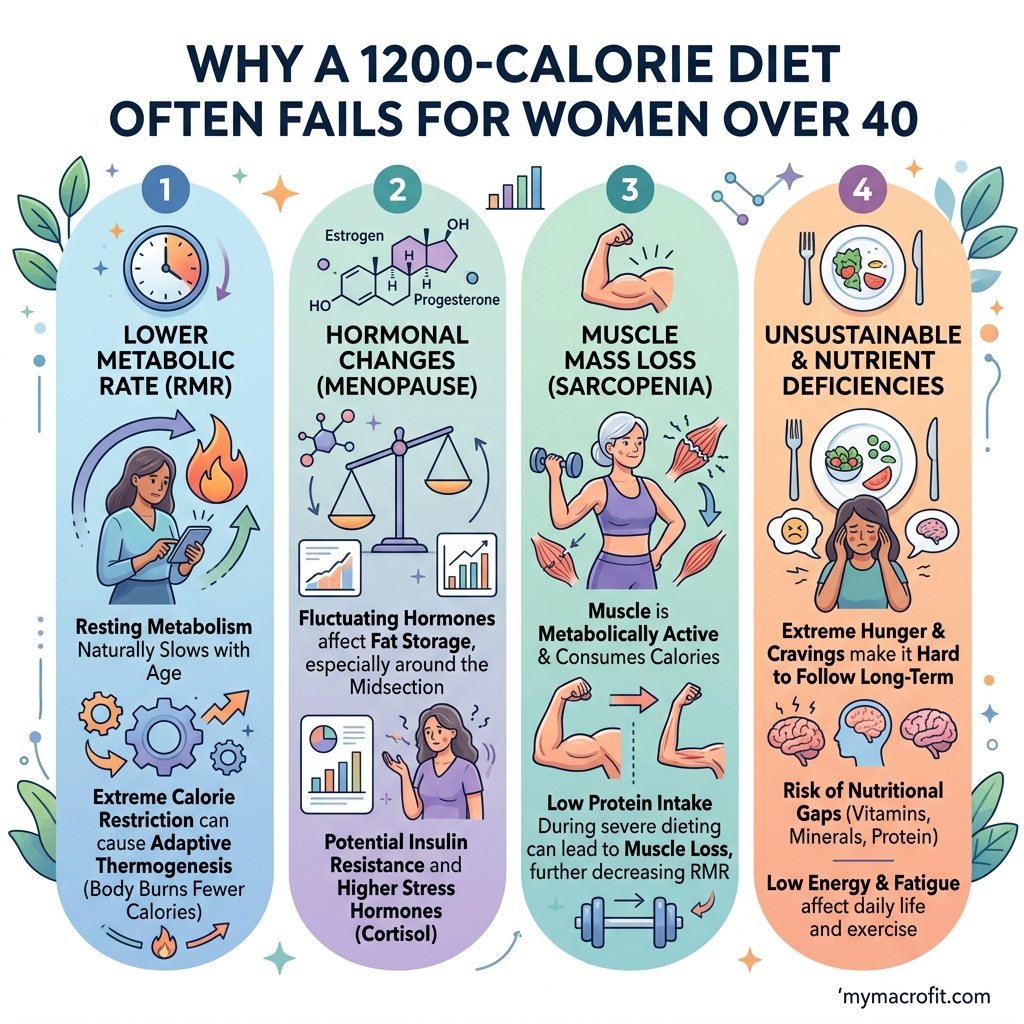
The post-40 hormonal shift makes an extreme deficit especially counterproductive:
| Problem with 1,200 cal | Why it matters more after 40 |
|---|---|
| Too little room for protein | Muscle is already declining, you can't protect it |
| Muscle loss | Lowers maintenance further, the opposite of what you want |
| Energy, sleep, stress hit | Raises cortisol, which fights fat loss |
| Unsustainable | Triggers rebound and regain |
The slowdown after 40 calls for protecting muscle and managing stress, and 1,200 calories undermines both. See is perimenopause weight gain permanent for the full picture.
What to eat instead
The fix is a target based on your body, not a generic floor:
- Find your maintenance. The Menopause Calorie Calculator (or TDEE Calculator) estimates the calories that hold your weight.
- Subtract a moderate deficit of 15-25% with the Calorie Deficit Calculator. For many women over 40 this lands around 1,500-1,900 calories, higher than 1,200, and it actually works.
- Prioritise protein (1.8-2.2g/kg) and add resistance training to protect muscle.
Find a target that actually works.
The free Menopause Calorie Calculator personalises your calories for this stage of life.
Calculate My Calories →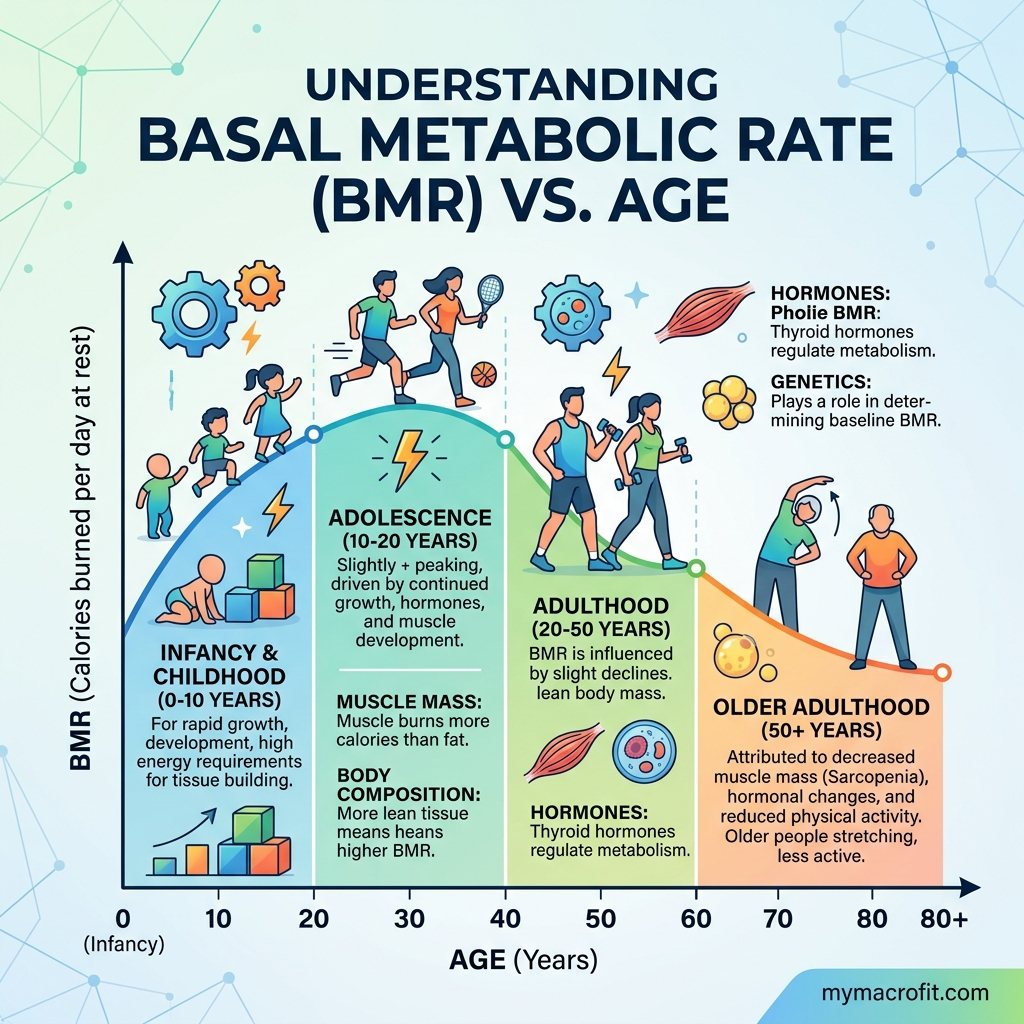
1,200 vs a moderate target, side by side
To see why eating more often works better, compare the two approaches over a realistic few months. Same woman, two strategies:
| 1,200 calories | Moderate (~1,650) + protein + lifting | |
|---|---|---|
| Early scale drop | Fast (lots of water/muscle) | Slower, steadier |
| Protein possible | Hard to fit | Comfortable |
| Muscle | Lost | Protected or built |
| Energy & sleep | Often suffer | Maintained |
| Hunger | High | Manageable |
| 6-month outcome | Stall, rebound, regain | Steady fat loss, kept off |
The 1,200 column looks better for about two weeks and worse for every month after. The moderate column is the unglamorous one that actually delivers, because it works with your body in this decade instead of against it.
What a moderate day looks like
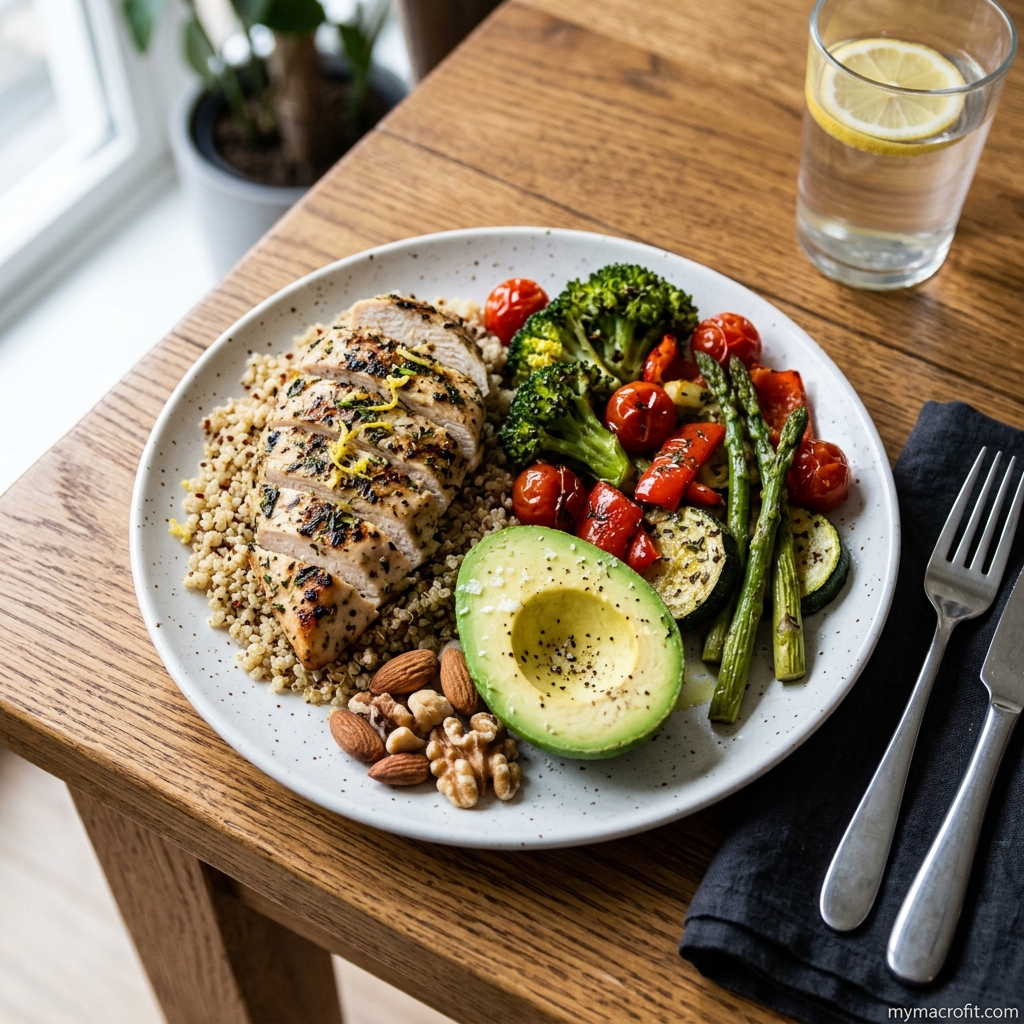
Eating "more" doesn't mean eating loosely. Here's a calm, protein-forward day landing around 1,650 calories, which for many women over 40 is a real deficit, not a crash:
| Meal | Example | Protein |
|---|---|---|
| Breakfast | Greek yogurt, berries, seeds + 2 eggs | ~30g |
| Lunch | Chicken or tofu, large salad, small grain | ~38g |
| Snack | Cottage cheese or a protein shake | ~22g |
| Dinner | Fish or lentils, plenty of veg, potatoes | ~35g |
That's satisfying, nourishing, and sustainable, and it carries roughly 125g of protein to protect your muscle. Compare that to what 1,200 calories forces you to give up, and the choice makes itself.
Higher calories, better results, really
It feels counterintuitive that eating more than 1,200 loses fat better, but here's the logic: a moderate deficit leaves room for enough protein to protect muscle, keeps your energy and training up, manages stress hormones, and is sustainable enough that you actually stick to it. Slower, steadier fat loss that keeps your muscle beats fast loss that strips it and rebounds, see protein for women over 40 and the full macros for women over 40 framework.
When the scale stalls
If progress slows, the answer after 40 is rarely "drop to 1,200." It's to recalculate for your current weight, tighten your tracking, and make a small adjustment, covered in how to adjust macros when weight loss stalls.
The takeaway
1,200 calories after 40 is usually a setup for muscle loss, exhaustion, and rebound, not lasting fat loss. Base your target on your real maintenance minus a moderate deficit, prioritise protein, and lift. It'll likely be higher than 1,200, and it'll actually get you there. Start with the Menopause Calorie Calculator.
Sources
- Menopause, NHS.
- Eat well, NHS.
- Menopause weight gain: Stop the middle-age spread, Mayo Clinic.
- Maintaining a healthy weight, National Institute on Aging (NIH).
Save & share on Pinterest
Click any card to pin it — or share with someone who needs it.
1200 Calories After 40: Too Low for Most Women (Here's What to Eat Instead)
1,200 calories is the default crash-diet number, and after 40 it usually backfires. Here's why it's …
1,200 calories is the default crash-diet number, and after 40 it usually backfir…
Read the full guide: 1200 Calories After 40: Too Low for Most Women (Here's What to Eat Instead)
Try the free Menopause Calorie Calculator
1200 Calories After 40: Too Low for Most Women (Here's What to Eat Instead) — use our free calculato…
Pinterest opens in a new tab. You can edit the description before saving.
Ready to get your numbers?
Free calculator, instant results, no signup required.
Frequently Asked Questions
Is 1200 calories too low for a woman over 40?+
How many calories should a woman over 40 eat to lose weight?+
Why does 1200 calories backfire after 40?+
Will I lose weight faster on fewer calories after 40?+
How do I eat enough protein on a calorie deficit after 40?+
How do I know if my deficit is too aggressive?+
I've been eating 1,200 calories and still not losing, what's happening?+
About the Author

I'm a registered health coach and pre/postnatal specialist. I look at the whole person, your sleep, your stress, your hormones, because the number on the scale is only ever part of the story.
View full profile →