1200 Calorie Meal Plan: Is It Right For You? (Full Day of Eating)

BSc Kinesiology · CPT
Let me be honest with you about something most articles in this space won't say upfront: 1,200 calories is not a magic number. It became the default "diet" figure because it appeared in clinical obesity programmes decades ago, for supervised patients on medically monitored plans. Somewhere along the way, it became the number everyone picks when they want to lose weight fast.
Sometimes it's appropriate. Often it isn't. And the difference matters more than most people realise, not just for results, but for what happens to your body, your hunger hormones, and your relationship with food over time.
This guide gives you the full picture: who 1,200 calories is genuinely right for, a complete meal plan structured to work as well as possible at this intake, and when you should choose a different approach entirely.
Who Is 1,200 Calories Actually Appropriate For?
I want you to read this section before you scroll to the meal plan. The women I've coached who struggled most on 1,200 calories were almost always people it was never right for in the first place.
1,200 kcal is appropriate for:
- Petite, sedentary women, women under 155cm (5'1") who sit most of the day have a TDEE of roughly 1,500-1,700 kcal. A 300-400 kcal deficit lands squarely at 1,200. For these women, this is a moderate, sensible deficit.
- Late-stage weight loss, if you've already lost significant weight and your maintenance calories have dropped, 1,200 kcal may now represent a moderate rather than extreme deficit.
- Short-term medically supervised plans, very low calorie diets (VLCDs) exist in clinical settings, but they use meal replacements specifically formulated for nutritional completeness, not regular food.
1,200 kcal is likely too low if you are:
- A woman taller than 165cm, your TDEE is almost certainly 1,800 kcal+, making 1,200 kcal a 33%+ deficit
- Even lightly active (walking, light exercise), activity pushes your TDEE higher
- Strength training, your muscles need fuel to recover and grow; severe restriction actively works against your training
- A man, virtually no man should be at 1,200 kcal; the minimum for men is typically 1,500 kcal
A more effective approach for most people: Calculate your TDEE and subtract 300-500 kcal. This creates the same fat loss as 1,200 kcal for many people, with far less muscle loss, better energy, and dramatically better sustainability. The scale may move slightly more slowly, but what you keep at the end is worth more.
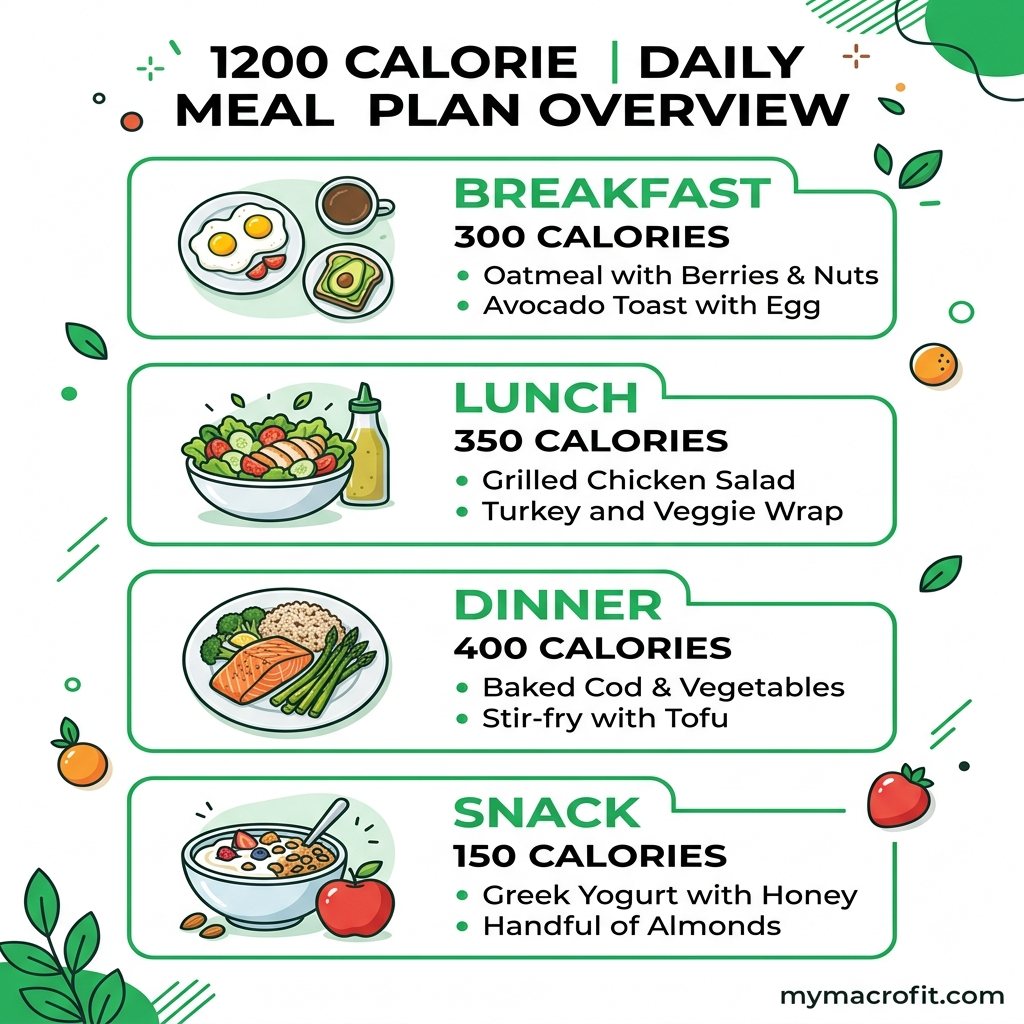
The 1,200 Calorie Meal Plan, High-Protein Version
If 1,200 kcal is right for your situation, here is how to structure it so it actually works.
The single most important variable at this calorie level is protein. It keeps you full, protects muscle mass during the deficit, and has the highest thermic effect of the three macros, meaning your body burns more calories digesting it. Skimping on protein at 1,200 kcal is the fastest way to lose muscle instead of fat.
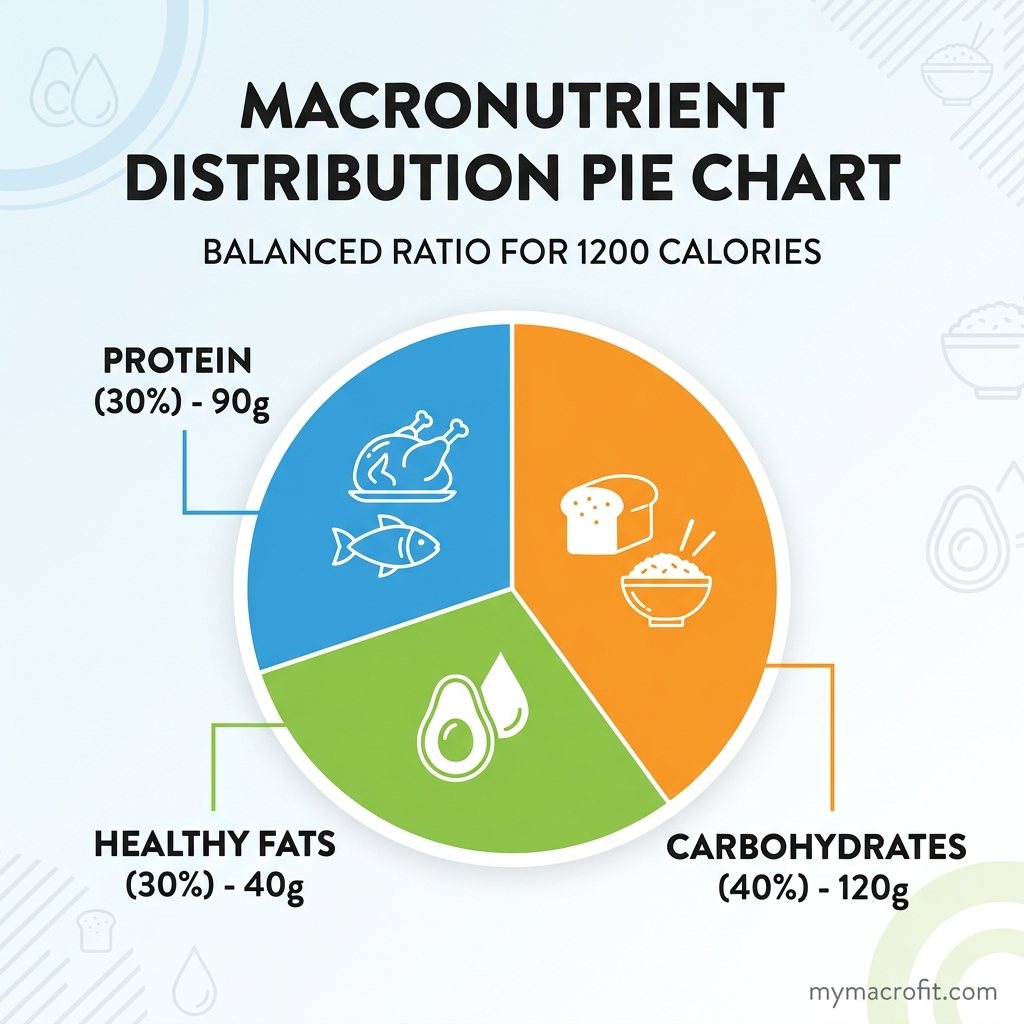
Daily targets: ~1,200 kcal · ~110g protein · ~100g carbs · ~45g fat
Breakfast, ~300 kcal · 30g protein
Option A: Greek yogurt protein bowl
| Ingredient | Calories | Protein |
|---|---|---|
| 200g fat-free Greek yogurt | 130 kcal | 22g |
| 80g mixed berries | 40 kcal | 1g |
| 20g granola | 80 kcal | 2g |
| 1 tsp honey | 20 kcal | 0g |
| Cinnamon (to taste) | 0 kcal | , |
| Total | ~270 kcal | ~25g |
Add 1 scoop unflavoured protein powder stirred through for an extra 20g protein and 100 kcal, recommended if you train.
Option B: Egg white omelette
| Ingredient | Calories | Protein |
|---|---|---|
| 4 egg whites + 1 whole egg | 120 kcal | 24g |
| 1 cup baby spinach | 20 kcal | 2g |
| 30g feta cheese | 80 kcal | 5g |
| 1 small whole grain wrap | 80 kcal | 3g |
| Total | ~300 kcal | ~34g |
Mid-Morning Snack, ~150 kcal · 15g protein
Choose one:
- 150g low-fat cottage cheese + 5 rice cakes (180 kcal, 18g protein), satisfying and easy to prep
- 1 hard-boiled egg + 1 medium apple (155 kcal, 6g protein), good on the go, lower in protein
- 170g fat-free Greek yogurt, plain (100 kcal, 17g protein), best protein-per-calorie option
Claire's note: If you find mid-morning hunger is your biggest challenge, switch cottage cheese for Greek yogurt here, the higher protein-to-calorie ratio controls appetite better than any other food I've seen at this intake.
Lunch, ~370 kcal · 35g protein
Option A: Tuna salad bowl
| Ingredient | Calories | Protein |
|---|---|---|
| 150g canned tuna in water, drained | 140 kcal | 33g |
| Large mixed salad (spinach, cucumber, tomato, pepper) | 50 kcal | 3g |
| 100g chickpeas, rinsed | 120 kcal | 7g |
| 1 tbsp olive oil + lemon juice dressing | 60 kcal | 0g |
| Total | ~370 kcal | ~43g |
Option B: Chicken lettuce wraps
| Ingredient | Calories | Protein |
|---|---|---|
| 130g cooked chicken breast | 165 kcal | 31g |
| Large iceberg lettuce leaves (as wraps) | 10 kcal | 1g |
| 100g cherry tomatoes | 20 kcal | 1g |
| 2 tbsp hummus | 70 kcal | 3g |
| Cucumber sticks | 15 kcal | 0g |
| Total | ~280 kcal | ~36g |
The chicken wrap option is lower calorie, use the 80-90 kcal saving for an extra snack or a slightly larger dinner.
Afternoon Snack, ~100 kcal · 10g protein
Choose one:
- 170g fat-free Greek yogurt, plain (100 kcal, 17g protein), best choice
- 2 hard-boiled egg whites + 10 almonds (104 kcal, 9g protein), great if you need something crunchy
- 1 medium apple + 1 tsp almond butter (110 kcal, 2g protein), lower protein but satisfying
Dinner, ~380 kcal · 35g protein
Option A: Baked cod with roasted vegetables
| Ingredient | Calories | Protein |
|---|---|---|
| 180g baked cod fillet | 160 kcal | 35g |
| 200g roasted vegetables (courgette, broccoli, red onion, cherry tomatoes) | 80 kcal | 5g |
| 120g sweet potato, baked | 100 kcal | 2g |
| Herbs, lemon, 1 tsp olive oil | 40 kcal | 0g |
| Total | ~380 kcal | ~42g |
Option B: Turkey stir-fry
| Ingredient | Calories | Protein |
|---|---|---|
| 150g lean turkey mince | 165 kcal | 30g |
| 200g stir-fry vegetables (peppers, mushrooms, pak choi, snap peas) | 70 kcal | 5g |
| 100g cooked brown rice | 130 kcal | 3g |
| Low-sodium soy sauce, ginger, garlic | 20 kcal | 0g |
| Total | ~385 kcal | ~38g |
Daily Macro Summary
| Meal | Calories | Protein |
|---|---|---|
| Breakfast | ~300 | ~30g |
| Mid-morning snack | ~150 | ~15g |
| Lunch | ~370 | ~35g |
| Afternoon snack | ~100 | ~10g |
| Dinner | ~380 | ~35g |
| Total | ~1,300 | ~125g |
The slight overage at 1,300 kcal is intentional. Staying rigidly at 1,200 kcal every day, including exercise days, creates unnecessary stress and increases the risk of compensatory eating. The 100 kcal buffer gives you flexibility without meaningfully slowing fat loss.
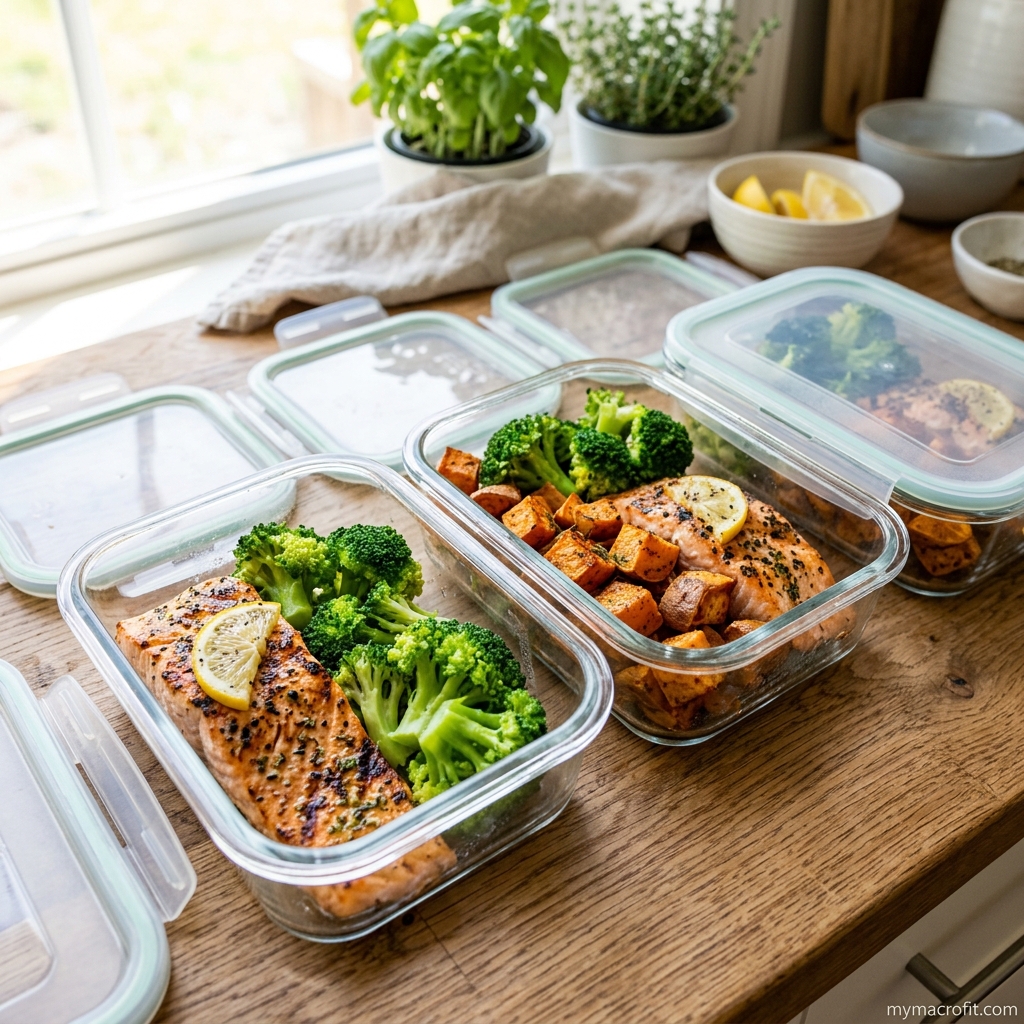
7-Day Meal Rotation
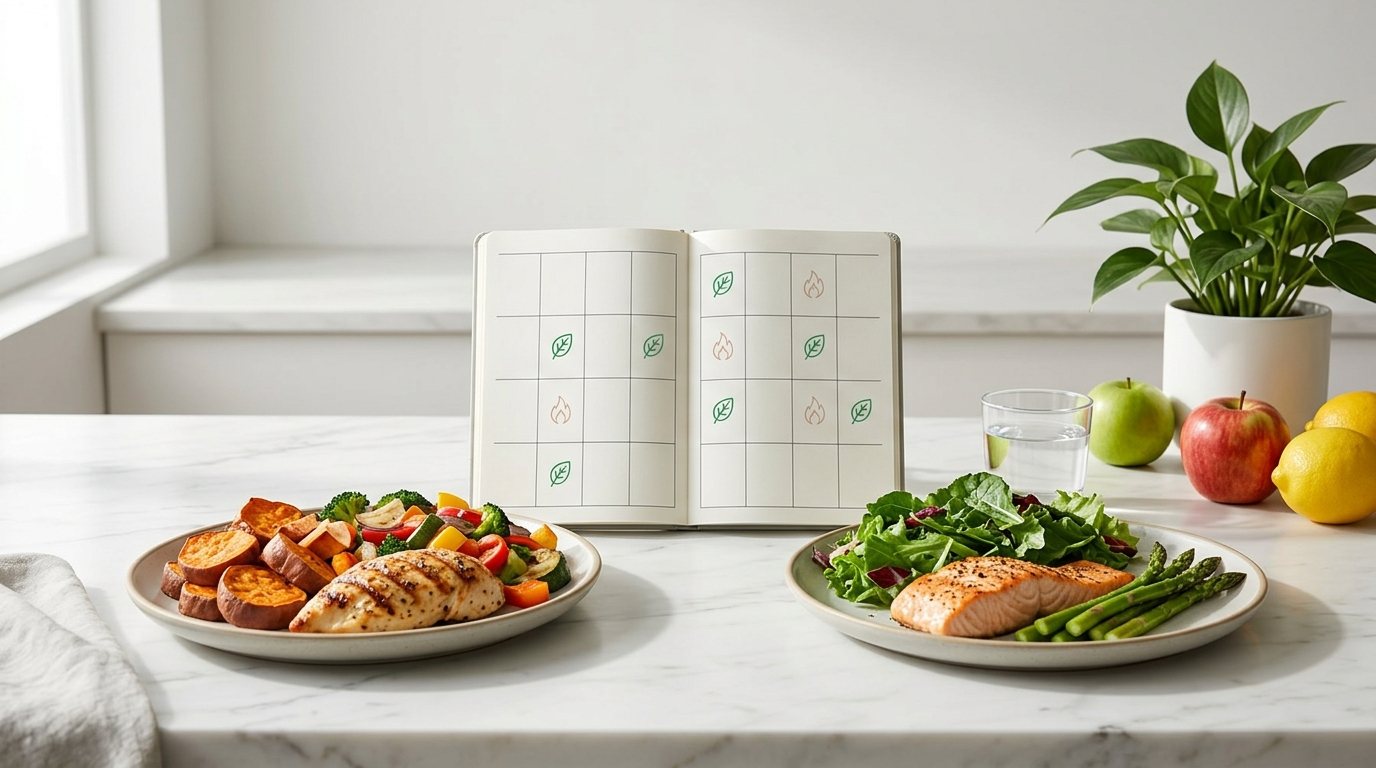
Following exactly the same meals every day for a week is both boring and unnecessarily rigid. Here's how to rotate across the week using the same structure:
| Day | Breakfast | Lunch | Dinner |
|---|---|---|---|
| Monday | Greek yogurt bowl | Tuna salad bowl | Baked cod & veg |
| Tuesday | Egg white omelette | Chicken lettuce wraps | Turkey stir-fry |
| Wednesday | Greek yogurt bowl | Tuna salad bowl | Baked salmon & sweet potato |
| Thursday | Protein smoothie (1 scoop protein + 200ml almond milk + 1 banana + ice, ~280 kcal) | Chicken & avocado salad | Lean beef mince & courgette noodles |
| Friday | Egg white omelette | Prawn & quinoa bowl | Baked cod & veg |
| Saturday | Greek yogurt bowl | Turkey & salad wrap | Grilled chicken thigh & roasted veg |
| Sunday | Scrambled eggs (3 eggs, 30g feta, spinach) | Lentil soup (350 kcal, 18g protein) | Turkey stir-fry |
Snacks stay consistent: cottage cheese or Greek yogurt mid-morning, yogurt or fruit + nut butter in the afternoon.
The Psychology of Eating 1,200 Calories
This is the part most meal plan articles skip, and it's often the reason people fail, not the food itself.
Why 1,200 kcal feels harder in week 3 than week 1
Your hunger hormone (ghrelin) actively increases during prolonged calorie restriction. Your body is not broken, it is doing exactly what it evolved to do: signal loudly for more food when intake drops significantly. This is not a willpower problem. It is a biological response that intensifies the longer the deficit continues.
This is why I recommend cycling intake rather than running 1,200 kcal continuously. After 4 weeks on a restricted intake, 2 weeks at 1,400-1,500 kcal reduces ghrelin, restores some glycogen, and dramatically improves the experience of the next restriction phase.
The two mindset traps at 1,200 kcal
-
All-or-nothing thinking, going 150 kcal over your target and deciding the day is ruined. It is not. A 1,350 kcal day is still a significant deficit. Log it, move on.
-
Treating the number as a ceiling, not a target, eating 900 kcal because you weren't hungry, believing more restriction means faster results. This is where metabolic adaptation accelerates and muscle loss becomes significant.
Practical Tips That Actually Make a Difference
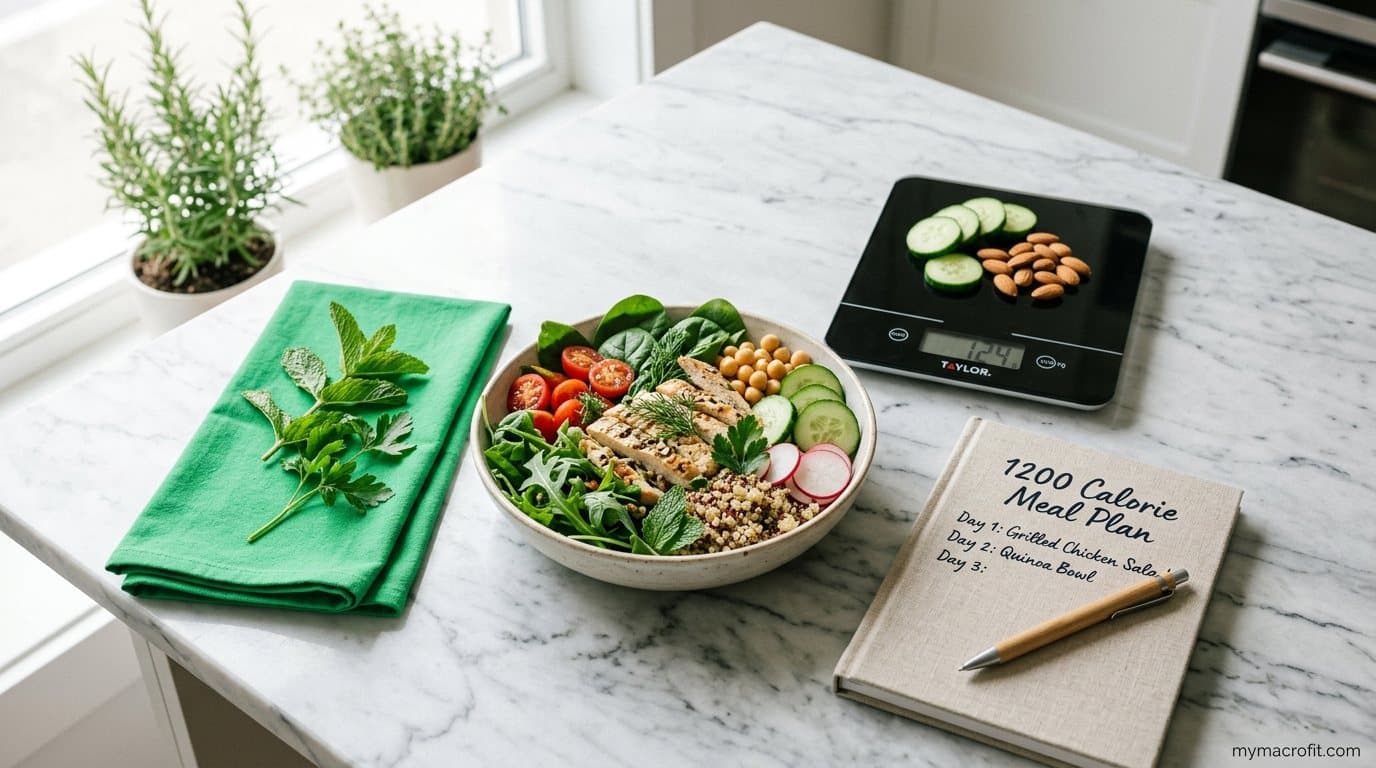
Weigh everything for the first two weeks. At 1,200 kcal, a tablespoon of olive oil you thought was one tablespoon but was two is a 60 kcal error, a 5% overshoot. After two weeks, your eye calibrates and weighing becomes less necessary.
Drink 500ml of water before each meal. Research consistently shows this reduces meal intake by 13% on average. At 1,200 kcal, managing appetite is the whole game.
Budget zero kcal for drinks. Plain water, black coffee, green tea, sparkling water. Even a semi-skimmed latte (130 kcal) takes a meaningful chunk of your daily budget.
Fill your plate with vegetables first. Leafy greens, broccoli, courgette, cucumber, peppers, 15-25 kcal per 100g. Fill half your plate with these before anything else. The volume is crucial for satiety at this calorie level.
Protein is non-negotiable. If your protein drops below 90g per day at 1,200 kcal, you will lose muscle alongside fat. The scale moves, but the body composition does not improve.
Warning Signs You're Eating Too Little
These are signals that 1,200 kcal is not working for your body and you need to increase calories:
- Persistent fatigue that doesn't improve after rest
- Hair loss or brittle nails (nutrient deficiency signals)
- Difficulty concentrating or brain fog
- Losing strength in the gym, your lifts are going down week over week
- Constant preoccupation with food and planning meals
- Loss of menstrual cycle or irregular periods
If you experience three or more of these, 1,200 kcal is likely too low for you. Increase to 1,400-1,500 kcal and reassess. Fat loss will still happen, more sustainably.
How Long Should You Stay at 1,200 Calories?
No longer than 4-8 weeks as a strict, daily approach. After this:
- Increase to 1,400-1,500 kcal for 2 weeks (still a deficit for most people)
- Reassess your weight and how you feel
- Return to 1,200 kcal if needed, or remain at the higher intake if progress continues
Cycling calorie levels, 4 weeks lower, 2 weeks slightly higher, consistently outperforms continuous severe restriction in both total fat loss and muscle preservation over a 3-6 month period.
Related reading: What to Eat on 1,500 Calories · How to Create a Calorie Deficit Without Hunger · Why You're Not Losing Weight in a Deficit
Sources
- Tsai AG, Wadden TA. The evolution of very-low-calorie diets. Obesity, 2006.
- Helms ER, et al. A systematic review of dietary protein during caloric restriction in resistance trained lean athletes. British Journal of Nutrition, 2014.
- Redman LM, et al. Metabolic and behavioral compensations in response to caloric restriction. JCEM, 2009.
- Rolls BJ, et al. Water incorporated into a food but not served with a food decreases energy intake in lean women. American Journal of Clinical Nutrition, 1999.
- Very low calorie diets, NHS, 2023.
Save & share on Pinterest
Click any card to pin it — or share with someone who needs it.
1200 Calorie Meal Plan: Is It Right For You? (Full Day of Eating)
A complete 1200 calorie meal plan with breakfast, lunch, dinner, and snacks, plus an honest look at …
A complete 1200 calorie meal plan with breakfast, lunch, dinner, and snacks, plu…
Read the full guide: 1200 Calorie Meal Plan: Is It Right For You? (Full Day of Eating)
Try the free Macro Calculator
1200 Calorie Meal Plan: Is It Right For You? (Full Day of Eating) — use our free calculators for ins…
Pinterest opens in a new tab. You can edit the description before saving.
Ready to get your numbers?
Free calculator, instant results, no signup required.
Frequently Asked Questions
Is 1200 calories a day enough for weight loss?+
Can you lose weight on 1200 calories without feeling hungry?+
Is 1200 calories too low?+
What happens if you eat 1200 calories for a month?+
About the Author

I'm a kinesiologist and personal trainer. I've spent eight years helping women lose fat and get stronger without handing their whole life over to a diet.
View full profile →