Body Fat Percentage: What's Healthy and How to Lower It

RHC · Pre/Postnatal Fitness Specialist
BMI gets all the headlines, but in terms of what genuinely predicts health and reflects fitness, body fat percentage is the metric that earns its place. The logic is simple once you see it: two people of identical height and weight can have completely different bodies, one lean and muscular, the other carrying significant excess fat, and BMI, which only knows your height and your mass, cannot tell them apart. Body fat percentage can, because it measures the variable that actually matters: how much of your weight is fat versus everything else. Let me show you what the number means, where you stand, and how to measure it without fooling yourself.
What Is Body Fat Percentage?
Body fat percentage is the proportion of your total body weight that is fat mass, as opposed to lean mass (muscle, bone, organs, water).
Example: A 75 kg person with 20% body fat has:
- 15 kg of fat
- 60 kg of lean mass
It's expressed as a simple percentage and is one of the most useful metrics for tracking fitness progress, especially when you're building muscle and losing fat simultaneously (body recomposition), where the scale might not move even as your body composition improves dramatically.
Healthy Body Fat Percentage by Category
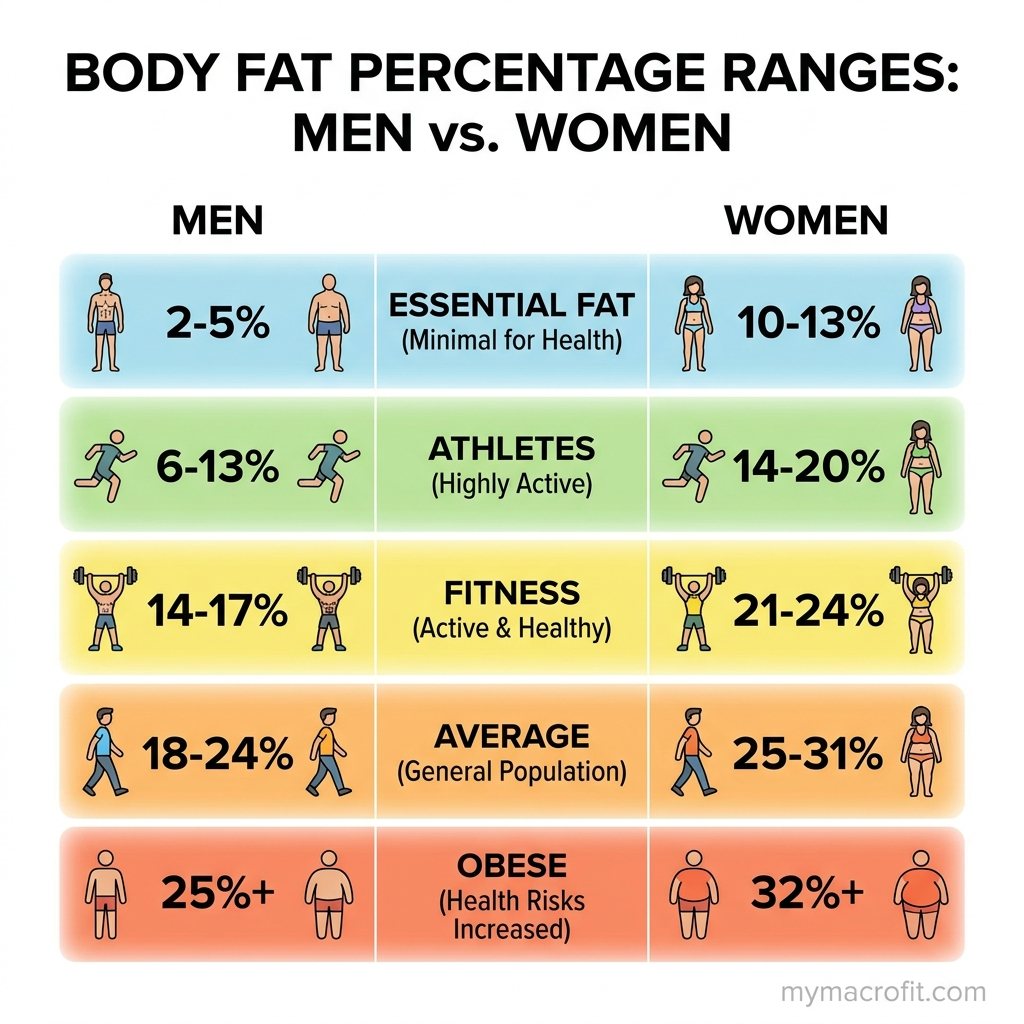
For Men
| Category | Body Fat % |
|---|---|
| Essential fat (minimum survivable) | 2-5% |
| Athletic | 6-13% |
| Fitness | 14-17% |
| Average/Acceptable | 18-24% |
| Obese | 25%+ |
For Women
| Category | Body Fat % |
|---|---|
| Essential fat (minimum survivable) | 10-13% |
| Athletic | 14-20% |
| Fitness | 21-24% |
| Average/Acceptable | 25-31% |
| Obese | 32%+ |
Women naturally carry more body fat due to hormonal differences and reproductive fat requirements. Comparing a woman's body fat percentage to male standards is misleading.
How to Measure Body Fat Percentage
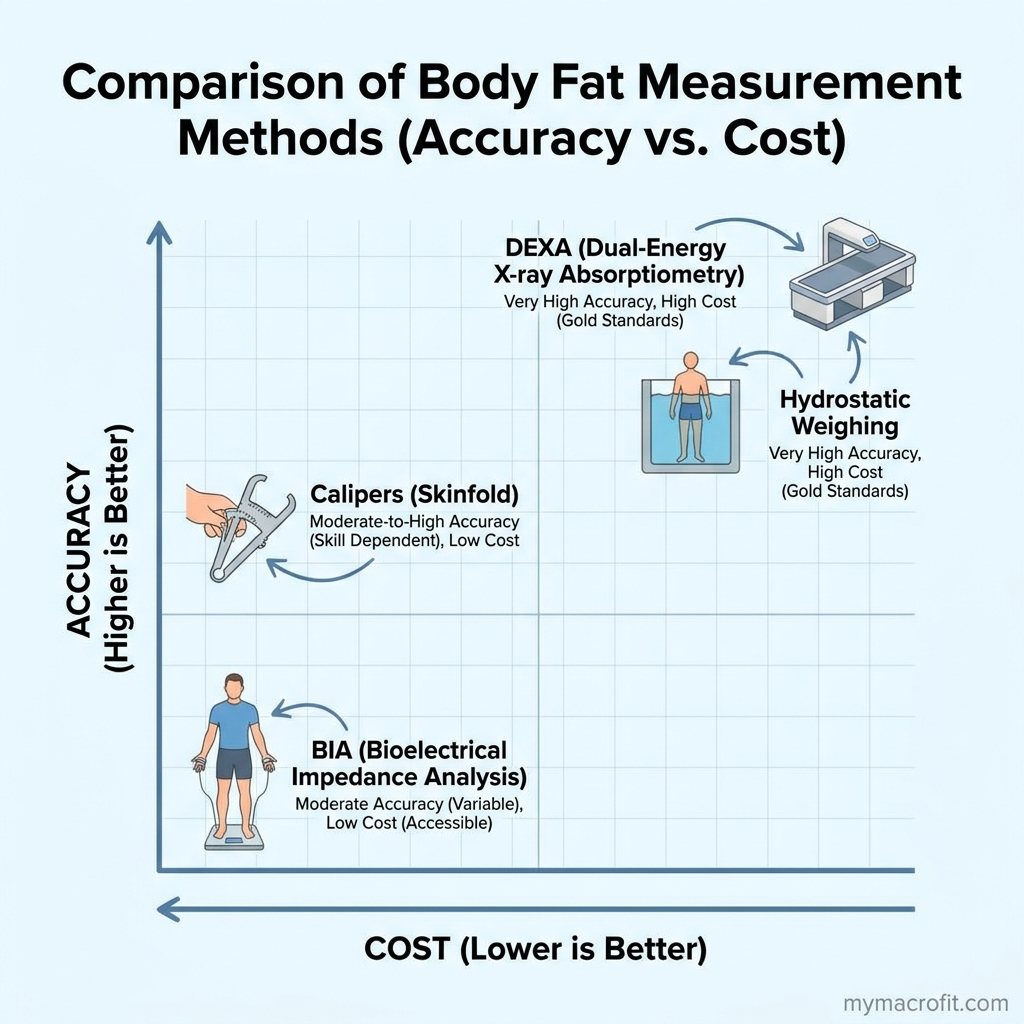
DEXA Scan, Most Accurate
A DEXA (Dual-Energy X-ray Absorptiometry) scan is the gold standard. It measures bone density, fat mass, and lean mass with high precision. Available at sports medicine clinics and some gyms for £50-150. Use this for an accurate baseline reading 1-2 times per year.
Calipers, Practical and Accessible
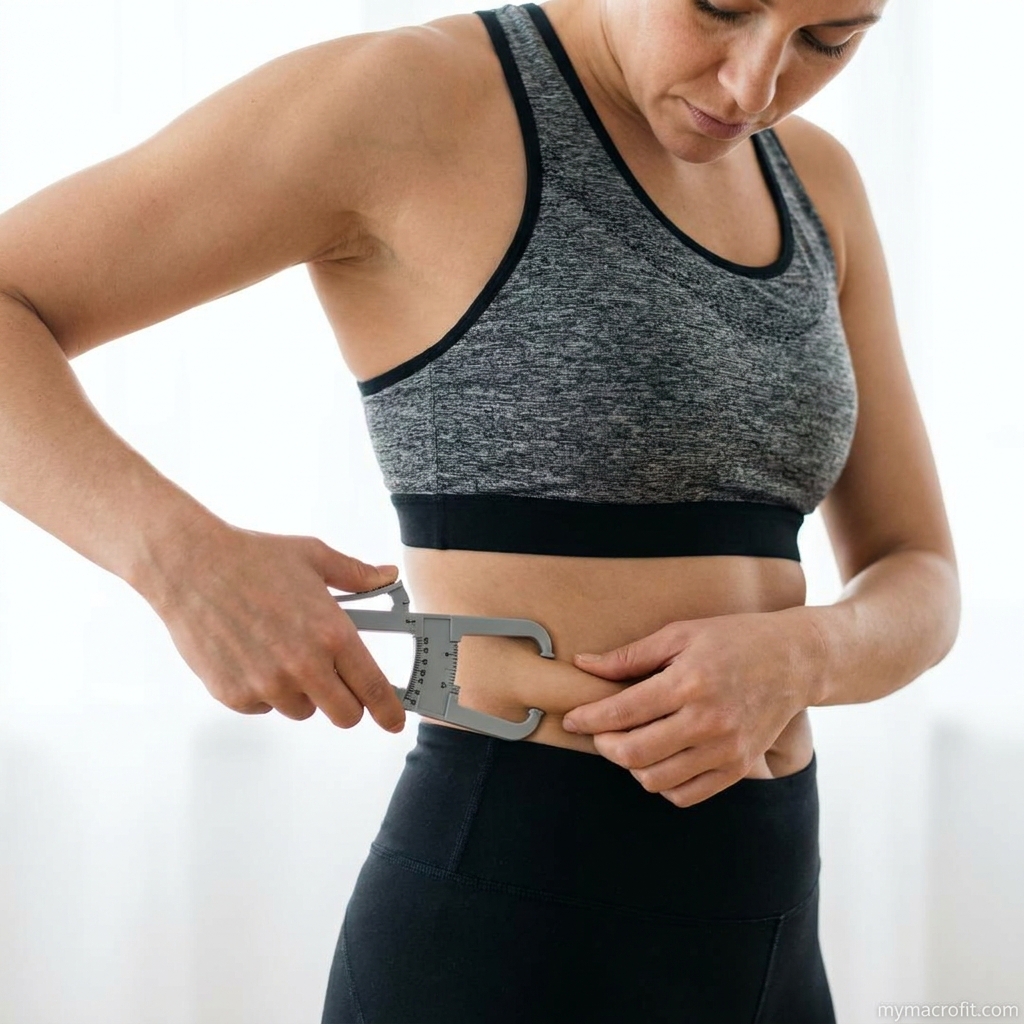
Skinfold calipers measure subcutaneous fat at specific sites (e.g., abdomen, tricep, thigh, subscapular). When done consistently by the same person, calipers provide reliable trend data even if absolute accuracy varies. Cost: £5-20 for calipers.
Navy Method, No Equipment Required
Uses waist, neck, and hip measurements (for women) with a simple formula. Good for rough estimates and tracking trends. Our Body Fat Calculator uses this method.
BIA Scales (Bioelectrical Impedance), Convenient but Variable
Consumer smart scales that estimate body fat via electrical impedance. Accuracy is highly variable based on hydration, time of day, recent food intake, and skin temperature. Useful for tracking trends over time if measured consistently (same time of day, same conditions), but not reliable for absolute readings.
Visual Estimation, Rough But Practical
Comparing your physique to body fat percentage reference photos gives a rough estimate. Useful for setting goals. Not a substitute for measurement.
Why Does Body Fat Percentage Change?
Body fat percentage changes when:
- You lose fat without losing muscle, BF% drops
- You gain muscle without gaining fat, BF% drops
- You lose fat AND muscle (crash diets, severe restriction), BF% may barely change
- You gain fat without gaining muscle, BF% increases
This is why crash dieting is counterproductive from a body composition standpoint. A diet that causes equal amounts of fat and muscle loss doesn't improve your body fat percentage, it just makes you a lighter version of the same composition.
How to Lower Your Body Fat Percentage
1. Create a moderate calorie deficit
A deficit of 300-500 kcal/day loses fat while minimising muscle loss. More aggressive deficits accelerate fat loss short-term but increase the muscle breakdown risk.
2. Eat adequate protein
1.8-2.4g of protein per kg of body weight is the most important nutritional variable for preserving muscle during fat loss. Protein also has the highest thermic effect, your body burns 20-30% of protein calories just digesting them.
3. Resistance train 3-4x per week
Lifting weights sends a signal to your body to preserve muscle even in a calorie deficit. Without this signal, your body has no reason to maintain expensive metabolic tissue. Cardio alone is less effective for body composition improvement than resistance training + a calorie deficit.
4. Prioritise sleep
Sleep deprivation elevates cortisol (a catabolic hormone that breaks down muscle) and disrupts ghrelin and leptin (hunger hormones), making you significantly hungrier the next day. Research shows inadequate sleep shifts weight loss away from fat mass toward lean mass, exactly the opposite of the goal.
5. Manage stress
Chronically elevated cortisol promotes fat storage, particularly visceral fat (the deep abdominal fat most associated with health risks). Stress management, through sleep, exercise, and other practices, directly impacts body composition.
Setting Realistic Body Fat Goals
Going from 30% to 20% body fat takes time. Expect:
- Maximum sustainable fat loss rate: 0.5-1% of body weight per week
- For a 80 kg man at 25% BF dropping to 15%: ~8 kg of fat to lose → 8-16 weeks minimum
- Visible abs for men: typically around 10-12% body fat
- Visible abs for women: typically around 18-20% body fat
The lower the body fat percentage, the slower and harder it becomes to lose more. This is adaptive thermogenesis, your body defends fat stores increasingly aggressively as they decrease.
The Difference Between Subcutaneous and Visceral Fat
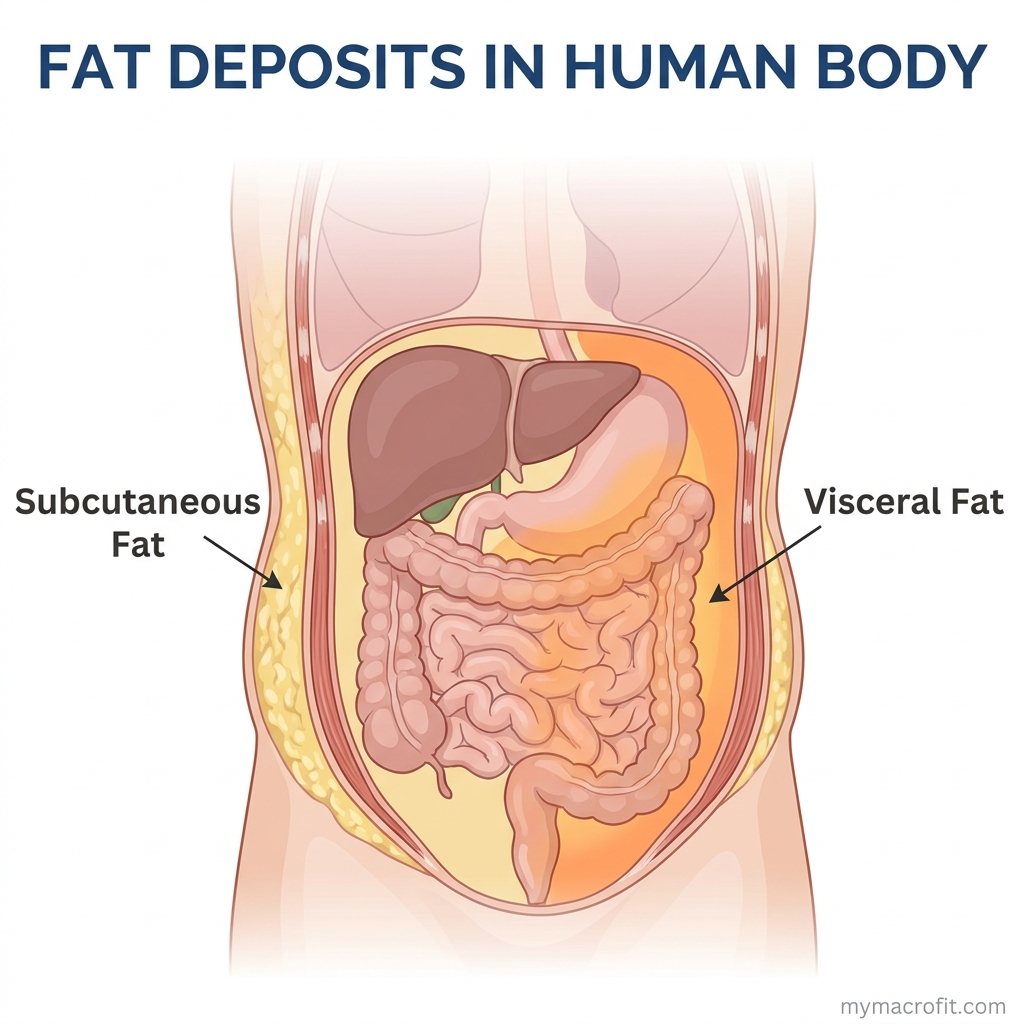
Subcutaneous fat is the fat directly under your skin, the kind you can pinch. This is largely aesthetic and poses limited health risk at moderate levels.
Visceral fat is the fat surrounding your internal organs (liver, intestines, heart). This is the metabolically active, health-relevant fat. High visceral fat is strongly linked to insulin resistance, cardiovascular disease, and type 2 diabetes.
Waist circumference is a practical proxy for visceral fat:
- Men: high risk above 102 cm (40 inches)
- Women: high risk above 88 cm (35 inches)
Good news: visceral fat responds strongly to calorie restriction and exercise, often faster than subcutaneous fat.
Body Fat vs BMI: Which Is Better?
BMI is a useful population-level screening tool, but at an individual level it's limited. It can't distinguish between fat mass and muscle mass, a heavily muscled athlete may be classified as "overweight" by BMI while having 10% body fat.
Body fat percentage directly measures what matters: how much of your body is fat. For tracking fitness progress, it's the more meaningful metric.
That said, you don't need to obsess over your exact body fat percentage. Focus on the behaviours, consistent training, adequate protein, moderate calorie deficit, and use body fat measurements as occasional checkpoints, not daily metrics.
Save & share on Pinterest
Click any card to pin it — or share with someone who needs it.
Body Fat Percentage: What's Healthy and How to Lower It
What body fat percentage means, what's actually healthy for men and women, how to measure it accurat…
What body fat percentage means, what's actually healthy for men and women, how t…
Read the full guide: Body Fat Percentage: What's Healthy and How to Lower It
Try the free Body Fat Calculator
Body Fat Percentage: What's Healthy and How to Lower It — use our free calculators for instant perso…
Pinterest opens in a new tab. You can edit the description before saving.
Ready to get your numbers?
Free calculator, instant results, no signup required.
Frequently Asked Questions
What is a healthy body fat percentage for women?+
What is a healthy body fat percentage for men?+
How do you reduce body fat percentage?+
How long does it take to lower body fat percentage by 5%?+
About the Author

I'm a registered health coach and pre/postnatal specialist. I look at the whole person, your sleep, your stress, your hormones, because the number on the scale is only ever part of the story.
View full profile →